Pristina, 26 October 2026
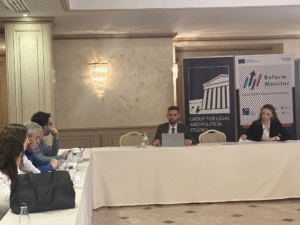
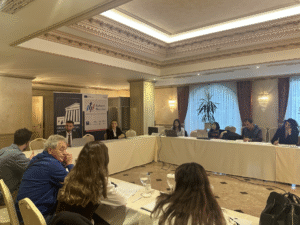
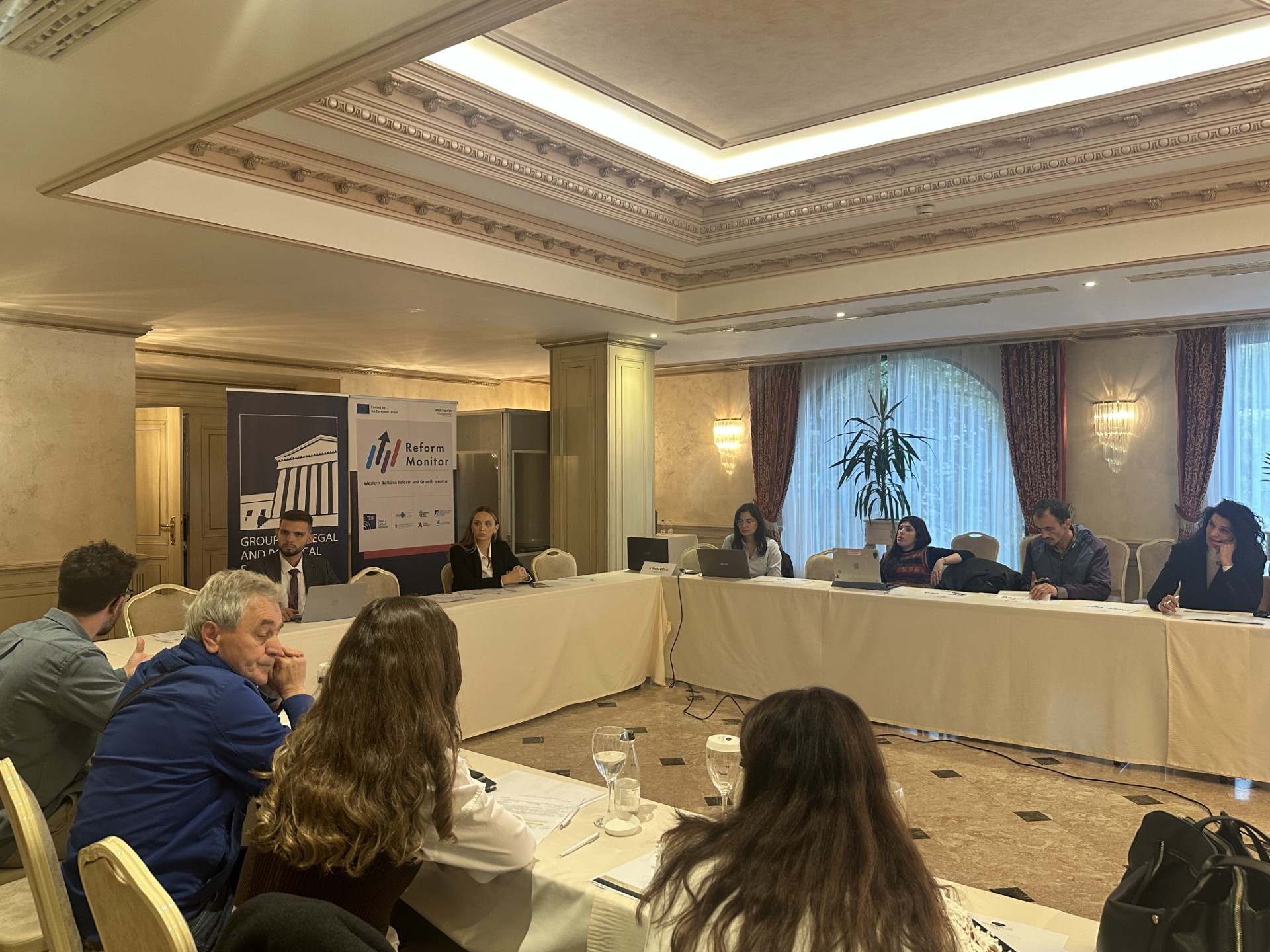
The Group for Legal and Political Studies (GLPS) today organised the fourth meeting of the National Consultation Mechanism on Reform Agenda. The event started with a discussion entitled “Kosovo’s Path towards the EU after the Political Deadlock: From Momentum to Reforms”, bringing together representatives of Kosovo’s institutions, the European Union, and civil society to discuss the implementation of the Reform Agenda, the consequences of institutional delays, and the steps needed to advance Kosovo’s European integration process.
The discussion highlighted that, following a prolonged period of political and institutional deadlock, Kosovo must seize the current momentum to accelerate reforms and translate political commitments into concrete results. With important deadlines approaching, the implementation of the Reform Agenda must be a priority for the Government and all responsible institutions.
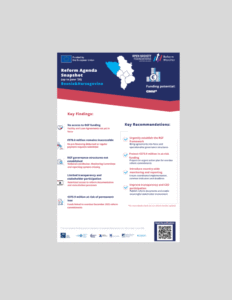
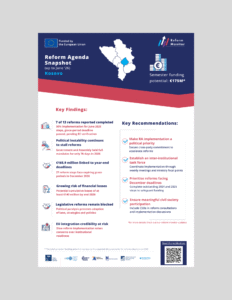
During the presentation of GLPS’s report, researcher Besar Gërgi stressed that a considerable number of reform steps had been delayed due to the institutional crisis, including measures that had already been prepared and primarily required political decision-making. The Civil Code and the Anti-Corruption Strategy were cited as examples. GLPS emphasised that reforms must be treated as an institutional priority and that reform steps whose deadlines have passed must not be disregarded.
Representatives of Kosovo’s institutions and the European Union underlined the importance of mobilising all stakeholders to implement the Reform Agenda. Jeton Zulfaj, representing the Government, stressed that the Reform Agenda should not be viewed solely through the lens of financial benefits, but also as an important process for transforming the country. He acknowledged that reforms in Kosovo often take longer than in other countries and emphasised that delays do not mean the reforms should not continue.
Alexis Hupin, Deputy Head of the European Union Office in Kosovo, stressed that the Reform Agenda must be a government priority and that time is of the essence in completing the required steps. He underlined that the engagement of all institutions is essential and that the importance of the process extends beyond financial allocations to encompass fundamental reforms and the rule of law.
From the Kosovo Assembly, Jehona Lushaku-Sadriu as the Chair of Parliamentary Committee on European Integration emphasised the need to establish European integration as a priority and to ensure that legislation is aligned with the European Union’s acquis communautaire. She warned of the risk of losing more than €100 million and highlighted the importance of holding line ministries accountable for fulfilling the Reform Agenda’s requirements.
The discussion also highlighted the need for greater transparency and earlier, more meaningful involvement of civil society in the reform process. Civil society representatives called for better access to implementation documents, greater predictability in consultation processes, and opportunities to contribute their expertise at the early stages of policy and legislative drafting.
Lura Limani noted that, despite the delays, reforms had continued at the level of institutions and agencies, while the measures included in the Reform Agenda had a direct impact on the lives of citizens and businesses. She underlined that transparency and access to implementation reports remain essential for monitoring progress and ensuring public accountability.
GLPS emphasises that responsibility for implementing reforms must remain with the institutions mandated to carry them out, while civil society must have meaningful opportunities to contribute through expertise, monitoring, and recommendations. Accelerating reforms must not come at the expense of legislative quality, public consultation, or alignment with European standards.
In conclusion, participants stressed the need for improved interinstitutional cooperation, clear lines of responsibility, and a more dynamic approach to fulfilling reform measures. Kosovo must move from identifying obstacles to taking concrete action, making use of the opportunity to advance reforms and the European integration process.
GLPS will continue to monitor the implementation of the Reform Agenda and contribute through research, recommendations, and public engagement to ensure that reforms deliver tangible results for the citizens of Kosovo.