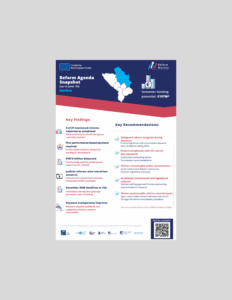
The Reform and Growth Facility (RGF) is a new financial instrument proposed by the European Commission in 2023, designed to accelerate the socio-economic convergence of the Western Balkans Six (WB6): Albania, Bosnia and Herzegovina, Kosovo, Montenegro, North Macedonia, and Serbia with the European Union. Building on the foundations of the 2020 Economic and Investment Plan for the Western Balkans, the RGF forms the cornerstone of the EU’s Growth Plan for the Western Balkans (2024–2027), which aims to foster closer integration with the EU Single Market and improve the region’s competitiveness and resilience.
The RGF provides up to EUR 6 billion in EU financial assistance, comprising EUR 2 billion in grants, and EUR 4 billion in concessional loans, to support the implementation of ambitious and country-specific Reform Agendas. These agendas are aligned with EU accession priorities and reforms under the European Semester model. The Facility represents a concrete step towards applying key EU governance and financial instruments to candidate countries in a pre-accession phase.
Reform Agendas: The Strategic Pillar of the Growth Plan
Each Western Balkan country has developed a Reform Agenda, in coordination with the European Commission, outlining its priorities across key policy areas such as:
- Public Administration Reforms (PAR) and Public Finance Management Energy Transition
- Digital Transformation
- Human Capital
- Business Environment and Private Sector Development
- Rule of Law and Fundamental Rights
The Reform Agendas serve as policy contracts between the EU and each partner country, outlining concrete measures, timelines, and milestones. They include a detailed costing and sequencing of reforms, and are subject to monitoring and assessment by both national authorities and the European Commission.
To qualify for funding, each country must demonstrate clear political commitment and implementation capacity. Annual disbursements will be based on the achievement of reform benchmarks and performance indicators established in each national agenda.
Conditions and Priorities
The RGF introduces conditionality mechanisms to ensure that funding is linked to tangible reforms. Although each country is eligible for different funding amounts and creates its own Reform Agenda, there are certain conditions that need to be met in all six cases. Some of the conditions embedded in all Reform Agendas are as follows:
- At least 30% of the funding must support the green transition, including energy efficiency, renewables, and environmental protection.
- A minimum of 15% must support digitalisation, such as digital public services, e-governance, and broadband expansion.
- Reforms must be consistent with EU values, including democratic governance, the rule of law, and respect for human rights.
- Progress in public financial management, public procurement, and anti-corruption measures is a prerequisite for disbursements.
Financing the Facility
The RGF is financed through the EU’s external budget instruments under the Multiannual Financial Framework (2021–2027), primarily through the Instrument for Pre-Accession Assistance (IPA III). The loan component of the Facility will be managed through bilateral arrangements with each country and include favourable terms in line with EU macro-financial assistance rules.
Disbursements are planned on an annual basis, subject to the Commission’s positive assessment of reform implementation. Funds are channelled directly into the national budgets of partner countries under strict monitoring mechanisms. The European Commission, in cooperation with national governments and civil society, will oversee the regular reporting, tracking, and evaluation of progress.
Monitoring, Disbursement, and Transparency
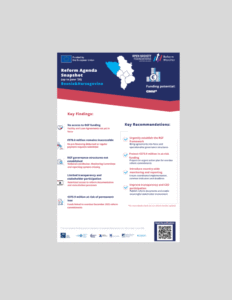
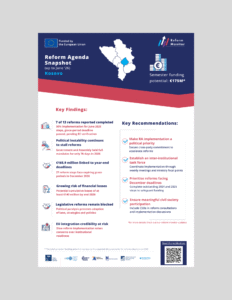
The European Commission will publish regular updates on disbursements, reform implementation milestones, and country progress. A dedicated online dashboard will track the status of each Reform Agenda, including the following:
- Approved measures;
- Budgeted vs. disbursed funds;
- Reform completion status;
- Key performance indicators;
- External audits and evaluations.
Civil society organisations, think tanks, and oversight bodies will be encouraged to participate in the monitoring process, ensuring transparency and accountability.
The Reform and Growth Facility is not just a financial instrument but a political commitment to bridge the gap between the Western Balkans and the EU. It sets a precedent for “accession through reform delivery,” anchoring long-term transformation in the region’s economies and institutions.
By linking funding to reforms, and reforms to EU membership prospects, the RGF has the potential to reshape the EU’s enlargement methodology, turning promises of integration into tangible results for the citizens of the Western Balkans.