
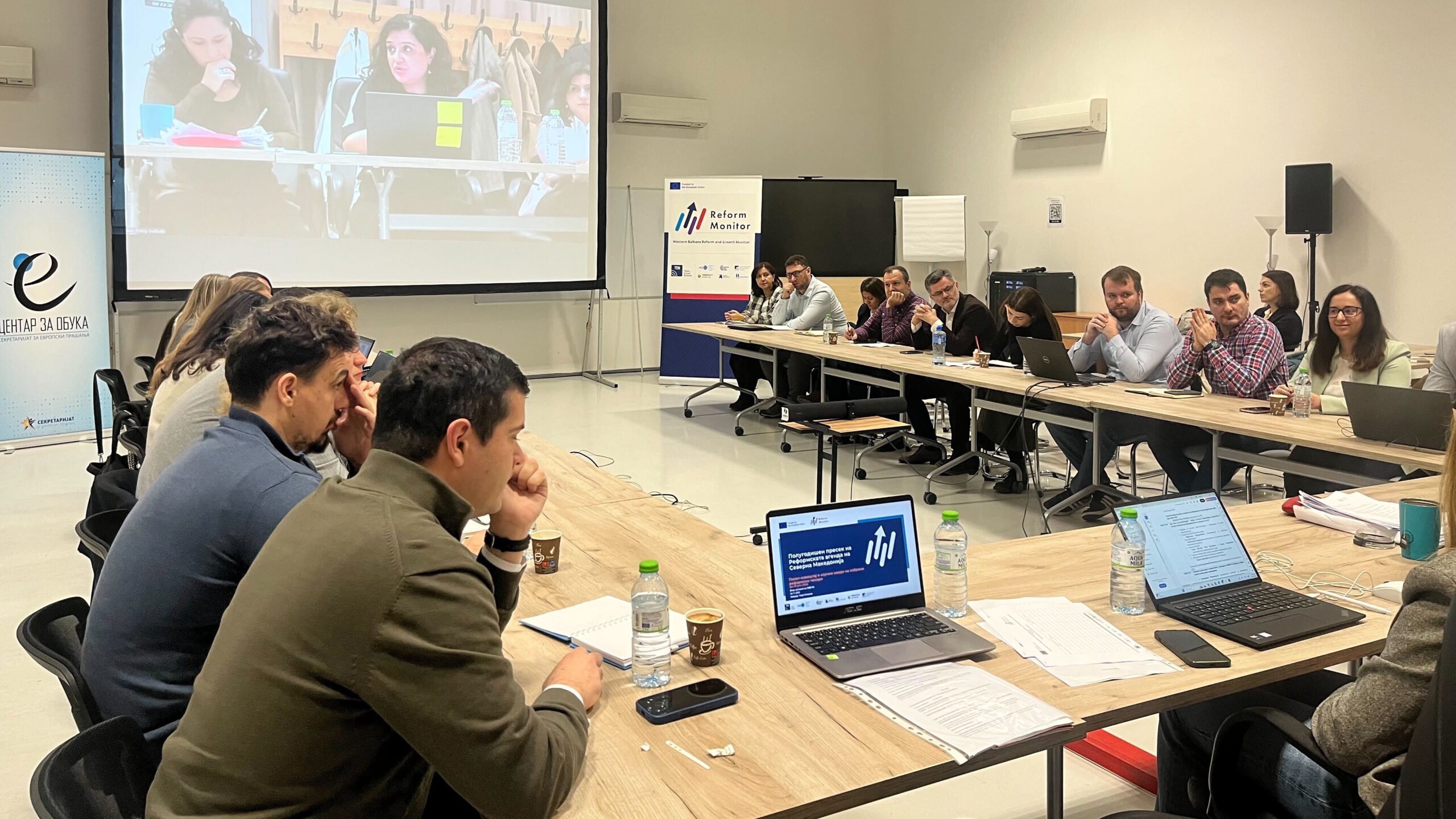
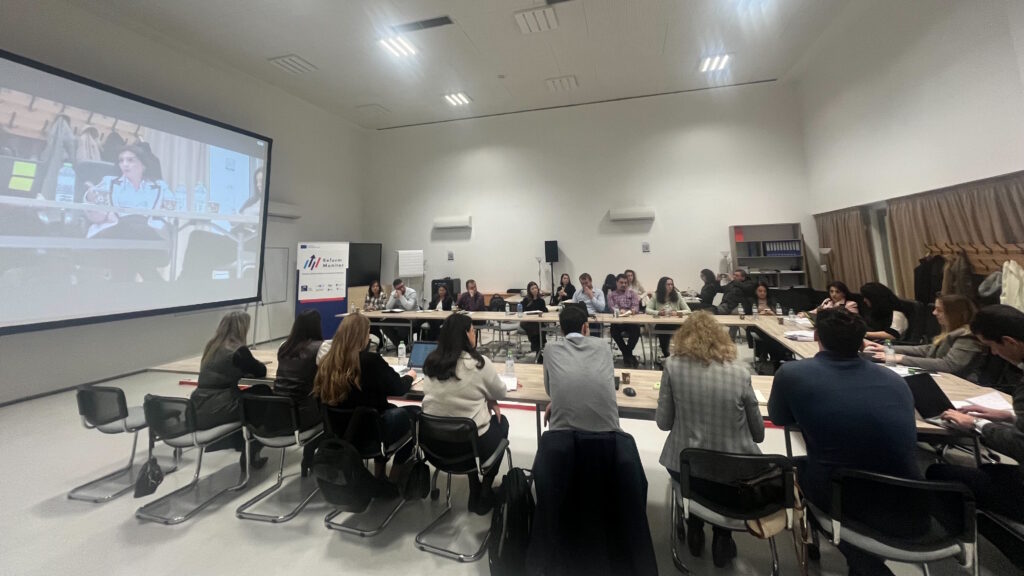
The European Policy Institute (EPI) – Skopje, in cooperation with the Ministry of European Affairs, held the second meeting of the National Consultation Mechanism for the Reform Agenda (N-CoMER) as part of the regional EU-funded project Western Balkans Reform and Growth Monitor. The meeting, organised at the premises of the Ministry, brought together representatives of national institutions (members of RA working group), civil society organisations, the private sector, and independent experts to review progress, identify obstacles, and discuss the next steps in implementing the Reform Agenda 2024–2027
Institutional Priorities, Progress and Key Challenges
The Ministry of European Affairs presented the current status of the third reporting period, highlighting that while the overall pace of implementation aligns with regional trends, institutions face tight deadlines, methodological differences in assessing qualitative indicators, and persistent coordination challenges. The Ministry underlined the need for timely reporting and stronger cooperation with civil society.
EPI shared findings from its pilot monitoring of reform delivery (December 2024 – June 2025), noting delays in publishing key documents, gaps in inter-institutional coordination, and capacity shortages in several institutions. The analysis also showed significant variations between policy areas, with energy, digitalisation, and rule of law facing the greatest bottlenecks.

The Ministry of Digital Transformation emphasised the complexity of aligning national legislation with EU requirements in cybersecurity and digital services, pointing to limited staffing and financial constraints as major barriers.
The Ministry of Energy reported substantial delays in market coupling procedures and transposition of EU regulations due to their technical nature and lengthy approval processes. Work continues on energy poverty measurement, decarbonisation plans, and the introduction of new digital services for vulnerable consumers.
The Ministry of Education outlined ongoing efforts to improve school digital infrastructure and expand dual education programmes, while the Ministry of Justice highlighted the critical need for strengthened human resources and long-term planning in the judiciary, as well as the impact of electoral cycles on legislative timelines.
Civil Society Insights
Representatives from civil society organisations stressed low public awareness of the Reform Agenda, challenges in accessing transparent data, and the need for improved quality of consultations. They also shared ongoing initiatives to strengthen public communication and parliamentary engagement regarding the reforms.
Conclusions and Way Forward
Participants agreed that administrative capacity remains the biggest obstacle to timely implementation. Strengthening inter-institutional coordination, improving transparency, and ensuring meaningful consultation were identified as priorities for the coming period.
The National Consultation Mechanism will continue to serve as a platform for structured dialogue, evidence-based monitoring, and joint problem-solving throughout the implementation of the Reform Agenda and the EU Growth Plan.

