
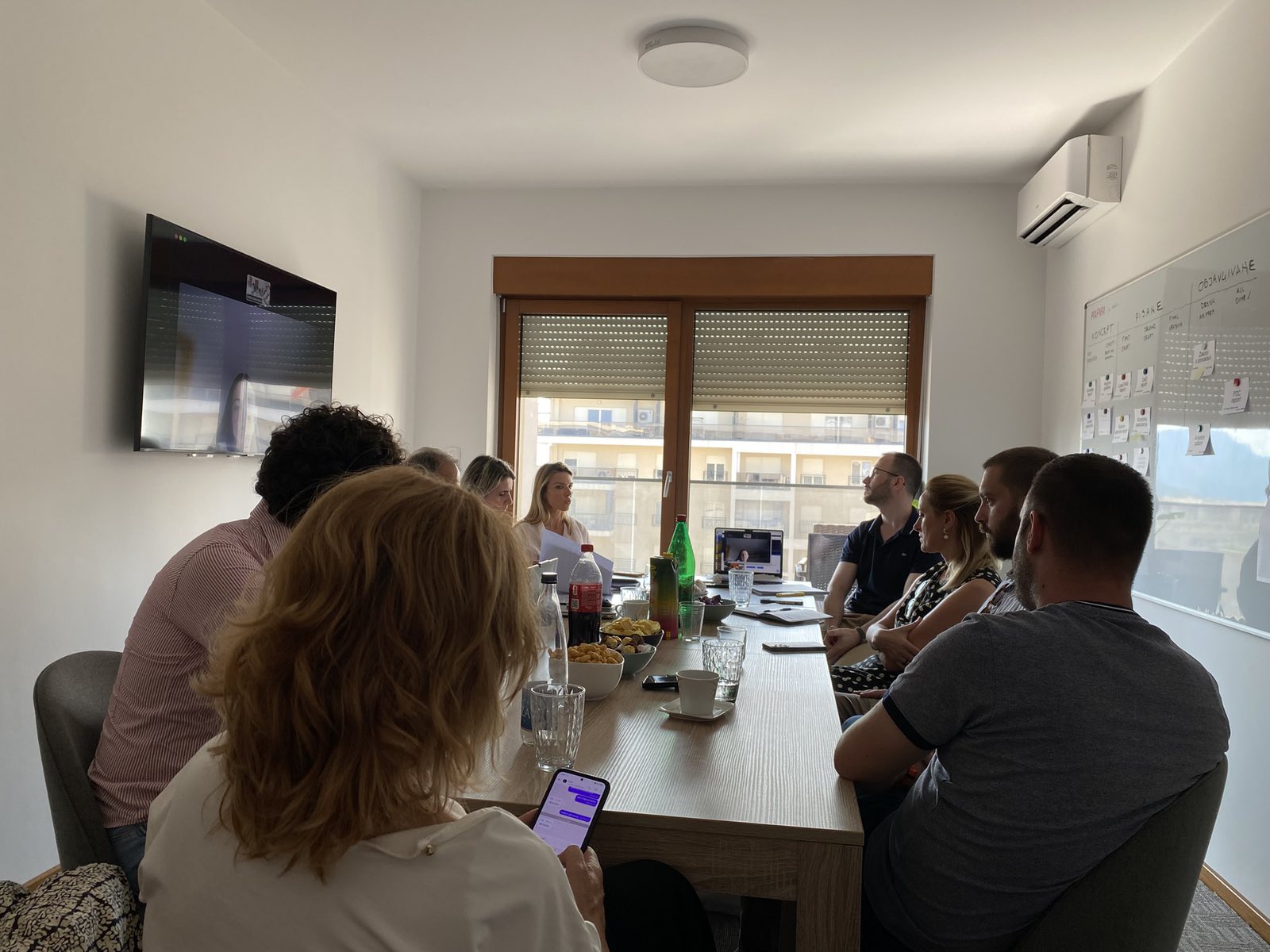
The National Consultation Mechanism for the Reform Agenda (N-CoMER) held its third meeting in Montenegro on Friday, July 17. The session brought together representatives from civil society organizations and the Delegation of the European Union to Montenegro to review progress on the Reform Agenda, discuss methodologies for assessing results, and outline key upcoming steps in the process.
A central focus of the discussion was the need for progress reports on reform obligations to be grounded in precise and realistic evaluations. Participants pointed out that official reporting can occasionally depict progress more optimistically than actual on-the-ground reality warrants. The meeting also covered the status of funds tied to specific steps that were due before the expiration of the grace period in June, exploring whether those funds could still be approved.
The methodology for evaluating reform steps formed another key topic, specifically the distinction between qualitative and quantitative indicators:
-
Quantitative indicators: Participants noted that quantitative targets allow for clearer verification of achievement and offer room to apply partial fulfillment criteria where relevant.
-
Qualitative & legislative steps: In contrast, legislative and structural commitments are primarily evaluated on a binary basis—whether the specific step has been fully executed or not.
Looking ahead, the discussion turned to potential revisions of the Reform Agenda expected by the end of the year. These adjustments may introduce additional reform measures alongside reallocated funds freed up from other countries’ agreements. Representatives of the EU Delegation confirmed that new reform steps are already under consideration and being aligned with the Government of Montenegro. The underlying rationale for these new steps in Montenegro is to target areas where they can make the highest impact on the EU accession process and accelerate compliance with EU membership requirements.
Finally, participants highlighted the importance of establishing a more systematic framework for tracking results under the first two pillars of the Growth Plan:
-
Integration with the EU single market
-
Strengthening regional economic integration within the Western Balkans through the Common Regional Market
Given their potential to boost economic growth, participants emphasized the need for closer monitoring of regional obligations that depend on multi-country cooperation, as well as clearer public communication on the progress of infrastructure projects supported or financed under the Growth Plan.
The meeting took place within the framework of the “WB Reform and Growth Monitor” project, implemented by a regional consortium of civil society organizations: Institute Alternativa (Montenegro), European Policy Institute (North Macedonia), Centre for European Policy (Serbia), Transparency International (Bosnia and Herzegovina), Group for Legal and Political Studies (Kosovo), and Institute for Democracy and Mediation (Albania). The project is supported by the European Commission, and co-financed in Montenegro by the Government of Montenegro through the Ministry of Regional-Investment Development and Cooperation with Non-Governmental Organizations.

