Montenegro: The Constitution Has Already Been Amended, You Just Don’t Know It

The Montenegrin Government presented its fourth semi-annual report on the implementation of the Reform Agenda as an unquestionable success: “As many as 34 [out of 41] reforms have been fulfilled, which will bring 97 million euros to Montenegro,” it was stated. Nowhere in official addresses or media reports was it emphasized that this is a self-assessment of the Government’s success, which the European Commission has so far cut in half three times through its reviews of the actual state of affairs.

The Reform Agenda is a list of 130 reforms, each with a due date and an amount of money it carries. Every six months, the Government reports on what has been done, and the European Commission decides how much of that is truly “earned” and pays out money as a reward for the measures that were implemented.

When one takes even a casual look at how the Government reported to the EC, it is clear that there is a significant delay in the implementation of reforms and that there is no chance that, this time either, the EC will recognize everything we reported as fulfilled. There are no problems, no failures — everything is marked as fulfilled or partially fulfilled. The Government goes so far to present success where there is none, as to use the label “partially fulfilled”, despite regulations that do not allow that label to be used in reporting for these measures at all.

For example, in the report, the Government says that the work regarding amending the Constitution is finished, and the step fulfilled, and it requests 4.6 million from the EC, which is the reward for that task. The official deadline expired a year ago, and in June the grace period expired as well. When the period for which the report was written expired, the Constitution was not amended, amendments were not even written, and public discussion about them had not even begun. By the way, this is the third time the Government reports that this step is fulfilled, and both previous times, the EC concluded in its statements simply “Not achieved” — and did not pay us the requested money.

A similar pattern repeats at the step related to electoral legislation and the implementation of ODIHR recommendations (worth 3.4 million). This step was also “fulfilled” for the Government, even though not one of the four required laws was adopted, except that compliance tables and one draft law were sent to the European Commission for review.

Amendments to the Law on the Election of the President of Montenegro, worth 2.3 million euros, were also reported as completed work — the law at that time was not even sent into parliamentary procedure, was not considered in committees, and was not adopted in the Parliament.

Integration of the electricity market was self-assessed as “fulfilled”, although confirmation from the Energy Community is still awaited. The new IT platform for visas was self-assessed as “fulfilled” — although it is only in the phase of preparing tender documentation. The Government is convinced that measures were implemented even where it admits itself that the numbers are not good, like the one about providing a comprehensive out-of-cell activity regime for detainees (the number of employed persons deprived of liberty fell from 300 (2023) to 250 (2025), the number of participants in sports activities from 42 to 22).

This is a continuation of the practice of inflated statistics in Government reports and giving obviously inaccurate ratings. In the first report from March 2025, the EC rejected a third of the steps the Government reported as fulfilled; in the second, from July 2025, even over 70%; in the third, from January this year, the EC officially established that more than half of the measures (55%) were falsely presented as fulfilled. That can also be seen through payments from the EU — had we implemented everything we should have, we would have received 135.5 million by now, and we received 67, slightly less than half.

At the same time, for the first time, we can permanently lose funds intended for us because the deadline for implementing reforms has expired. Of the 41 measures for which the Government has now reported, two-thirds are reforms whose deadline expired long ago, for some as far back as December 2024. Certain reform measures have been traveling through reports for two years already; the Government unsuccessfully tries to “sell” them as implemented, but the EC does not recognize them.

It sounds technical and complex, but it is important — this will be the foundation of our financing after we enter the EU. In the financial package for Montenegro’s EU accession that was adopted in June, the European Commission stated that all member states, in the next seven-year EU budget, will receive money through “plans based on results… with payments linked to the fulfillment of agreed steps”, which is the same principle as the Reform Agenda. The system we are building now, with 383.5 million euros at stake, will tomorrow be applied to a package worth 3.2 billion euros.

Inaccurate reporting is the consequence of a lack of capacity to implement reforms, insufficient commitment of competent institutions to carry out activities that they proposed themselves within defined deadlines, and insufficient political will to achieve results and coordinate the work of the administration toward true changes.

If it is already known that Brussels cannot be tricked, then it turns out that the purpose of the report is for domestic needs — to sell success to the citizens by painting statistics and in the hope that they won’t follow when, in roughly 90 days, the European Commission publishes how much of the announced 97 million it will actually pay us.

In a system in which the EU rewards us with money for implementing reforms, the Government’s inflated assessments and beautifying of reality only waste time and money, while we suffer the consequences of a dysfunctional administration that changes sluggishly and reluctantly. We must eradicate the habit of painting over results while the stakes are “only” tens of millions of euros, both because of the money and because of the dignity of the citizens for whom those reports are written and reforms implemented.

This op-ed was originally published in Montenegrin

Author: Marko Sošić, Institute Alternativa, Montenegro

Image: gov.me
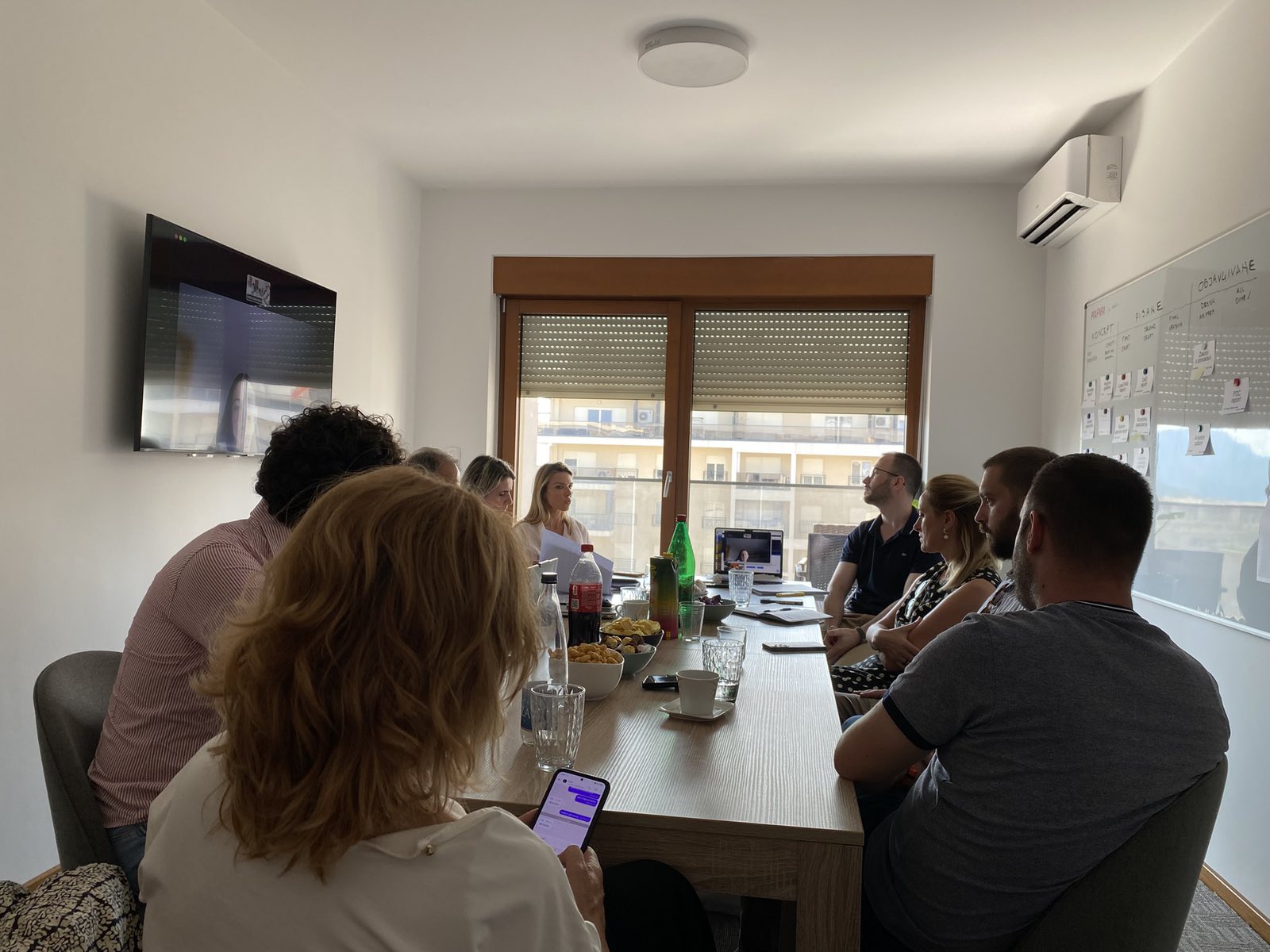
Third N-CoMER Meeting in Montenegro Focuses on Reform Agenda Implementation and Growth Plan Priorities

The National Consultation Mechanism for the Reform Agenda (N-CoMER) held its third meeting in Montenegro on Friday, July 17. The session brought together representatives from civil society organizations and the Delegation of the European Union to Montenegro to review progress on the Reform Agenda, discuss methodologies for assessing results, and outline key upcoming steps in the process.

A central focus of the discussion was the need for progress reports on reform obligations to be grounded in precise and realistic evaluations. Participants pointed out that official reporting can occasionally depict progress more optimistically than actual on-the-ground reality warrants. The meeting also covered the status of funds tied to specific steps that were due before the expiration of the grace period in June, exploring whether those funds could still be approved.

The methodology for evaluating reform steps formed another key topic, specifically the distinction between qualitative and quantitative indicators:

  • Quantitative indicators: Participants noted that quantitative targets allow for clearer verification of achievement and offer room to apply partial fulfillment criteria where relevant.

  • Qualitative & legislative steps: In contrast, legislative and structural commitments are primarily evaluated on a binary basis—whether the specific step has been fully executed or not.

Looking ahead, the discussion turned to potential revisions of the Reform Agenda expected by the end of the year. These adjustments may introduce additional reform measures alongside reallocated funds freed up from other countries’ agreements. Representatives of the EU Delegation confirmed that new reform steps are already under consideration and being aligned with the Government of Montenegro. The underlying rationale for these new steps in Montenegro is to target areas where they can make the highest impact on the EU accession process and accelerate compliance with EU membership requirements.

Finally, participants highlighted the importance of establishing a more systematic framework for tracking results under the first two pillars of the Growth Plan:

  1. Integration with the EU single market

  2. Strengthening regional economic integration within the Western Balkans through the Common Regional Market

Given their potential to boost economic growth, participants emphasized the need for closer monitoring of regional obligations that depend on multi-country cooperation, as well as clearer public communication on the progress of infrastructure projects supported or financed under the Growth Plan.

The meeting took place within the framework of the “WB Reform and Growth Monitor” project, implemented by a regional consortium of civil society organizations: Institute Alternativa (Montenegro), European Policy Institute (North Macedonia), Centre for European Policy (Serbia), Transparency International (Bosnia and Herzegovina), Group for Legal and Political Studies (Kosovo), and Institute for Democracy and Mediation (Albania). The project is supported by the European Commission, and co-financed in Montenegro by the Government of Montenegro through the Ministry of Regional-Investment Development and Cooperation with Non-Governmental Organizations. 

The European Commission releases €158.9 million to Albania, Montenegro and North Macedonia

The European Commission has today made available €49 million to Albania, €44.2 million to Montenegro, and €65.7 million to North Macedonia under the Reform and Growth Facility. This follows the third request for payment and the Commission’s positive assessment of reform steps implemented in the areas of business competitiveness and innovation in Albania and Montenegro, and education and digitalisation in North Macedonia.

With today’s release, the total amount released under the Facility under their respective envelopes reaches €212.8 million for Albania, €89.3 million for Montenegro, and €142.1 million for North Macedonia.

Progress under the Reform Agendas

In Albania, the reforms assessed by the Commission include measures to improve the business environment, facilitate investment and innovation, and expand access to finance, including for start-ups and companies active in the green and digital sectors. Of the €49 million disbursed, €22.8 million will be transferred to the state budget, while the remaining funds are made available for investment projects through the Western Balkans Investment Framework (WBIF), subject to the applicable approval procedures. The official assessment by the EC is available in the Official documents part of our website.

You can check the latest Refrom Monitor’s Reform Agenda Update for Albania at: https://reform-monitor.org/albania-reform-agenda-update-2nd-semester-2025/

In Montenegro, the Commission assessed reforms in the area of research and innovation, including support for scientists, businesses and research institutions, as well as further strengthening of the national innovation ecosystem. Of the €44.2 million disbursed, €20.6 million will be transferred to the state budget, while the remaining funds are made available for investment projects through the WBIF. The official assessment by the EC is available in the Official documents part of our website.

The last Reform Agenda Update prepared as part of our project is avaliable at: https://reform-monitor.org/montenegro-reform-agenda-update-2nd-semester-2025/

In North Macedonia, the reforms assessed include measures to improve the financing of primary and secondary education and measures in order to expand access to digital infrastructure and IT equipment in schools. Of the €65.7 million disbursed, €30.6 million will be transferred to the state budget, while the remaining funds are made available for investment projects through the WBIF. The official assessment by the EC is available in the Official documents part of our website.

The RA Update for North Macedonia is available at: https://reform-monitor.org/north-macedonia-reform-agenda-update-2nd-semester-2025/

The funds that are earmarked for the WBIF will, once approved by the WBIF board, support infrastructure projects in sustainable transport, clean energy, digital and human capital development. Projects will be implemented in close cooperation with Western Balkan partners and international financial institutions.

Background

The Growth Plan for the Western Balkans, adopted in 2023, aims to bring partner countries from the region benefits of membership ahead of their accession to the EU. It seeks to integrate partners into the EU’s Single Market, advance regional economic cooperation, deepen EU-related reforms and increase pre-accession funding. This in turn accelerates the enlargement process and the growth of partners’ economies.

The Plan is supported by the Reform and Growth Facility, its financial instrument with an envelope of €6 billion. Every six months, partners report on their progress on reforms implemented with the support of the Facility. The latest financial release relates to the third half-yearly reporting period, covering reforms implemented until the end of December 2025. The overall financing released under this instrument since 2024 amounts to €673.6 million.

The Western Balkans Investment Framework (WBIF) is instrumental in implementing the Reform and Growth Facility. It is channelling €3 billion in grants and loans under the Facility to support priority investments in transport, energy, digital and human capital. Established 15 years ago, the WBIF is a joint financial platform, bringing together the European Commission, financial organisations, EU Member States and Norway. It contributes directly to the EU’s Global Gateway Strategy.

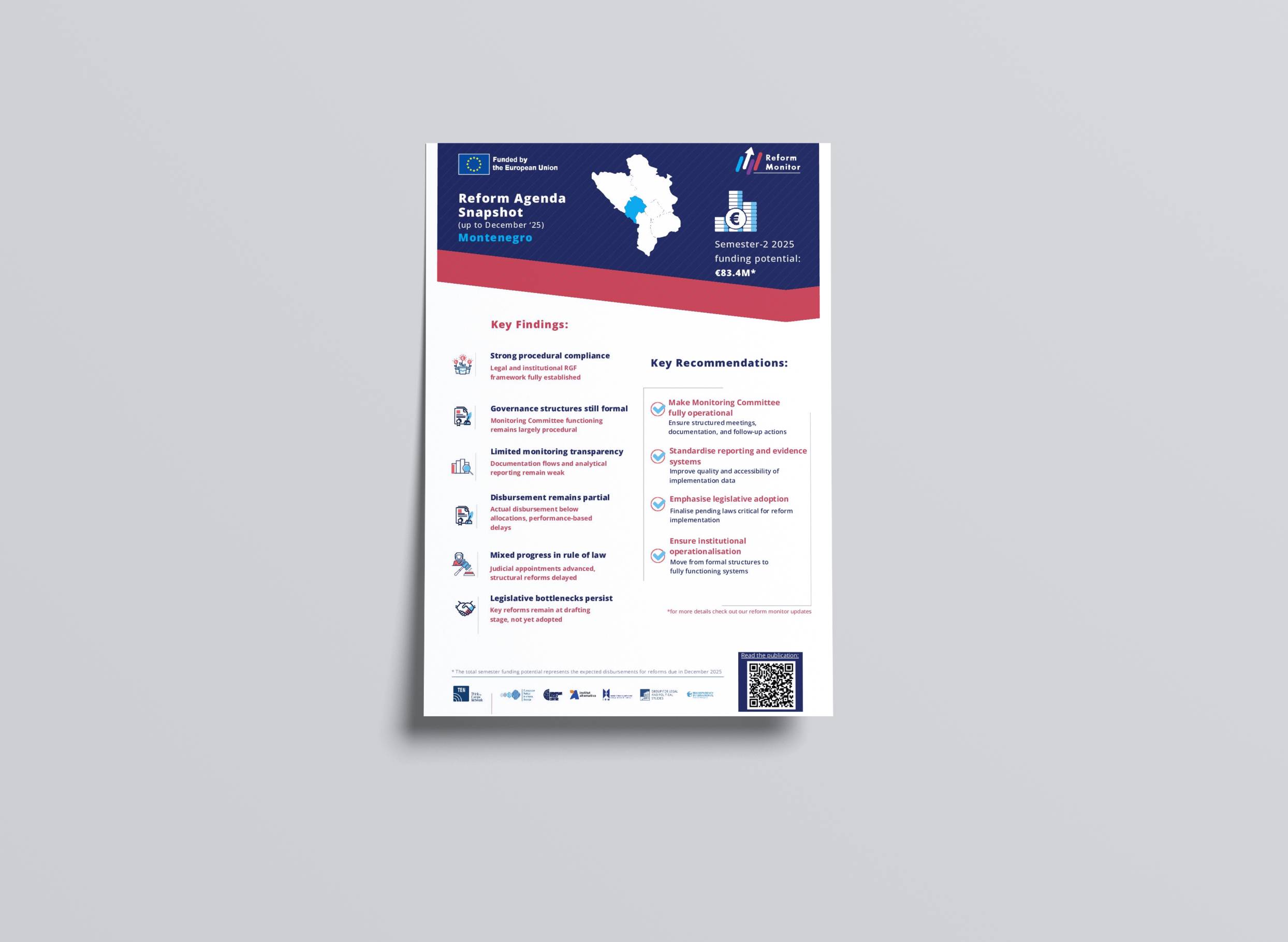
Reform Agenda Snapshot (up to December ‘25) – Montenegro

Key findings and recommendations from our Reform Monitor update for Montenegro, up to December 2025.

Snapshot-Montenegro

Download

Crna Gora: Pregled ispunjenosti reformske agende – Monitor reformi – drugo polugodište 2025

Ova publikacija je dio niza izvještaja „Pregled ispunjenosti Reformske agende“, odnosno nacionalnih izvještaja o monitoringu koji prate sprovođenje reformskih agendi unutar Instrumenta za reforme i rast za Zapadni Balkan, u okviru projekta „Monitor reformi“.

„Pregled ispunjenosti Reformske agende“ fokusira se na napredak u sprovođenju obaveza specifičnih za svaku državu u okviru Instrumenta za reforme i rast. Monitoring se sprovodi putem skupa proceduralnih indikatora, indikatora vezanih za sprovođenje reformi i finansijskih indikatora. Proces praćenja, odnosno monitoringa je suštinski usmjeren na reformske korake sa definisanim rokovima, pri čemu se njihov status sprovođenja procjenjuje na osnovu javno dostupnih podataka i zvanične dokumentacije pribavljene od strane nacionalnih organa, a gdje je relevantno, dopunjene informacijama nezavisnih institucija i organizacija civilnog društva. Posebna pažnja posvećuje se učešću zainteresovanih strana i transparentnosti.

Monitoring obuhvata odabrane reforme organizovane u takozvane „sektore politike“, koji su formirani kodiranjem pod-oblasti usklađenih oblasti politike u okviru reformskih agendi. Odabrani sektori politike, koji omogućavaju analize na regionalnom nivou, uspostavljanje polaznih tačaka i uporedivost, zasnivaju se na raspoloživim ljudskim resursima i tematskoj ekspertizi mreže TEN.

Detalji o metodologiji i procesu odabira reformskih koraka dostupni su u nacrtu metodološke napomene na sljedećem linku.

Pregled ispunjenosti Reformske agende strukturiran je na sljedeći način: ključni nalazi i preporuke predstavljaju izvršni sažetak. Poglavlja Pravni i institucionalni okvir i Zahtjevi i isplata sredstava prate ukupni napredak u proceduralnim i finansijskim aspektima sprovođenja Reformske agende. Posljednje poglavlje, Reforme u fokusu: sektori politike Monitora reformi, donosi nezavisne nalaze praćenja odabranih reformi. Pojedinačni odjeljci u okviru ovog poglavlja sadržne narativni pregled napretka i izazova u sprovođenju Reformske agende za Crnu Goru.

Krajnji datum za prikupljanje podataka i procjenu za ovaj pregled ispunjenosti je 31.12.2025. Dalji razvoj politika može uticati na status trenutno nezavršenih reformi i biće obuhvaćen u narednim pregledima ispunjenosti.

Ovi pregledi ispunjenosti ne predstavljaju zamjenu za formalnu ulogu procjene Evropske komisije.

RA_Pilot-Reform-Monitor_2nd-Semester-2025_Crna-gora

Download

Montenegro – Reform Agenda Update – 2nd Semester 2025

This publication is part of the series “Reform Agenda Updates”, national monitoring reports that track the implementation of the Reform Agendas as part of the Reform and Growth Facility for the Western Balkans, within the Reform Monitor project.

The “Reform Agenda Updates” assessment focuses on the implementation progress of country-specific obligations under the RGF. Monitoring is conducted through a set of procedural, reform implementation, and financial indicators. The core of the monitoring exercise tracks reform steps with defined deadlines, assessing their implementation status based on publicly available evidence and official documentation obtained by national authorities, and, where relevant, complemented by information from independent institutions and civil society sources. Cross-cutting attention is given to stakeholder participation and transparency.

The monitoring exercise covers selected reforms organised into so-called “policy domains,” created by coding the sub-areas of the harmonised policy areas in the Reform Agendas. The selected policy domains, which enable regional-level analyses, benchmarking, and comparability, are supported by the available human resources and the thematic expertise of the TEN network.  

For methodological notes and the reform steps selection process, see the draft methodology note at the link

The Reform Agenda Update is structured as follows. The Key findings and recommendations provide a high-level summary. The Legal and Institutional Arrangements and Requests and Release of Funds sections monitor overall progress in the procedural and financial aspects of implementing the Reform Agenda. The last section, Reforms in Focus: Reform Monitor policy domains, provides independent monitoring findings on selected reforms. Here, each section provides a narrative snapshot of progress and obstacles in implementing Serbia’s Reform Agenda.

The cut-off date for data collection and assessment for this update is 31.12.2025. Further policy developments may shift the status of currently pending reforms and will be reflected in subsequent updates.

These monitoring updates are not a substitute for the European Commission’s formal assessment role.

RA_Update-Reform-Monitor_2nd-Semester-2025_Montenegro

Download

Re-form for Growth: Small Grant Facility

MK | BCMS | SQ

The project “WB Reform and Growth Monitor”, implemented by members of the Think for Europe Network (TEN) and Transparency International in Bosnia and Herzegovina (TI BiH), supported by the European Union, announces a Call for Proposals for the ”Re-form for Growth” Small Grant Facility (SGF).

The objective of this Call is to empower civil society organisations to provide independent monitoring, advocacy, and sector-specific perspectives on the implementation of the Growth Plan for the Western Balkans (GPWB).

A total amount of EUR 314,620 is allocated to the SGF to support up to 20 grants, with an implementation period of 10 to 12 months per action. The financial framework for the grants is as follows:

  • Maximum Grant Amount: EUR 16,000
  • Indicative Average Grant: EUR 15,730

The indicative regional distribution is planned as follows:

CountryNumber of Grants
Serbia4
Bosnia and Herzegovina4
North Macedonia3
Albania     3
Kosovo     3
Montenegro3
TOTAL20

In order to be eligible for a grant, the applicant must:

  • Be a legal entity;
  • Be non-profit making;
  • Be a civil society organisation whose activities are implemented at national and/or local level (i.e. within one or more local self-government units);
  • Demonstrate active engagement and relevant experience in one or more thematic areas relevant to this Call for Proposals, through its mandate, previous or ongoing activities, research, monitoring or advocacy work;
  • Be registered in one of the following countries: North Macedonia, Serbia, Montenegro, Albania, Bosnia and Herzegovina, or Kosovo, at least six (6) months prior to the publication of this Call for Proposals;
  • Be directly responsible for the preparation and management of the action, and not acting as an intermediary;
  • Have sufficient operational and financial capacity to carry out the proposed action;
  • Not be a beneficiary of funding under the EU Civil Society Facility (CSF) and Media Programme (Reference No. EuropeAid/179703/DH/ACT/Multi) for the same implementation period of the proposed action.

Thematic Priorities of the SGF: 

  1. Integration with the EU Single Market;
  2. Regional integration through the Common Regional Market;
  3. Priority Areas of the Reform Agendas;
  4. Implementation of the Reform and Growth Facility;

For more details about this call, please read carefully the GUIDELINES FOR APPLICANTS.

Submission and Deadline

Applications must be submitted electronically with the following completed documents, that can be downloaded from:

Submission Deadline: 06.05.2026

Applications shall be sent to: [email protected]; cc: [email protected] with the subject: “CfP: Re-form for Growth – (Country)_Application”.

The sublimated answers and clarifications to all the recieved questions regarding the call are avalaible at:

Reforma za rast: Program malih grantova

Projekat “WB Reform and Growth Monitor”, koji sprovode članovi mreže Think for Europe Network (TEN) i Transparency International BiH u Bosni i Hercegovini, uz podršku Evropske unije, objavljuje Poziv za dostavljanje predloga za „Re-form for Growth“ program malih grantova (PMG).

Cilj ovog Poziva je osnažiti organizacije civilnog društva da pruže nezavisno praćenje, zagovaranje i sektorski specifične perspektive u vezi sa implementacijom Plana rasta za Zapadni Balkan (GPWB).

Ukupno je za PMG predviđeno 314.620 EUR za podršku do 20 grantova, sa periodom implementacije od 10 do 12 meseci po akciji. Finansijski okvir za grantove je sledeći:

  • Maksimalni iznos granta: 16.000 EUR
  • Indikativni prosečni grant: 15.730 EUR

Indikativna regionalna raspodela je planirana na sledeći način:

DržavaBroj grantova
Srbija4
Bosna i Hercegovina4
Severna Makedonija3
Albanija   3
Kosovo   3
Crna Gora3
UKUPNO20

Da bi bio/la podoban/a za dobijanje granta, podnosilac prijave mora:

  • Biti pravno lice;
  • Biti neprofitna organizacija;
  • Biti organizacija civilnog društva čije se aktivnosti sprovode na nacionalnom i/ili lokalnom nivou (tj. u okviru jedne ili više jedinica lokalne samouprave);
  • Pokazati aktivno angažovanje i relevantno iskustvo u jednoj ili više tematskih oblasti relevantnih za ovaj Poziv za dostavljanje predloga, kroz svoj mandat, prethodne ili tekuće aktivnosti, istraživanja, praćenje ili zagovarački rad;
  • Biti registrovan/a u jednoj od sledećih zemalja: Severna Makedonija, Srbija, Crna Gora, Albanija, Bosna i Hercegovina ili Kosovo, najmanje šest (6) meseci pre objavljivanja ovog Poziva;
  • Biti direktno odgovoran/a za pripremu i upravljanje akcijom, a ne delovati kao posrednik;
  • Imati dovoljnu operativnu i finansijsku sposobnost za sprovođenje predložene akcije;Ne sme biti korisnik finansiranja u okviru EU Programa za civilno društvo i medije (CSF) (Referentni broj EuropeAid/179703/DH/ACT/Multi) za isti period implementacije predložene akcije.

Tematski prioriteti Poziva: 

  1. Integracija sa Jedinstvenim tržištem EU;
  2. Regionalna integracija kroz Zajedničko regionalno tržište;
  3. Prioritetne oblasti reformskih agendi;
  4. Primena Instrumenta za reformu i rast;

Za više detalja o ovom pozivu, pažljivo pročitajte SMERNICE ZA PODNOSIOCE PRIJAVA.

Podnošenje prijava i rok

Prijave moraju biti podnete elektronski sa sledećim popunjenim dokumentima:

Rok za podnošenje: 6. maj

Prijave se šalju na: [email protected]; cc: [email protected] sa predmetom: “CfP: Re-form for Growth – (Country)_Application”.

Po potrebi, dodatne informacije mogu se dobiti slanjem pitanja na navedene e-mail adrese, najkasnije do 6. aprila 2026.

Реформа за раст: Механизам за мали грантови

Проектот  „Следење реформи и раст во Западен Балкан“, спроведуван од членови на мрежата Мисли за Европа (ТЕН) и Транспаренси Интернешнл – Босна и Херцеговина (ТИ-БиХ), со поддршка од Европската Унија, објавува Повик за предлози во рамки на Механизмот за мали грантови „Реформа за раст“.

Целта на овој Повик е да ги зајакне граѓанските организации во обезбедувањето независен мониторинг, застапување и секторски перспективи во однос на имплементацијата на Планот за раст за Западен Балкан.

Вкупен износ од 314.620 евра е доделен на SGF за поддршка на максимум 20 грантови, со период на спроведување од 10 до 12 месеци по акција. Финансиската рамка за грантовите е следна:

  • Максимален износ на грант: 16.000 евра
  • Индикативен просечен грант: 15.730 евра     

Индикативната регионална распределба е планирана на следниов начин:  

ЗемјаБрој на грантови
Србија4
Босна и Херцеговина4
Северна Македонија3
Албанија3
Косово 3
Црна Гора3
ВКУПНО20

За да биде подобен за грант, апликантот мора:

  • Да биде правно лице;
  • Да биде непрофитен субјект;
  • Да биде граѓанска организација чии активности се спроведуваат на национално и/или локално ниво (т.е. во рамките на една или повеќе единици на локалната самоуправа);
  • Да покаже активно и соодветно искуство во една или повеќе тематски области на овој Повик, преку својот мандат, претходни или тековни активности, истражување, следење или застапување; 
  • Да биде регистриран во една од следниве земји: Северна Македонија, Србија, Црна Гора, Албанија, Босна и Херцеговина или Косово, најмалку шест (6) месеци пред објавувањето на овој Повик;
  • Да биде директно одговорен за подготовката и управувањето со акцијата, а не да дејствува како посредник;
  • Да имаат доволен оперативен и финансиски капацитет за спроведување на предложената акција;
  • Да не биде корисник на средства во рамките на Програмата на ЕУ за граѓанско општество и Медиумската програма (Референтен број EuropeAid/179703/DH/ACT/Multi) во истиот период на спроведување на предложената акција.

Тематски приоритети на механизмот: 

  1. Интеграција во единствениот пазар на ЕУ;
  2. Регионална интеграција преку Заедничкиот регионален пазар (ЗРП);
  3. Приоритетни области од Реформските агенди;
  4. Спроведување на Инструментот за реформи и раст (ИРР);

За повеќе информации за овој Механизам за мали грнатови, ве молиме внимателно прочитајте го УПАТСТВО ЗА АПЛИКАНТИTE ЗА ГРАНТОВИ.

Поднесување на апликацијата

Апликациите мора да се поднесат електронски и да ги содржат пополнети документите кои може да се симнат на линковите:

Краен рок за поднесување: 6 мај 2026.

Апликациите треба да се испратат на:: [email protected]; со копија: [email protected] 

Насловот на е-поштата треба да гласи: CfP: Re-form for Growth – (Country)_Application

Доколку е потребно, дополнителни информации може да се добијат со испраќање прашања на наведената е-пошта, најдоцна до 6 април 2026 година.

Reforma për Rritje: Skema e Granteve të Vogla

Projekti “WB Reform and Growth Monitor”, i zbatuar nga anëtarët e Think for Europe Network (TEN) dhe Transparency International në Bosnje dhe Hercegovinë (TI BiH), me mbështetjen e Bashkimit Evropian, shpall Thirrjen për Propozime në kuadër të Skemës së Granteve të Vogla “Re-form for Growth” (Small Grant Facility – SGF).

Qëllimi i kësaj thirrjeje është fuqizimi i organizatave të shoqërisë civile për të ofruar monitorim të pavarur, advokim dhe perspektiva sektoriale lidhur me zbatimin e Planit të Rritjes për Ballkanin Perëndimor (Growth Plan for the Western Balkans – GPWB).

Një shumë totale prej 314,620 euro është ndarë për këtë Skemë të Granteve të Vogla, për të mbështetur deri në 20 grante, me një periudhë zbatimi prej 10 deri në 12 muaj për secilin projekt.

Korniza financiare për grantet është si në vijim:

ShtetiNumri i Granteve
Serbia4
Bosnja dhe Hercegovina4
Maqedonia e Veriut3
Shqipëria   3
Kosovo     3
Mali i Zi3
TOTALI20

Për t’u kualifikuar për grant, aplikanti duhet:

  • Të jetë subjekt juridik;
  • Të jetë subjekt jofitimprurës;
  • Të jetë organizatë e shoqërisë civile, aktivitetet e së cilës zbatohen në nivel kombëtar dhe/ose lokal (domethënë brenda një ose më shumë njësive të vetëqeverisjes lokale);
  • Të demonstrojë angazhim aktiv dhe përvojë në një ose më shumë fusha tematike relevante për këtë Thirrje për Propozime, nëpërmjet mandatit të saj, aktiviteteve të mëparshme ose të vazhdueshme, punës kërkimore, monitoruese ose avokuese;
  • jetë i regjistruar në një nga vendet e mëposhtme: Maqedonia e Veriut, Serbia, Mali i Zi, Shqipëria, Bosnja dhe Hercegovina, ose Kosova, të paktën gjashtë (6) muaj para publikimit të kësaj Thirrjeje për Propozime;
  • Të jetë përgjegjës drejtpërdrejt për përgatitjen dhe menaxhimin e veprimit, dhe të mos veprojë si ndërmjetës;
  • Të ketë kapacitet të mjaftueshëm operativ dhe financiar për ta zbatuar veprimin e propozuar;
  • Të mos jetë përfitues i fondeve në kuadër të Programit të BE-së për Shoqërinë Civile (CSF) dhe Mediat (Nr. i Referencës EuropeAid/179703/DH/ACT/Multi) për të njëjtën periudhë zbatimi të veprimit të propozuar.

Prioritetet Tematike të Thirrjes për Aplikim: 

  1. Integrimi me Tregun e përbashkët të Bashkimit Evropian;
  2. Integrimi rajonal përmes Tregut të Përbashkët Rajonal;
  3. Fushat prioritare të Agjendave të Reformës;
  4. Zbatimi i Mekanizmit për Reformë dhe Rritje;

Për më shumë detaje rreth kësaj thirrjeje, ju lutemi lexoni me kujdes UDHËZUESIN PËR APLIKIM.

Dorëzimi dhe Afati i Fundit

Aplikimet duhet të dorëzohen në mënyrë elektronike duke përfshirë dokumentet e mëposhtme të plotësuara:

Afati i dorëzimit: 6 Maj 2026

Aplikimet duhen të dërgohen në: [email protected]; cc:[email protected] me subjektin: “CfP: Re-form for Growth – (Country)_Application”.

Nëse është e nevojshme, informata shtesë mund të merren duke dërguar pyetje në adresat e emailit më poshtë, jo më vonë se 6 prill 2026.