The National Consultative Mechanism for the Reform Agenda, a forum for sharing experiences, has started its work in North Macedonia

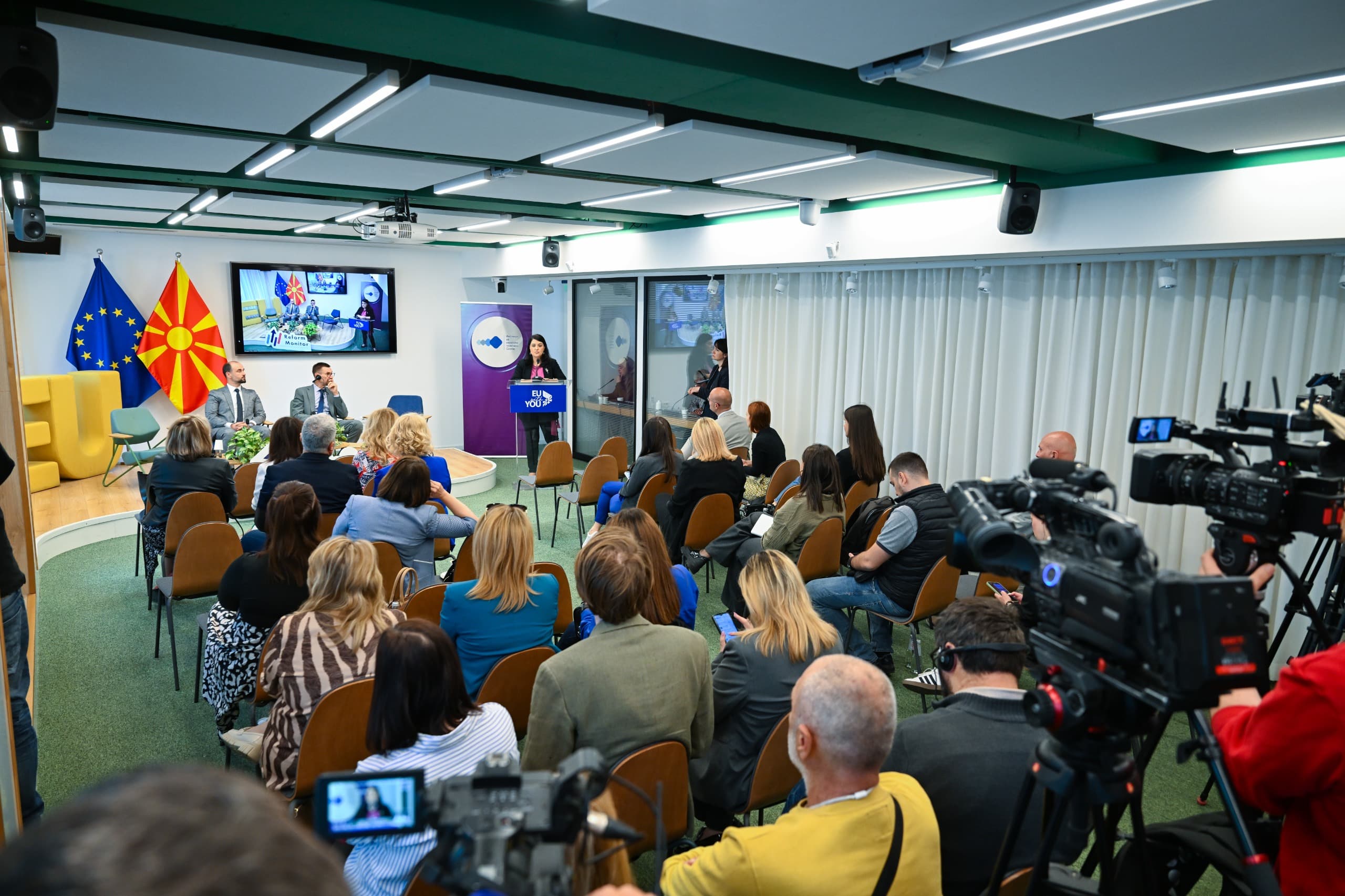
At Europe House in Skopje and online via Zoom, EPI organized the first meeting of the National Consultative Mechanism for the Reform Agenda (N-CoMRa) was held. This multi-sectoral mechanism is composed of civil society organizations with experience and interest in monitoring the Growth Plan, the Reform Agenda and the EU integration process.

The implementation of the Reform Agenda of North Macedonia requires an inclusive approach and active involvement of all stakeholders for the successful implementation of reforms and the advancement of the country’s economic potential. Therefore, the establishment of a platform for open dialogue and cooperation between institutions, the civil society, academia and the business community is crucial.

In this context, EPI, in cooperation with the Ministry of European Affairs (MEA), established the N-CoMRa 2024–2027 as a new national platform for structured, transparent and inclusive evidence-based dialogue. The mechanism enables the exchange of views and monitoring of the implementation of the Reform Agenda within the framework of the EU Reform and Growth Facility for the Western Balkans.

EPI’s Director, Simonida Kacarska, emphasised that the goal of the project is to establish a national mechanism for consultation with the civil society, chambers and academia:

“We hope that this is the beginning of a forum for the exchange of experiences on the new instruments of the Growth Plan. It will be one of the channels for discussion on the topics covered by the Growth Plan,” said Kacarska.

The Minister for European Affairs, Orhan Murtezani, pointed out that the mechanism enables a systemic dialogue between institutions and citizens, academia and the business communities:

“This is not just an administrative necessity, but an attempt to create a culture of reform based on trust, accountability and common goals. The aim is to turn the European perspective into reality through the rule of law, energy transition, digital transformation, human capital development and good governance – five interconnected pillars,” he said.

The Deputy Head of Mission of the EU Delegation, HE Ben Nupnau, stressed that transparency and accountability are key to successful reforms and investments:

“The assessment for the first six months is already underway, and the meeting was held in a timely manner. It is necessary for civil society organizations to get involved and monitor the process to ensure that everything is going as it should,” said Nupnau.
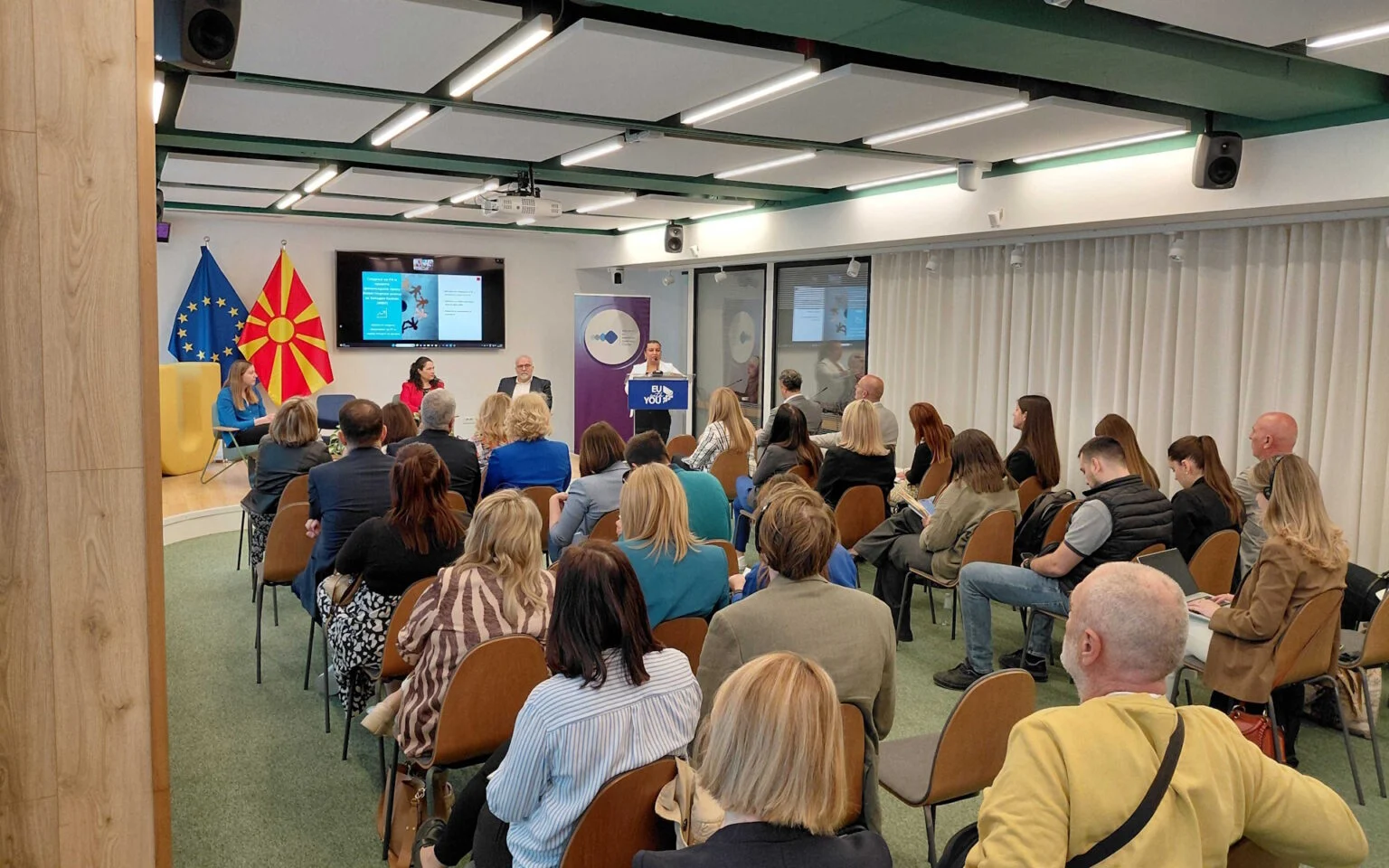
In the working part of the meeting, Fikrija Tair-Selmani from EPI presented the project “WB Reform and Growth Monitor” and the role of the N-CoMRa in its implementation. Dragan Tilev and Hristina Koneska-Beroska from MEP presented the activities of the ministry and the responsible institutions in the context of the Reform Agenda.

Other members of the N-CoMRa also presented their activities related to the Growth Plan and the Reform Agenda: the Prespa Institute, the Institute for Democracy “Societas Civilis” – Skopje, the Metamorphosis Foundation and Reactor.
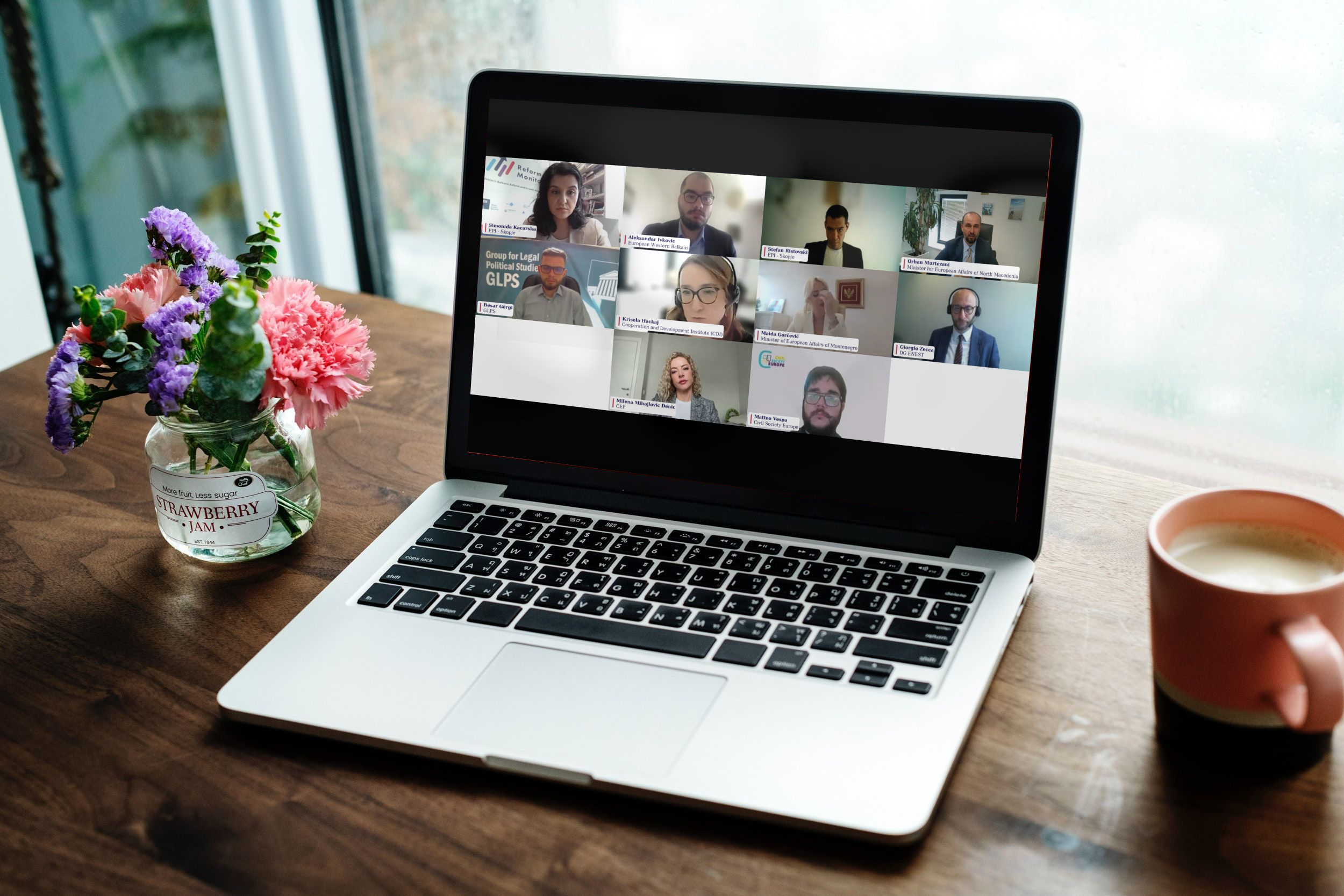
Western Balkans Reform and Growth Monitor Project Officially Launched

More than 180 participants from across the Western Balkans and the European Union joined the official launch of the WB Reform and Growth Monitor Project, a three-year regional initiative implemented by the Think for Europe Network and led by the European Policy Institute – Skopje (EPI) with financial support from the European Union. The project supports structured stakeholder engagement in the implementation of the national Reform Agendas under the EU’s Growth Plan for the Western Balkans (GPWB).

Opening the event, Simonida Kacarska, Director of EPI, emphasized the collaborative nature of the initiative:

“This launch event aims to showcase what we have done so far, what is the focus in the next 30 months, and how we can foster partnerships—with institutions, civil society organizations, the European Commission, and other regional partners.”

Representing the European Commission’s DG ENEST, Olivier Lanoo, elaborated on the goals of Pillars 1 and 2 of the Growth Plan:

“Pillar 1 is about gradual integration of the region into the EU, covering priorities such as free movement of goods and digital market access. Pillar 2, on the other hand, focuses on creating a competitive and integrated regional market.”

Giorgio Zecca, Acting Head of Sector at DG ENEST, emphasized the role of civil society and transparency:

“The regulation explicitly states that the involvement of civil society organizations and main stakeholders is a guiding principle. We are committed to ensuring this happens throughout implementation.”

In a strong endorsement of the initiative, two national coordinators for the Reform Agendas provided remarks. The Minister for European Affairs of North Macedonia, Orhan Murtezani and the Minister of European Affairs of Montenegro, Maida Gorčević shared their views.

“Clarity in reform monitoring is not a technical issue, but a strategic necessity… The Reform and Growth Monitor offers the possibility to integrate evidence-based reform tracking into policy planning, funding decisions, and accountability mechanisms” said  Orhan Murtezani, Minister for European Affairs of North Macedonia.

He added that the national Reform Agenda reflects “a nationally driven platform of transformation,” grounded in consultation with civil society, line ministries, and development partners.

Maida Gorčević, Minister of European Affairs of Montenegro, praised the project’s timing and impact:

“Inclusiveness is not just a formality. It ensures expertise, strengthens institutions, and enhances predictability in managing EU funds.”

She also announced the planned establishment of a formal oversight committee that will include civil society, academia, and the expert community.

Stefan Ristovski, Lead Researcher on the project, presented the project’s goals and the new platform www.reform-monitor.org:

“The project is built around four pillars: monitoring, national consultation mechanisms, re-granting, and strategic communication… We aim to provide regular updates, comparative assessments, and data-based tools to track the implementation of reforms and conditionalities.”

The “RA Talks” panel, moderated by Aleksandar Ivković from European Western Balkans, brought together key voices from the region and the EU

Milena Mihajlović Denić, Programme Director at CEP (Serbia), emphasized the complexity of monitoring, stating that the reform agendas vary, not only in content, but also in methodology.

“The reform agendas vary not only in content but in methodology. It will be challenging to compare, but we are prioritizing reform areas that can offer regional benchmarks.”

Besar Gërgi, Country Researcher for Kosovo at GLPS, explained that the government cannot implement all the reform steps alone.

“The government alone cannot implement 111 reform steps. Civil society has a crucial role, yet we were not properly consulted in the design phase. We hope the implementation phase will bring more opportunities.”

Krisela Hackaj, Executive Director of CDI (Albania), shared encouraging news coming from Albania.

“The Albanian government has now included our recommendation to create an inclusive monitoring committee—this is a significant step forward.”

She added that to have a real dialogue, the civil society needs data and that’s why the reform trackers are important.

Matteo Vespa, Policy and Project Officer at Civil Society Europe, offered comparative insights from the EU’s Next Generation EU experience.

“Involvement of civil society in the EU’s national recovery plans was often promised but rarely delivered. The Western Balkans can do better—by building on structured models like the partnership principle from cohesion policy.”

The WB Reform and Growth Monitor project will support civil society in all six Western Balkan countries to engage in evidence-based monitoring, dialogue, and regional cooperation. Its goal: to ensure that reforms funded through the EU’s €6 billion Reform and Growth Facility are effective, inclusive, and transparent.


CALL FOR APPLICATIONS for expert/s for the Development of a Monitoring Methodology for WBIF-Funded Projects

The Think for Europe Network (TEN), under the regional project “WB Reform and Growth Monitor” funded by the European Commission, invites qualified expert/s to apply for the development and support of a methodology to monitor the implementation of strategic projects financed under the Western Balkan Investment Framework (WBIF), financially supported by the Reform and Growth Facility (RGF).
Scope of Work and Key Responsibilities
  • Design a Draft Monitoring Methodology: Develop a comprehensive methodology for monitoring WBIF-funded strategic projects, incorporating tools, indicators, templates, and a gender-sensitive framework.
  • Facilitate Consultations: Support consultations with stakeholders and refine the methodology based on feedback received.
  • Guide Piloting Process: Assist in the piloting of the methodology and ensure that findings are integrated into the first deliverable: WBIF Projects Updates.
  • Finalize Methodology Booklet: Prepare a finalized methodology booklet, including developed practical tools and templates.
  • Contribute to Reports: Provide input and review national and regional reports to ensure consistency with the established methodology.

For more details, please find the Terms of Reference (ToR).

ELIGIBILITY: Applications may be submitted:

  • Individually, or
  • As part of a team of two experts

REMUNERATION:

The fee for this position is 5,250 EUR gross, covering 15 working days. Payment will be made in three instalments, as outlined in the ToR.

APPLICATION PROCEDURE:

Interested applicants should submit their applications to [email protected] no later than May 15, 2025, with the subject line: “Application for Expert/s for the Development of a Monitoring Methodology for WBIF-Funded Projects.”

REQUIRED DOCUMENTS:

  • Detailed resume (biography) in English:

A comprehensive CV outlining relevant professional experience and qualifications, as specified in the ToR. If applying as a team, a separate CV must be submitted for each team member.

  • Overall work plan:

A concise plan detailing the proposed implementation of the assignment. For team applications, the work plan should clearly indicate the division of tasks among team members. It must also include a breakdown of the 15 working days across the tasks and deliverables outlined in the ToR.

  • Concept note on methodology development (maximum 2 pages):

A brief description of the proposed organization and approach for developing the monitoring methodology, highlighting the key steps, methods, and tools to be applied.

  • References to previous work:

A selection of three relevant written outputs (e.g., academic publications, research studies, policy papers, or analytical reports) that demonstrate the applicant’s professional expertise and experience. In the case of a team application, each team member must submit their own individual set of three written references.

Inquiries:

For any questions or clarifications regarding this call, applicants may submit inquiries to the same email address ([email protected]) no later than May 2, 2025. Responses to all received questions will be published on the official websites of TEN (www.thinkforeurope.org) and EPI (www.epi.org.mk) on May 7, 2025.


Call for the National Consultation Mechanism for the Reform Agenda (N-CoMRA) of Kosovo

The Group for Legal and Political Studies invites all civil society organizations, interest groups, and active citizens in Kosovo to join the National Consultation Mechanism for the Reform Agenda (N-CoMRA).
🇪🇺A participatory platform to raise your voice and contribute to reform processes and Kosovo’s democratic development.
⏰Apply by May 12, 2025, by filling out the questionnaire:
This initiative is undertaken within the framework of a project titled: “WB Reform and Growth Monitor”, financed by the European Commission, and implemented by the TEN – Think for Europe Network.

Call for Expression of Interest to Join the Consultative Platform on the Reform Agenda of Albania 2024–2027

The Institute for Democracy and Mediation (IDM), as part of the regional project WB Reform and Growth Monitor implemented by the TEN – Think for Europe Network, invites civil society organizations (CSOs), chambers of commerce, social partners, academic institutions, and other interested stakeholders in Albania to express their interest in joining the Consultative Platform on the Reform Agenda 2024–2027 (RA 2024–2027).
The N-CoMER platform serves as a consultative forum that promotes structured, inclusive, and evidence-based dialogue between public institutions and non-governmental stakeholders — including CSOs, business representatives, and academia — focused on the implementation and monitoring of Albania’s Reform Agenda. This initiative operates within the context of the EU’s Reform and Growth Facility for the Western Balkans.
The platform is open to all non-state actors with relevant experience or interest in the areas of reform implementation, Growth Plan monitoring, and/or EU integration. Members are expected to contribute constructively and adhere to the principles of transparency, inclusiveness, and open dialogue.
To join the platform, please complete the application form at the following link no later than May 16, 2025https://forms.gle/7H1k7BVMSmuDhcPx6
For further details on the platform and participation criteria, please consult the explanatory document.
N-CoMER Albania – Call for Expression of Interest

Q&A REGARDING THE CALL FOR APPLICATIONS for expert/s for the development of a monitoring methodology for WBIF-funded projects

Answers to the questions regarding the Call for expert/s to develop a monitoring methodology for WBIF-funded projects.


Download

Advancing Coordination for Reform Monitoring: Outcomes from the Second Intersectoral Working Group Meeting in Serbia

The second meeting of the Intersectoral Working Group for Reform Agenda Monitoring, and the first held within the framework of the WB Reform and Growth Monitor project as a national consultation mechanism, marked important steps forward in operationalising the N-CoMRA platform in Serbia. Participants agreed on the process for forming thematic subgroups based on existing NCEU working groups, supported by transparent coordination, inclusive outreach, and a shared understanding of expected contributions for the upcoming monitoring cycle.

Key-takeaways-IWG-Online-meeting_08.04

[Summary of the project] WB Reform and Growth Monitor

The overall objective of this action is to enable civil society organisations (CSOs) in the Western Balkans (WB) to actively contribute to the design and credible implementation of reforms related to the four pillars of the Growth Plan for the WB.

WB-Reform-and-Growth-Monitor_summary-of-the-project_eng

Summary of the project in English

Summary of the project in Macedonian

Summary of the project in Albanian

Summary of the project in Serbian

Summary of the project in Montenegrin