Montenegro Reform Agenda – Accumulation of Obligations and Unpaid Funds

So far, Montenegro has withdrawn just over one third of the funds that were available for the successful implementation of the Reform Agenda. Reports by the European Commission point to unreliable reporting and slow progress in meeting targets, while measures “on hold” continue to accumulate.

Although the disbursement of the first and second tranches of the Reform Agenda has been proclaimed a success by our officials, European Commission reports highlight worrying problems regarding the accuracy of government reporting, the accumulation of unimplemented reform steps, and the fact that we have so far managed to draw only slightly more than one third of the available funds, the payment of which is conditional on the implementation of reforms.

Out of 25 reform steps from the Reform Agenda that were supposed to be implemented by June this year, the Government claims that 17 have been fully implemented, while the European Commission states that only 12 steps have been completed.

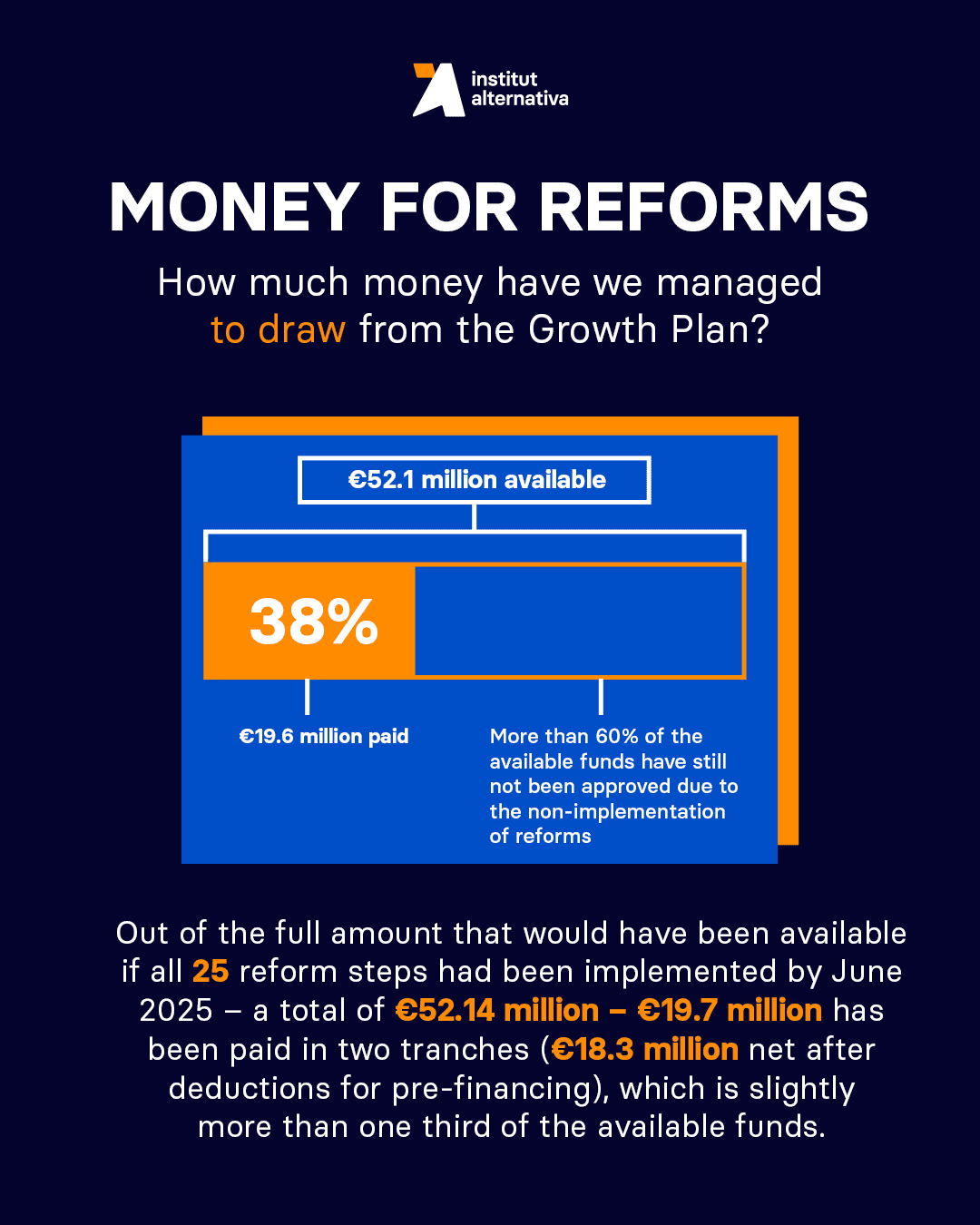
This also affects the funds withdrawn – out of the full amount that would have been available had all 25 reform steps been implemented – a total of €52.14 million – €19.70 million gross has been paid, or €18.26 million net after deductions for pre-financing. This represents only about 38% of the available funds.
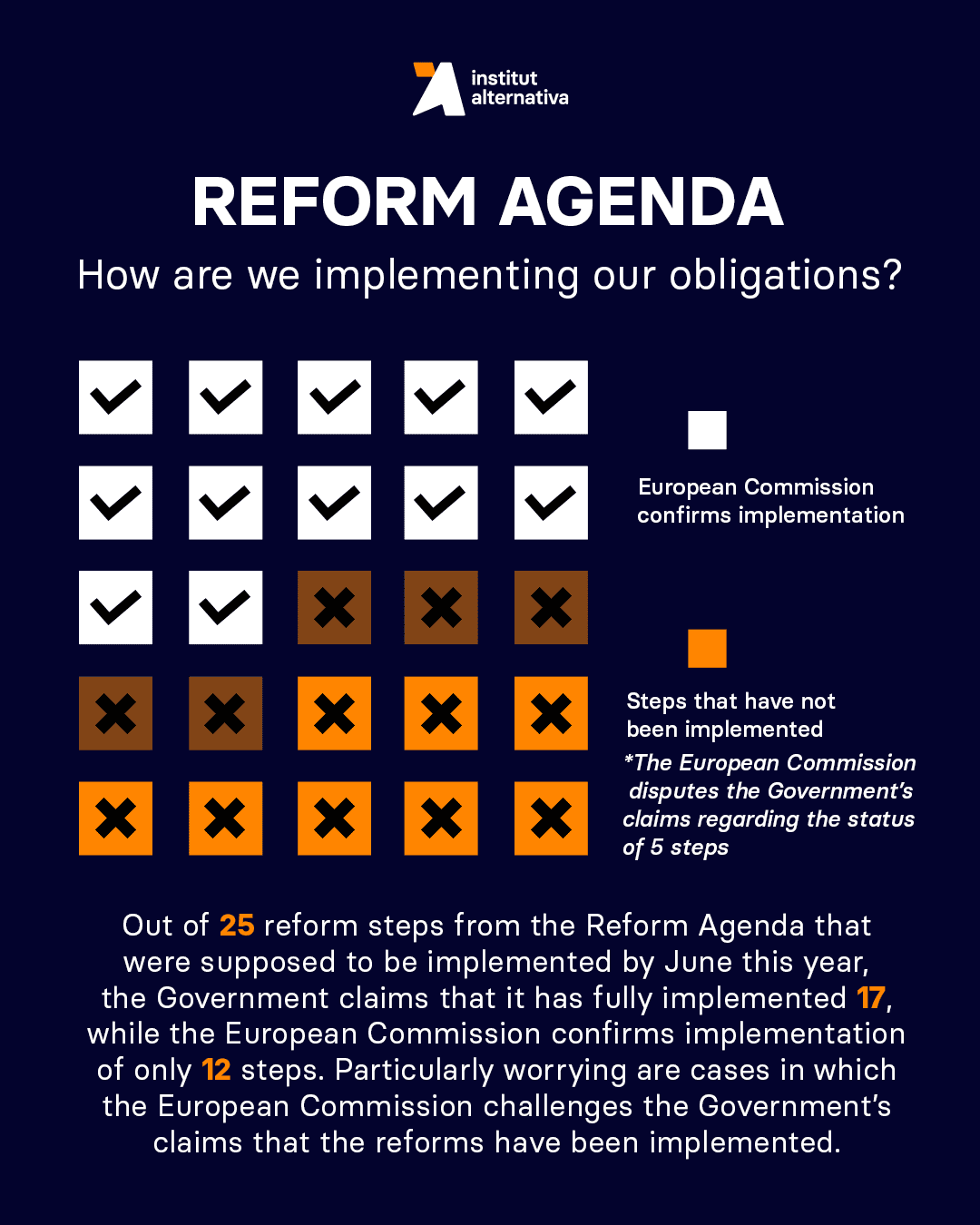
Particularly worrying are cases where the European Commission’s assessment does not align with the Government’s evaluation of the level of reform implementation.A good example of the disagreement between the Government and the European Commission is the reform step related to connecting the Special State Prosecutor’s Office (SSPO) and granting access to the databases of institutions it cooperates with, the completion of which would bring €2.1 million. The Government lists this measure as fully completed, while the European Commission assesses that the measure has not been implemented because three key databases are still not directly accessible to the SSPO: the Tax Administration’s records of issued and received invoices of legal entities; data from the Central Bank on indebtedness, transactions, and account blockages; as well as transaction data available to the Central Bank and historical cadastral data from the Real Estate Administration.

In other words, the Government officially claims that full compliance has been achieved, while the European Commission, through its detailed review, refutes the Government’s claims and, accordingly, only partially approves the disbursement of funds. A similar pattern appears in steps related to energy, digitalization, the rule of law, and corporate governance. In the same way, disagreements have arisen regarding the assessment of the fulfillment of measures for a total of 13 reform steps (out of 25 in total), for which the Government claims full or partial implementation, while the European Commission, through analysis of the submitted evidence and its assessment, concludes that they have not been achieved.The discrepancy comes down to the same rule – the European Commission requires thoroughly proven functionality and maintains the assessment “not achieved,” resulting in partial payments that are significantly below the available amount. These cases precisely explain why only part of the funds from the Growth Plan has been withdrawn so far.
The funds that have not yet been paid are not lost, as there is a one-year “grace period” during which they can still be withdrawn if the reforms are implemented. However, it should be borne in mind that by December of this year an additional 32 steps must be implemented, potentially bringing €83.4 million. Therefore, in addition to the unfinished obligations carried over since December last year (a total of 13 measures), by the end of the year we also have 32 new measures for which we will have to report to the European Commission on what has been done. The accumulation of obligations in the first year of implementing the Reform Agenda testifies to a lack of capacity and insufficient commitment of the competent institutions to implement the reforms they themselves proposed within the defined deadlines.

Marko Sošić
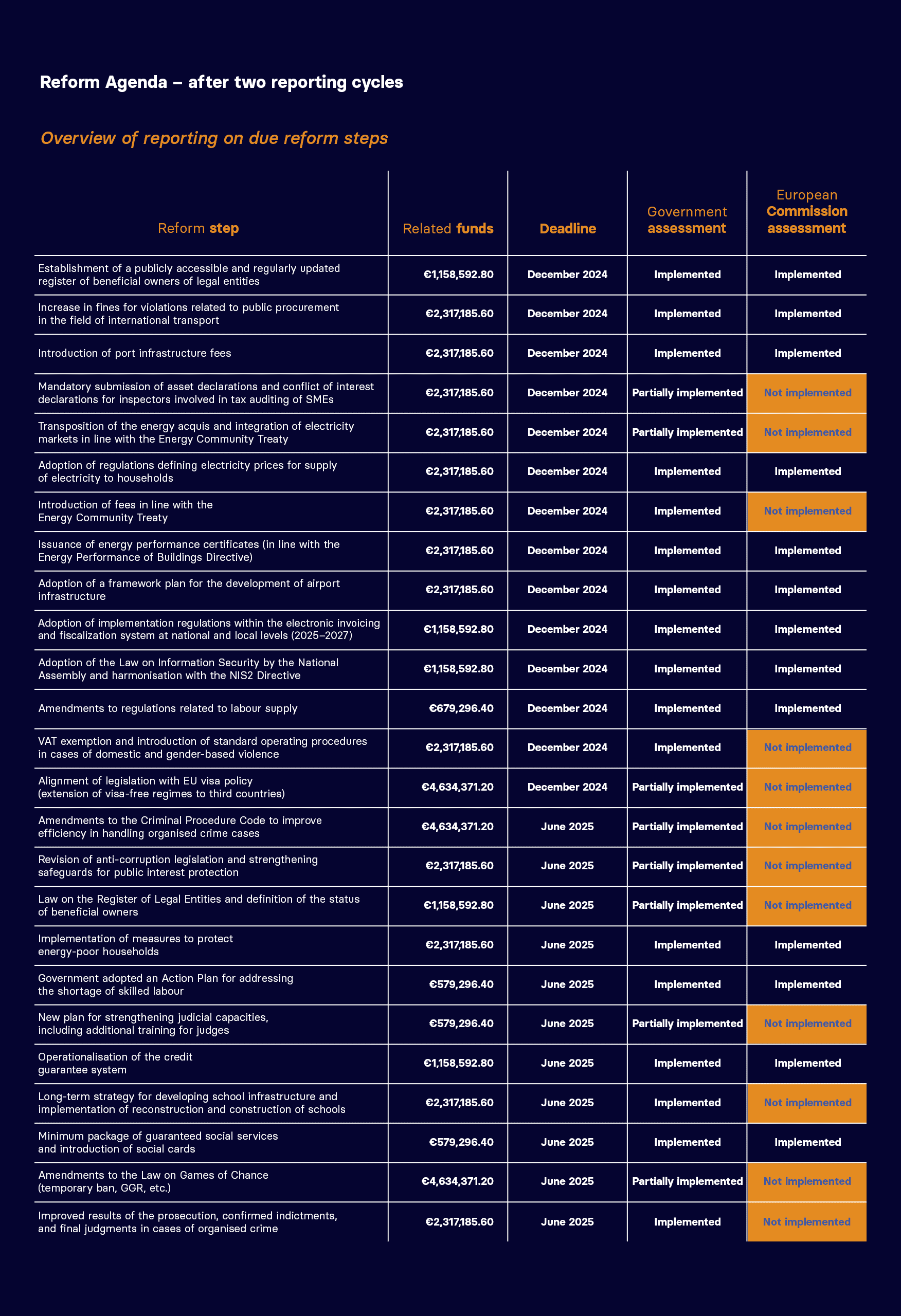
Photo: Gemini

[Video] Reform and Growth Facility: A new chapter for the Western Balkans

EC approves second release of funds for Albania, Montenegro and North Macedonia under the Western Balkans Growth Plan

On 16 October 2025, the European Commission published the second implementing decision for the release of funds to Albania, Montenegro, and North Macedonia under the Reform and Growth Facility for the Western Balkans, part of the broader Growth Plan.

The Commission’s decisions are based on evaluations of compliance with political preconditions, macro-financial stability, and specific reform commitments outlined in each country’s Reform Agenda. The release follows positive assessments of reform progress and macroeconomic conditions in the three countries, and partial implementation of specific reform steps under the Reform Agendas.

The Commission’s implementing decision approving release of funds to Albania, Montenegro and North Macedonia under the Reform and Growth Facility for the Western Balkans is avaliable here.

Albania

The European Commission found that  21 out of the 41 payment conditions related to the reform steps as set in its request and in its Reform Agenda are fulfilled by Albania. With that, the country will receive its first release of €99,323,541.9 net (post-pre-financing clearance): € 28,504,617.19 in non-repayable grants and € 70,818,924.71 in loans, with 34.75% (€ 24,609,576.34) allocated to the Western Balkans Investment Framework (WBIF). This disbursement comes in recognition of Albania’s progress on key governance and economic reforms, including public administration reform, judicial efficiency, and digitalisation of public services. Specific projects under WBIF will focus on enhancing sustainable transport networks and clean energy initiatives.

The Assessment of the Conditions for Payments is available here.

Montenegro

The European Commission found that  5 out of 18 payment conditions related to the reform steps as set out in its second request for disbursement are fulfilled by Montenegro with a deadline due June 2025. In total, Montenegro fulfilled 12 reform steps so far. With that, the country will receive its second release of funds of € 8,083,884.46 net (post-pre-financing clearance): € 2,319,973.97 in non-repayable grants and € 5,763,910.49 in loans, with 34.75% (€ 2,002,958.90) allocated to the Western Balkans Investment Framework (WBIF). 

This release follows the country’s successful implementation of reforms in public sector transparency, digital transition, and energy efficiency. Notably, Montenegro has improved the accessibility of data on State-Owned Enterprises (SOEs) and adopted several key laws aligned with EU directives, such as the Law on Information Security in line with the NIS2 directive. 

The Assessment of the Conditions for Payments is available here.

North Macedonia

The European Commission found that  4 of of 16 payment conditions with a deadline due June 2025 are fulfilled by North Macedonia, or in total 6 out of 21 for both semesters. With that, the country will receive its second disbursement of  €15,929,721.7 net (post-pre-financing clearance): € 4,571,631.37  in non-repayable grants and € 11,358,090.36 in loans, with 34.75% (€ 3,946,936.40 ) allocated to the Western Balkans Investment Framework (WBIF). The country demonstrated progress in corporate governance, internal financial controls, and justice sector reforms, although key challenges remain, particularly in the fight against high-level corruption and political interference in the judiciary.

The Assessment of the Conditions for Payments is available here.

Next Steps

The facility rewards the beneficiaries who demonstrate measurable progress in implementing their Reform Agendas in areas like the rule of law, governance, green and digital transitions, and public financial management.

Assessments for Serbia are not yet published, and the country has not yet received funding under the RGF apart from the prefinancing that beneficiaries received. In contrast, Kosovo has not yet ratified the necessary agreements, and Bosnia and Herzegovina is awaiting the Commission’s approval of its Reform Agenda.

You can find further documents and implementing decisions in the Documents section of our website.


EU Commission published its first assessments and greenlighted partial release of funds for Montenegro and North Macedonia under the Western Balkans Reform Facility

The European Commission has approved the initial release of funds under the Reform and Growth Facility for the Western Balkans, in accordance with implementing decisions adopted on 30 July 2025. These implementing decisions specify the amounts and the procedure for the release of the non-repayable and the loan support for Montenegro and North Macedonia. 

The implementing decisions are accompanied by the first formal assessments under the Reform and Growth Facility for the Western Balkans, offering detailed evaluations of the reforms implemented by North Macedonia and Montenegro. The assessment covers the payment conditions for the period since the entry into force of Regulation (EU) 2024/1449 on 25 May 2024 and until 28 February 2025, i.e the first deadlines in the respective Reform Agendas.  

North Macedonia

The European Commission found that only 2 of 5 conditions are fulfilled by North Macedonia. With that, the country will receive €7,918,701.90 net (post-pre-financing clearance): €2,272,568.64 in non-repayable grants and €5,646,133.26 in loans, with 34.75% (€1,962,031.31) allocated to the Western Balkans Investment Framework (WBIF). North Macedonia got finances for amending the corporate law to introduce new rules on the appointment of independent board members of State Owned Companies in the Business environment and private sector development policy area, as well as for the adoption of the Public Internal Financial Controls (PIFC) Law in the Governance, Public Administration Reform and Public Financial Management policy area.

The Commission’s implementing decision approving the first release of funds to North Macedonia is available at: https://reform-monitor.org/wp-content/uploads/2025/09/COMMISSION-IMPLEMENTING-DECISION-approving-the-first-release-of-funds-to-North-Macedonia-under-the-Reform-and-Growth-Facility-for-the-Western-Balkans.pdf 

The Assessment of the Conditions for Payments is available at: https://reform-monitor.org/wp-content/uploads/2025/09/ANNEX-%E2%80%93-Assessment-of-the-Conditions-for-Payments-%E2%80%93-North-Macedonia.pdf 

Montenegro

Montenegro met 7 of 14 conditions, unlocking €10,178,175.47 net (post-pre-financing clearance): €2,921,009.36 in non-repayable grants and €7,257,166.11 in loans, including 34.75% (€2,521,865.22) for WBIF projects.  Montenegro released funds by improving the transparency of the inter-governmental agreements and third-country contracts, and keeping a publicly available and up to date register of SOEs and companies with State’s participation, including municipal companies in the Business environment and private sector development policy area. They also released funds by ensuring the issuing of Energy Performance Certificates (in line with the EPBD) and amended the relevant legislation to enable effective decision-making on energy efficiency investments for homeowners as part of the Energy and Green transition policy area. In the policy area of Digital Transition they adopted the Law on Information Security in full alignment with the NIS2 directive, they adopted the National Plan for deployment of Broadband infrastructure by the Government and a plan for full deployment of transactional national and local level public electronic services 2025-2027. The final implemented reform was the appointment of the Supreme Court presiding as part of the Fundamentals and Rule of Law policy area.

The Commission’s implementing decision approving the first release of funds to Montenegro is available at: https://reform-monitor.org/wp-content/uploads/2025/09/COMMISSION-IMPLEMENTING-DECISION-approving-the-first-release-of-funds-to-Montenegro-unde.pdf

The Assessment of the Conditions for Payments is available at: https://reform-monitor.org/wp-content/uploads/2025/09/ANNEX-%E2%80%93-Assessment-of-the-Conditions-for-Payments-%E2%80%93-Montenegro.pdf 

Similar assessments are anticipated for Serbia and Albania. In contrast, Kosovo has not yet ratified the requisite loan and facility agreements essential for fund disbursement under the Facility, while Bosnia and Herzegovina lacks final approval from the European Commission on its submitted Reform Agenda.

Tracking the Reform Agenda – From Adoption to EC Assessment

The infographic “Tracking the Reform Agenda: From Adoption to EC Assessment” provides a clear and concise visual overview of the key stages in the reform process, from the initial adoption of policies to their evaluation by the European Commission. Designed to enhance understanding of this complex journey, it highlights critical milestones.

Tracking-the-Reform-Agenda_From-Adoption-to-EC-Assessment_eng

reform-monitor.org – a single, accessible point of reference for tracking the progress of the national Reform Agendas

The launch of the WB Reform and Growth Monitor on May 8th, 2025, marks a significant milestone in supporting transparency, accountability, and civil society participation in the implementation of the EU’s Reform and Growth Facility (RGF) for the Western Balkans. A comprehensive regional platform has been created to provide civil society organisations, researchers, media, national institutions, EU actors, and citizens with a single, accessible point of reference for tracking the progress of national Reform Agenda. This tool helps foster democratic oversight and public awareness in a reform process that directly links EU financial support with clearly defined reform outcomes.

The WB Reform and Growth Monitor https://reform-monitor.org/ is the project’s official website that consolidates official information, documents, and updates related to the RGF and the corresponding Reform Agendas adopted by the six Western Balkan countries. While these agendas represent one of the most structured reform frameworks introduced in the context of the EU accession process, they have so far remained difficult to navigate or understand in their entirety.

One of the most valuable features of the website is the unique region-wide database developed through careful extraction and standardisation of information from Annex 1 of each Reform Agenda. The database allows the user to explore, compare and analyse reform steps with their full description, responsible implementing institutions, timeline and deadline, and the amount of EU funding linked to their completion. Anyone using the platform can instantly filter reforms by country, policy area, deadline, or status, making it easier to identify delays, track completed reforms, and assess the overall progress made by each country under the Growth Plan.

The WB Reform and Growth Monitor project fills this gap by ensuring that all information is centralized, regularly updated, and presented in a clear and user-friendly format. Visitors to the website can find each country’s full Reform Agenda document, updates on the implementation of reform milestones, regular semestral monitoring reports, news items covering relevant developments, and a library of analytical outputs from project partners. By doing so, the platform not only enhances public scrutiny over the use of EU funds but also supports more informed engagement in reform implementation

This level of structured information is especially useful for civil society organisations who are increasingly expected to monitor the implementation of reforms and contribute with evidence-based advocacy. As part of the WB Reform and Growth Monitor project, a regranting scheme will be launched to support around 20 CSOs across the region in monitoring specific reform areas. The Monitor is designed to become their core resource—offering verified data, timelines, and documents to support their work. But beyond its utility for experts and civil society, the website also aims to raise public awareness about what the Reform and Growth Facility really means. It provides clarity on how EU support is being used, what governments have committed to do in return, and where citizens can demand accountability.

The launch of this platform is a contribution to participatory democracy in the Western Balkans. It reflects our belief that reforms are not just about ticking boxes to unlock funds, but about building better governance, delivering public goods, and bringing the region closer to EU standards. With this platform, we aim to bridge the information gap and empower a wide range of actors to engage more meaningfully in the reform process. The site is open and available to all, and we encourage organisations across the region and beyond to share it, use it, and become part of this growing effort to track and shape reform.

The WB Reform and Growth Monitor is available at https://reform-monitor.org/

We invite you to explore the site, make use of the database, follow the monitoring reports, and join us in promoting a transparent, evidence-based reform culture in the Western Balkans.

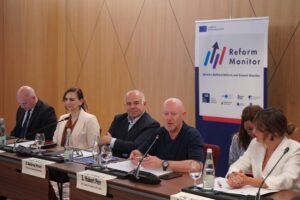
First Roundtable of the Dialogue Platform for the Reform Agenda

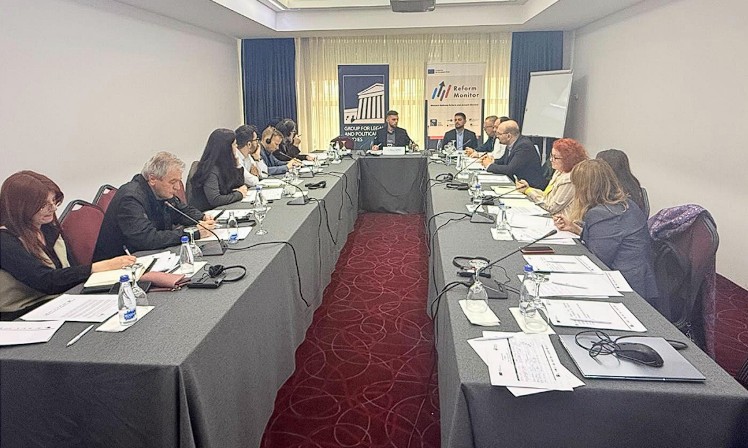
Today marked the first roundtable of the dialogue platform for the Reform Agenda, serving as a starting point for collaboration between civil society, public institutions, and the European Union to create a transparent and inclusive framework for implementing reforms.

The discussions focused on the establishment of the RGF Monitoring Committee, the ministries’ progress in carrying out planned measures, and the involvement of civic actors to guarantee a reform process with lasting impact.

Moving forward, the platform will continue to function as a structured tripartite dialogue mechanism grounded in transparency and data, ensuring meaningful participation from civil society, academia, and the private sector.

N-CoMER-Roundtable-Summary-Report-5-JUNE-1.pdf

N-CoMRA in Kosovo Holds Its First Meeting

Today on 30th of May, the National Consultation Mechanism for Reform Agenda (N-CoMRA) in Kosovo has held its first meeting. This platform aims to bring together all actors of civil society, academia, chambers of commerce and all other activists and supporters of EU integrations into a single space. It is organized by the Group for Legal and Political Studies (GLPS) and its goal is to monitor the implementation of Kosovo’s Reform Agenda.

The Reform Agenda is a complex document spanning 111 reform steps in 5 policy areas such as Governance, Public Administration Reform and Public Finance Management; Green and Digital Transition; Private Sector Development and Business Environment, Human Capital Development and Retention and Fundamentals / Rule of Law. Therefore, such a sophisticated process requires the input of not only public institutions but also civil society, academia, economic chamber for a better implementation rate.

At the start of the event a draft concept note for the N-CoMRA was presented by research fellow Besar Gërgi. Following that, present members gave numerous comments on improving the concept note and structuring the cooperation to enhance intra-civil society collaboration. Finally, N-CoMRA adopted a Declaration to call for the speedy ratification of the Facility Agreement between Kosovo and the European Union which is the prerequisite to acquire the pre-financing in the value of € 61.8 million.

We once again urge all the interesting civil society organizations to join the National  Consultation Mechanism for Reform Agenda to provide their input in order to ensure transparency in the Reform Agenda and also contribute towards a better implementation rate that would be translated into a closer integration with the EU and more funds for the citizens of the country.

Key-Takeaways-N-CoMRA-First-Meeting_Kosovo

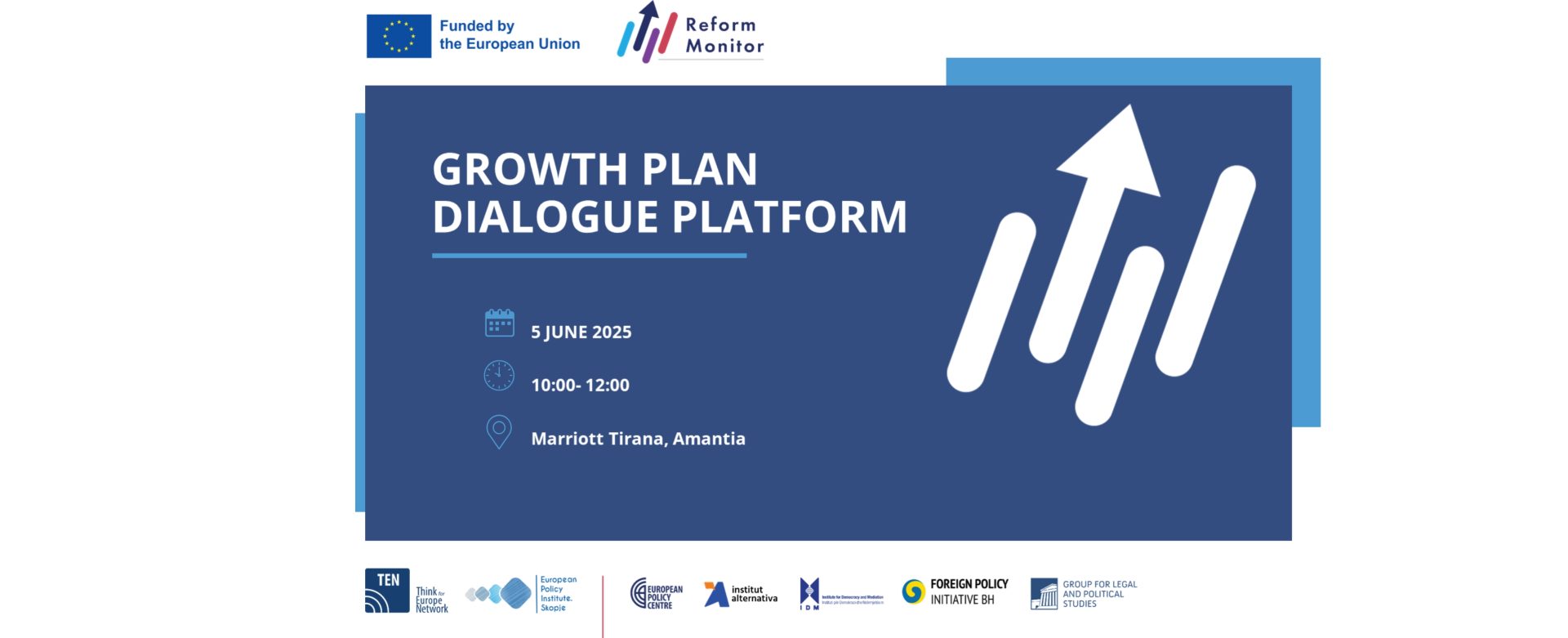
The first meeting of the N-CoMER in Albania will be on 5th of June

Since the endorsement of the Reform Agenda last November, Albania has entered a new phase of its EU integration journey—one that is not only ambitious in scope, but also unprecedented in terms of the financial and political support it has mobilized. Under the Growth Plan for the Western Balkans, Albania stands to receive up to EUR 922 million by 2027. The first pre-financing tranche of EUR 64.5 million has already been disbursed, marking a tangible start to this multi-year commitment.

Progress is gradually taking shape. In February 2025, Albania submitted its first reform progress report, now under assessment by the European Commission. If approved, it will unlock the next EUR 76.7 million. By June 2025, a further EUR 127.8 million may follow, conditional on the completion of 18 reform steps across five policy areas.

To support this process, key institutional steps have been taken. In March, Albania ratified the loan and facility agreements. In May, the Council of Ministers formalized national coordination and reporting structures to guide implementation. Within this framework, SASPAC, as National Coordinator, will jointly establish with the European Commission a Reform and Growth Facility (RGF) Monitoring Committee. This body will include civil society and business representatives and convene annually to review reform progress and promote accountability.

Yet, institutional action alone is not enough. Meaningful reform depends on the active involvement of civic actors—organizations, experts, and communities who can contribute to implementation and independent monitoring. To this end, the IDM Albania has launched N-CoMER as a platform for cross-sector dialogue. It aims to strengthen civil society’s voice in shaping inclusive and transparent reform processes.

This first roundtable will bring together civic and institutional actors as well as international partners to review the progress of the Reform Agenda, discuss the role of national consultation and coordination bodies, and explore participatory strategies for its execution.

The event will be held on the 5th of June, 10:00 – 12:00, at Marriott Tirana, Amantia.

Agenda – RA Dialogue Platform 5 June

The National Consultative Mechanism for the Reform Agenda, a forum for sharing experiences, has started its work in North Macedonia

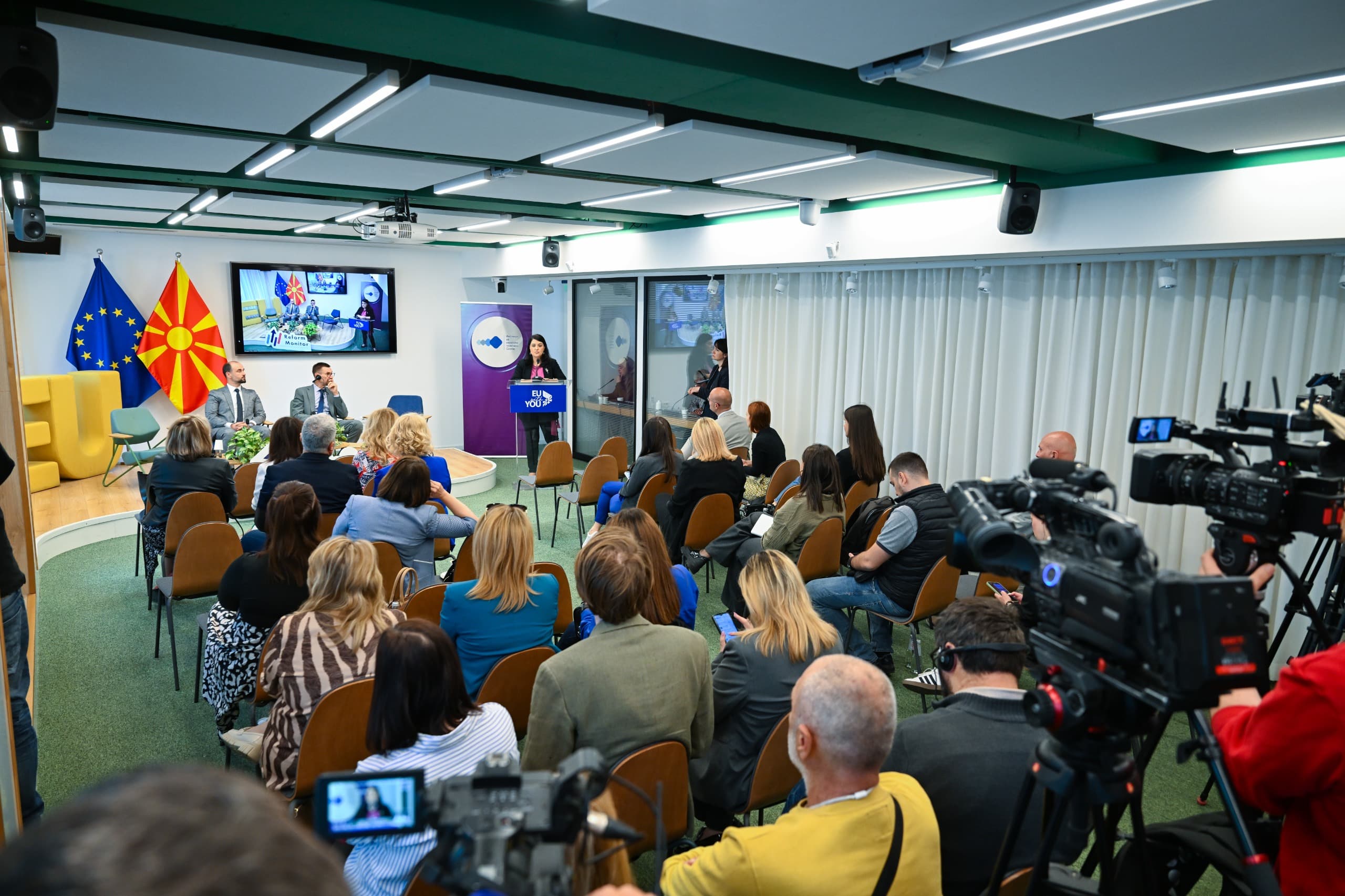
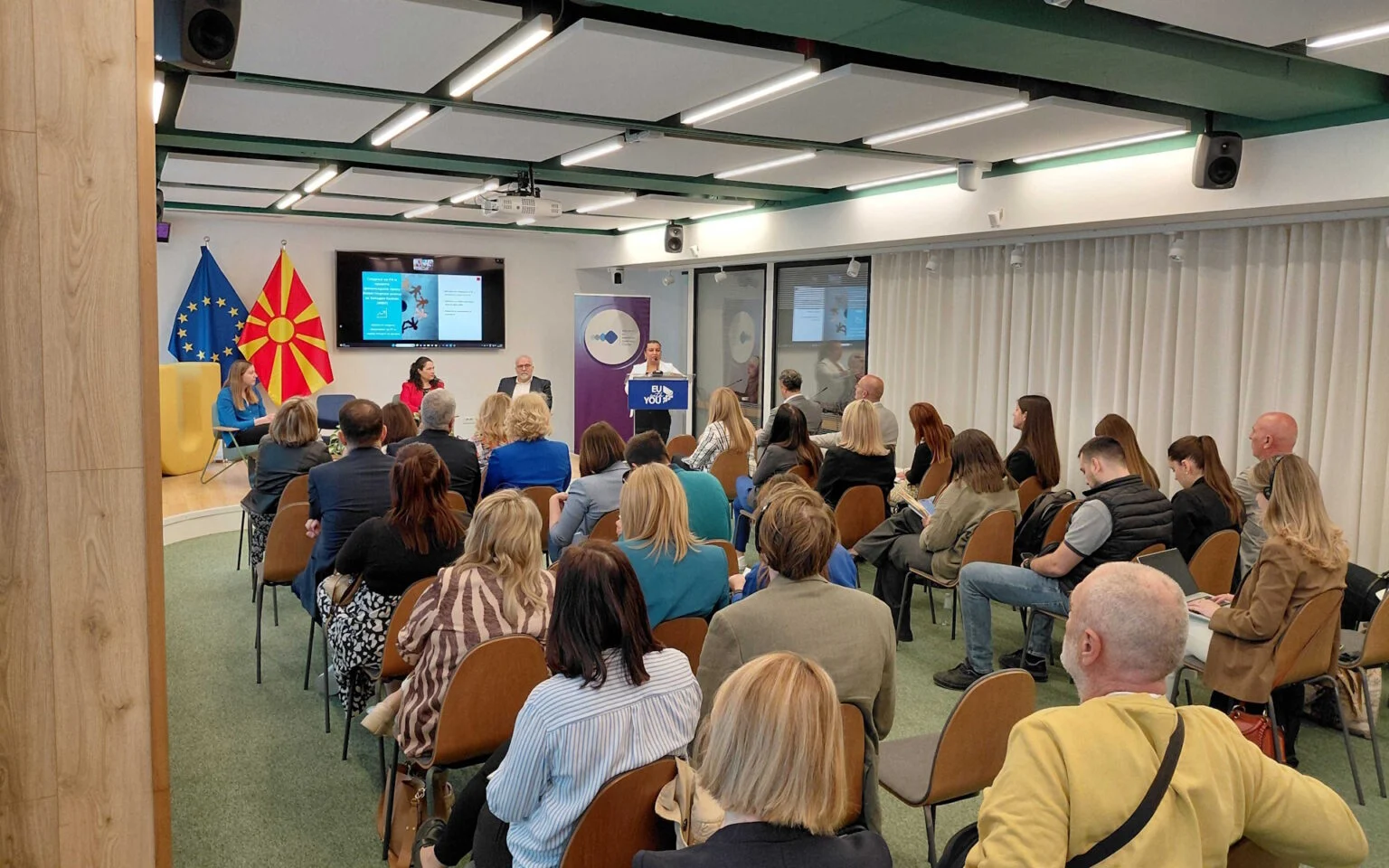
At Europe House in Skopje and online via Zoom, EPI organized the first meeting of the National Consultative Mechanism for the Reform Agenda (N-CoMRa) was held. This multi-sectoral mechanism is composed of civil society organizations with experience and interest in monitoring the Growth Plan, the Reform Agenda and the EU integration process.

The implementation of the Reform Agenda of North Macedonia requires an inclusive approach and active involvement of all stakeholders for the successful implementation of reforms and the advancement of the country’s economic potential. Therefore, the establishment of a platform for open dialogue and cooperation between institutions, the civil society, academia and the business community is crucial.

In this context, EPI, in cooperation with the Ministry of European Affairs (MEA), established the N-CoMRa 2024–2027 as a new national platform for structured, transparent and inclusive evidence-based dialogue. The mechanism enables the exchange of views and monitoring of the implementation of the Reform Agenda within the framework of the EU Reform and Growth Facility for the Western Balkans.

EPI’s Director, Simonida Kacarska, emphasised that the goal of the project is to establish a national mechanism for consultation with the civil society, chambers and academia:

“We hope that this is the beginning of a forum for the exchange of experiences on the new instruments of the Growth Plan. It will be one of the channels for discussion on the topics covered by the Growth Plan,” said Kacarska.

The Minister for European Affairs, Orhan Murtezani, pointed out that the mechanism enables a systemic dialogue between institutions and citizens, academia and the business communities:

“This is not just an administrative necessity, but an attempt to create a culture of reform based on trust, accountability and common goals. The aim is to turn the European perspective into reality through the rule of law, energy transition, digital transformation, human capital development and good governance – five interconnected pillars,” he said.

The Deputy Head of Mission of the EU Delegation, HE Ben Nupnau, stressed that transparency and accountability are key to successful reforms and investments:

“The assessment for the first six months is already underway, and the meeting was held in a timely manner. It is necessary for civil society organizations to get involved and monitor the process to ensure that everything is going as it should,” said Nupnau.

In the working part of the meeting, Fikrija Tair-Selmani from EPI presented the project “WB Reform and Growth Monitor” and the role of the N-CoMRa in its implementation. Dragan Tilev and Hristina Koneska-Beroska from MEP presented the activities of the ministry and the responsible institutions in the context of the Reform Agenda.

Other members of the N-CoMRa also presented their activities related to the Growth Plan and the Reform Agenda: the Prespa Institute, the Institute for Democracy “Societas Civilis” – Skopje, the Metamorphosis Foundation and Reactor.