[Podcast] Navigating the Growth Plan for the Western Balkans

🎙️ In our latest episode of the Western Balkans Reform and Growth Podcast, we are joined by Mr. Matteo Bonomi, senior fellow at the Istituto Affari Internazionali. In our talk we focus on the robustness of the EU’s Growth Plan for the Western Balkans barriers to single market integration, the role of regional cooperation, financial support adequacy, and future directions for reform.

🗣️ Our guest shares perspectives on the EU Growth Plan, identifying areas for further development and outlining considerations for a more ambitious approach to EU integration.

CSOs and Institutions discussed the Reform Agenda and the Growth Plan in Montenegro

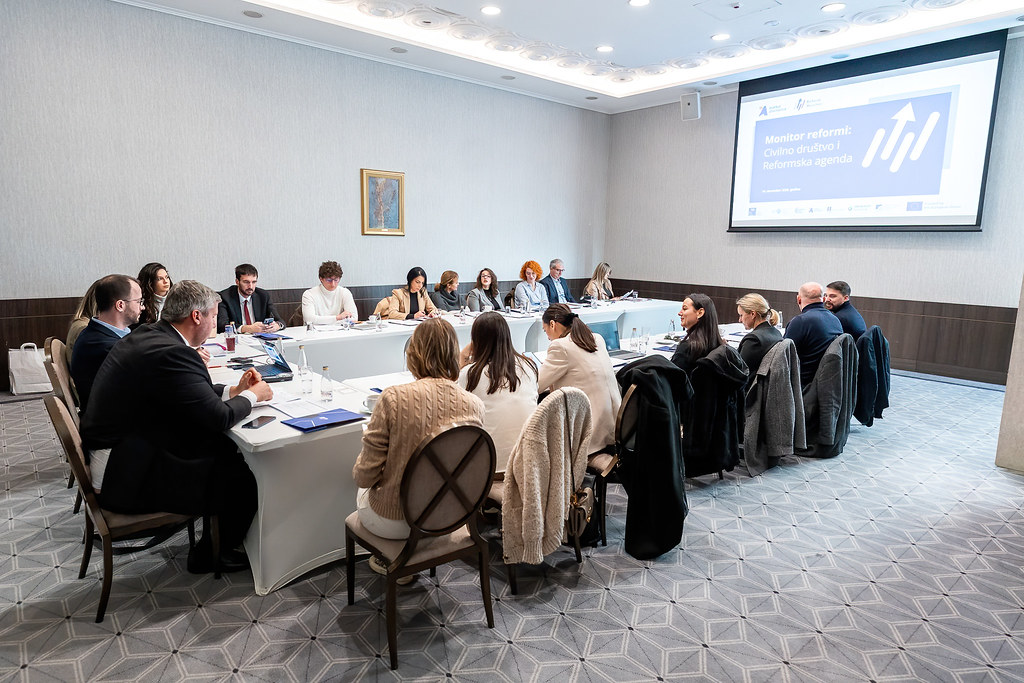
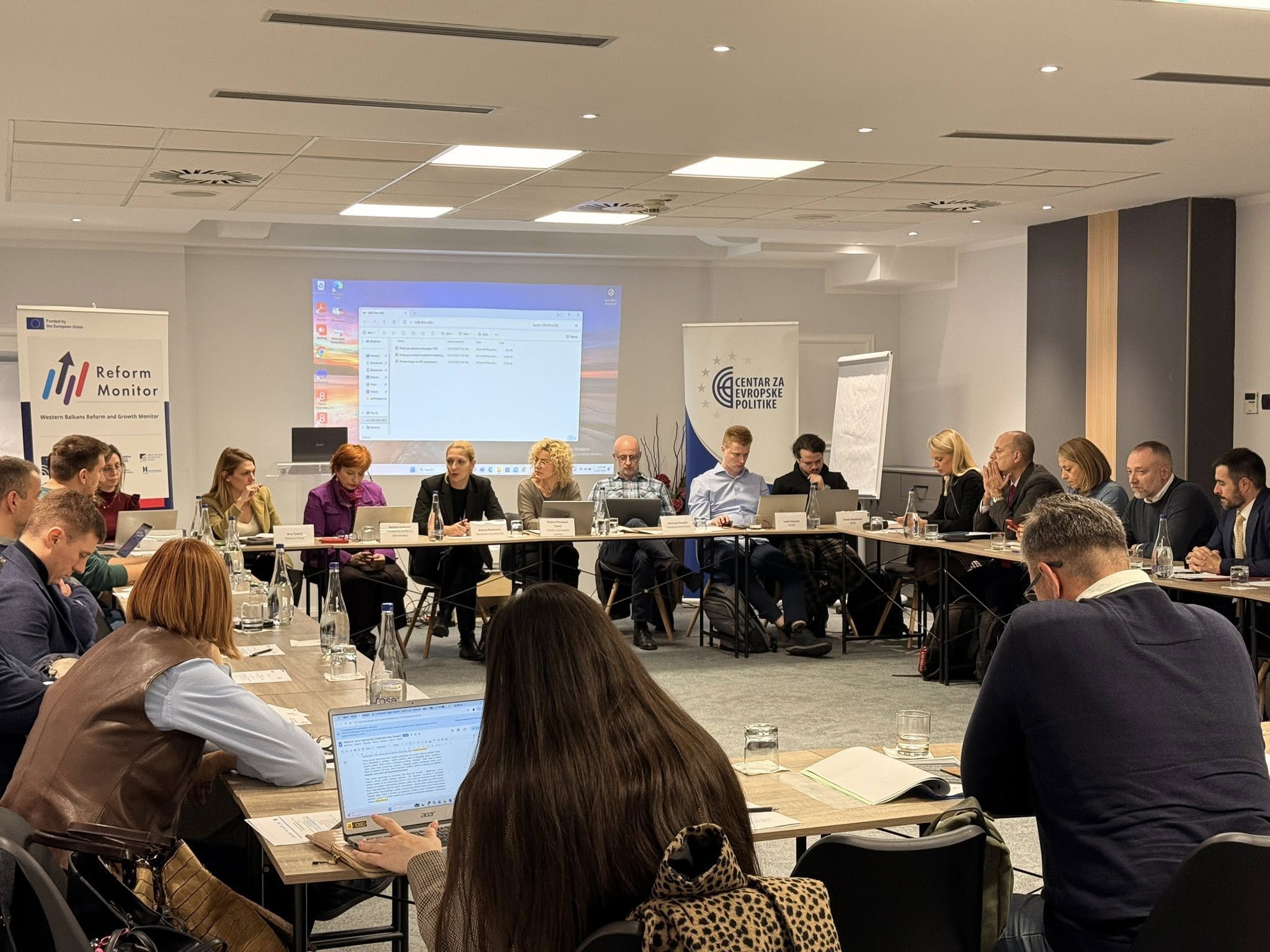
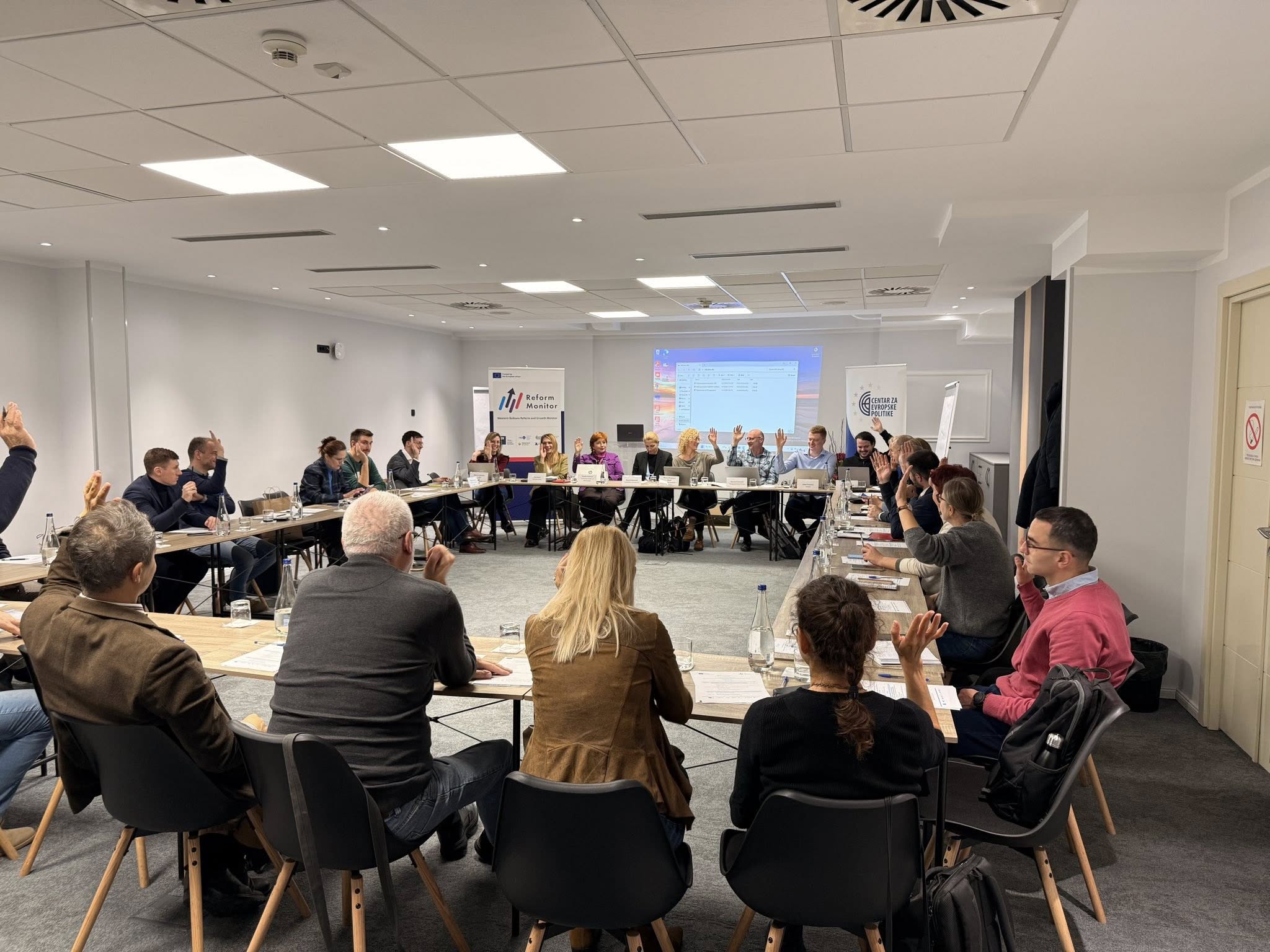
The Institute Alternative organised a meeting on Wednesday, 10 December, dedicated to the implementation of the Reform Agenda 2024–2027 and the Growth Plan for the Western Balkans. The meeting brought together representatives of key institutions responsible for implementing reform measures, as well as representatives of civil society.

Participants included representatives of civil society and institutions coordinating the implementation of the Reform Agenda. The aim of the meeting was to present priorities and challenges in implementing reform steps and to consider ways in which reform processes can most effectively respond to the needs of citizens and the economy. Participants also discussed mechanisms for monitoring the implementation of the Reform Agenda, as well as the dynamics of withdrawing funds available through the Growth Plan for Montenegro. To date, Montenegro has prepared two semi-annual reports on the implementation of a total of 25 reform steps, of which the European Commission has confirmed the implementation of 12. It was noted at the meeting that preparation of the third report is underway, covering 32 new reform steps planned for implementation by December 2025, which will be reported to the European Commission by mid-January.

Žana Jovanović, Head of the Directorate for the Management Structure at the Ministry of Finance, explained details related to financial management, the funds received through the fulfillment of reform steps, and the way in which the Ministry of Finance prepares payment requests. The discussion also covered the preparation of the budget for the following year and the manner in which funds needed for implementing reform steps are planned within the individual financial plans of budget users.

Bojan Vujović, Director General of the Directorate for Coordination of EU Financial Support at the Ministry of European Affairs, answered questions related to challenges in coordinating the implementation of the Reform Agenda, cooperation with representatives of the European Commission, and the way in which the understanding of certain reform steps and activities changes during the course of implementation. The practice of regular meetings between representatives of the European Commission and the Government regarding the alignment of understanding of the current status of reform steps and the determination of their implementation status was also mentioned.

Marko Sošić, Public Policy Researcher at the Institute Alternative, presented findings and observations regarding specific reform measures as part of research conducted with regional partners, with a particular focus on areas where progress has been slower or where additional clarification is needed.

During the meeting, several proposals for further work were formulated. With regard to the need to strengthen transparency, it was requested that the payment requests prepared by the Ministry of Finance on the basis of materials for the semi-annual report be published, as well as the publication of the communication plan for the Reform Agenda that has already been prepared by the Ministry of European Affairs. It is also necessary to consider expanding the Supervisory Committee for the Reform Agenda to include interested representatives of civil society, beyond the already appointed permanent members. With regard to financial transparency, it was recommended to consider opening separate budgetary programs for financing the implementation of reform steps, in order to enable easier monitoring of the planning and spending of funds for this purpose. Particular emphasis was placed on the need to strengthen transparency in the component related to infrastructure projects – the way projects are selected, prepared for application, submitted to the WBIF, and how their status and financing are monitored.

The meeting represents a step toward better information sharing and greater openness toward citizens and civil society regarding the implementation of the Reform Agenda and the Growth Plan, with the aim of ensuring that reform processes deliver concrete and measurable benefits to the citizens and economy of Montenegro.

Reformska agenda i civilno društvo - Prvi sastanak

Launch of the R-CoMER: Uniting Regional Forces to Accelerate Western Balkans’ Growth and Reforms

The European Policy Institute (EPI) and the Think for Europe Network (TEN) hosted the first meeting of the Regional Consultation Mechanism  (R-CoMER) today. The online event brought together representatives from key regional organizations/institutions, such as the Regional School of Public Administration (ReSPA), the Transport Community Permanent Secretariat, the CEFTA Secretariat, and the Regional Cooperation Council (RCC), who, together with TEN explored opportunities for cooperation under the EU-funded “WB Reform and Growth Monitor” project.

Designed as an introductory and informative session, the meeting focused on presenting each organization/institution’s work related to the Growth Plan, identifying potential synergies, and outlining the project’s progress to date. Regional organizations/institutions shared their mandates under the Growth Plan and the Common Regional Market (CRM), emphasizing opportunities for collaboration such as exchanging monitoring methodologies and data. Their interventions highlighted that the project operates within a broader ecosystem of regional reforms that directly influence the pace and credibility of EU integration.

ReSPA’s contribution underscored its direct support to Reform Agenda implementation through expert missions, legislative drafting, digitalization tools, and mobility schemes that facilitate peer learning within the region and with EU Member States. Programme Manager Boris Ristović highlighted ongoing work in North Macedonia and Montenegro, including support for a new anti-corruption strategy, assistance on public salary system reforms through cooperation with Croatia, and work on cybersecurity and NIS2 preparedness. He also announced an upcoming December webinar on administrative simplification—an area closely linked to improving service delivery. Ristović expressed interest in comparing the project’s methodology with ReSPA’s activities.

RCC Senior Expert Fatmir Curri outlined RCC’s work on CRM pillars related to competitiveness, human capital, and digital transformation. He announced that RCC is finalizing an internal CRM monitoring tool, developed jointly with other regional bodies, which will break down measures into annual milestones. Curri underscored that many CRM outcomes rely on national-level progress, such as the rollout of national digital ID wallets, which are essential for a future regional digital ID system. He also noted that RCC will soon present the CRM to civil society across the region to strengthen public understanding of national and regional responsibilities, highlighting a clear opportunity for synergy with R-CoMER and the Monitor’s national consultation mechanisms.

CEFTA representative Aurelia Ieseanu presented progress in CRM pillars on trade in goods and services, including achievements on Additional Protocols and new work on e-commerce and intellectual property rights. She also noted advances in mutual recognition of conformity assessment for industrial products and efforts to remove short-term work permit requirements under Additional Protocol 6. These developments demonstrate how regional agreements can translate into practical benefits for businesses, precisely the type of outcomes the Monitor aims to assess.

Transport Community representative Elvira Kavazović highlighted the organization’s mandate to align Western Balkan transport rules with the EU acquis and stressed that economic growth and transport development must progress in parallel. She noted ongoing work on e-freight and intelligent transport systems that can modernise freight transport, reduce border delays, and support the region’s digital and green transition. The Transport Community submits annual progress reports to the European Commission and confirmed readiness to support the project with data, methodologies, and insights, strengthening the Monitor’s capacity to track connectivity reforms as indicators of competitiveness and EU market readiness.

The discussion also addressed the practical challenges of monitoring WBIF projects—an area where civil society has limited access to information and where European Commission procedures for co-financing under the Reform and Growth Facility are still being finalised. Participants noted that independent monitoring can help identify bottlenecks early and reinforce accountability on both EU and government sides.

The “WB Reform and Growth Monitor” project, funded by the European Union, aims to strengthen data-driven monitoring, institutional accountability, and public engagement in the implementation of the Growth Plan. By fostering structured cooperation with regional organizations through R-CoMER, the project contributes to advancing reforms and supporting the region’s EU integration efforts.

North Macedonia: National Consultation Mechanism Discusses Updates in Implementing the Reform Agenda 2024–2027

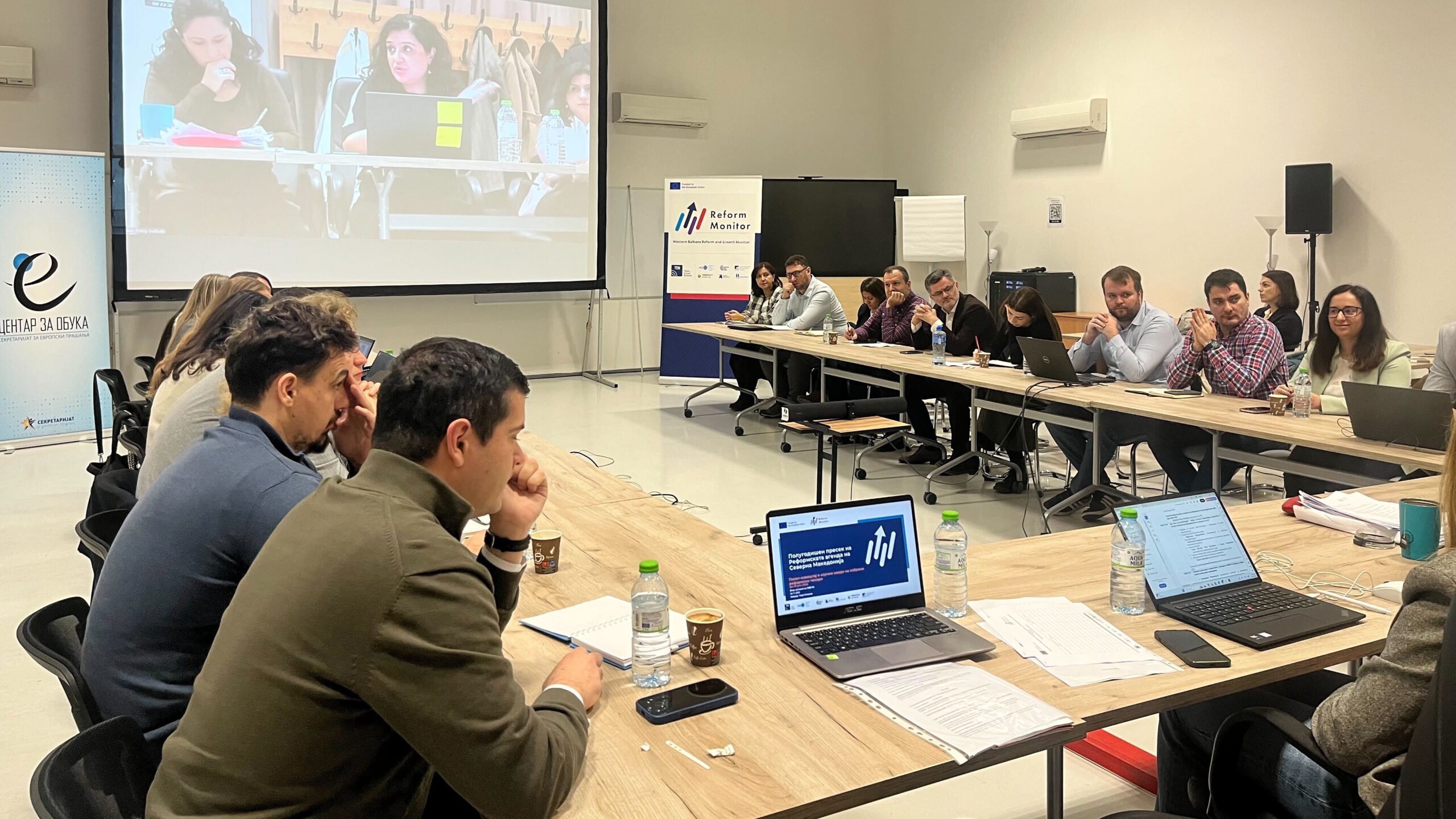
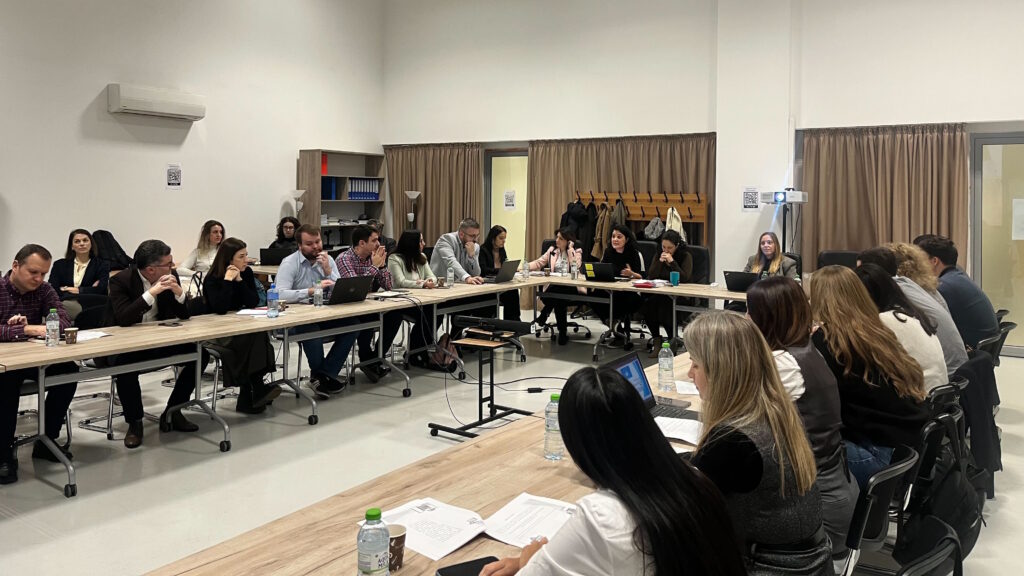
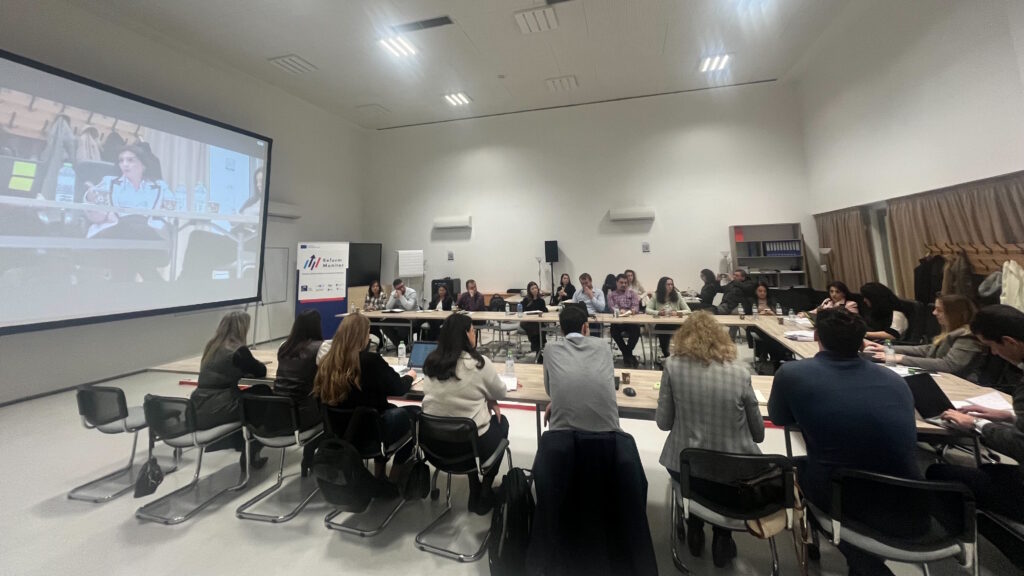
The European Policy Institute (EPI) – Skopje, in cooperation with the Ministry of European Affairs, held the second meeting of the National Consultation Mechanism for the Reform Agenda (N-CoMER) as part of the regional EU-funded project Western Balkans Reform and Growth Monitor. The meeting, organised at the premises of the Ministry, brought together representatives of national institutions (members of RA working group), civil society organisations, the private sector, and independent experts to review progress, identify obstacles, and discuss the next steps in implementing the Reform Agenda 2024–2027


Institutional Priorities, Progress and Key Challenges

The Ministry of European Affairs presented the current status of the third reporting period, highlighting that while the overall pace of implementation aligns with regional trends, institutions face tight deadlines, methodological differences in assessing qualitative indicators, and persistent coordination challenges. The Ministry underlined the need for timely reporting and stronger cooperation with civil society.

EPI shared findings from its pilot monitoring of reform delivery (December 2024 – June 2025), noting delays in publishing key documents, gaps in inter-institutional coordination, and capacity shortages in several institutions. The analysis also showed significant variations between policy areas, with energy, digitalisation, and rule of law facing the greatest bottlenecks.

The Ministry of Digital Transformation emphasised the complexity of aligning national legislation with EU requirements in cybersecurity and digital services, pointing to limited staffing and financial constraints as major barriers.

The Ministry of Energy reported substantial delays in market coupling procedures and transposition of EU regulations due to their technical nature and lengthy approval processes. Work continues on energy poverty measurement, decarbonisation plans, and the introduction of new digital services for vulnerable consumers.

The Ministry of Education outlined ongoing efforts to improve school digital infrastructure and expand dual education programmes, while the Ministry of Justice highlighted the critical need for strengthened human resources and long-term planning in the judiciary, as well as the impact of electoral cycles on legislative timelines.


Civil Society Insights

Representatives from civil society organisations stressed low public awareness of the Reform Agenda, challenges in accessing transparent data, and the need for improved quality of consultations. They also shared ongoing initiatives to strengthen public communication and parliamentary engagement regarding the reforms.

Conclusions and Way Forward

Participants agreed that administrative capacity remains the biggest obstacle to timely implementation. Strengthening inter-institutional coordination, improving transparency, and ensuring meaningful consultation were identified as priorities for the coming period.

The National Consultation Mechanism will continue to serve as a platform for structured dialogue, evidence-based monitoring, and joint problem-solving throughout the implementation of the Reform Agenda and the EU Growth Plan.

[Podcast] The Growth Plan and Performance-Based Funding in the Western Balkans

🎙️ In our first episode of the Western Balkans Reform and Growth Podcast, we speak with Mr. Dominik Hatiar, Head of Sector for the RGF at the European Commission, about how the new Reform and Growth Facility is shaping essential reforms, accelerating EU convergence, and ensuring financial assistance is tied directly to results.

🗣️ Our guest reflects on the shift from traditional, bureaucratic assistance to a more strategic, performance-based model of funding under the Reform and Growth Facility. He shares insights on how this new approach works in practice — from the implementation of reforms and transparency.

Listen to the Podcast on Spotify.

The Price of Partial Reforms: Why “Almost” Meeting EU Criteria Holds Serbia Back

For years, it seems that the Serbian Government has operated under the assumption that  being almost aligned with EU criteria should be treated as meaningful progress. This mindset has  contributed not only to the slow pace of reforms but also to the reality that, after eleven years of  accession negotiations, Serbia has opened only two clusters. Under the EU Growth Plan, however,  the habit of presenting partial fulfilment as genuine reform is becoming a structural obstacle,  especially in the Reform Agenda’s area where reforms matter the most: Rule of Law and  Fundamental Rights.  

A striking example is the reform of the Unified Voter Register. The entire process – including the  audit – was supposed to be completed by December 2024. Instead, Serbia approaches the end of  2025 with the reform still only halfway implemented. The legal framework exists, and the  composition of the audit commission is progressing, but the core element, the audit itself, has not  even begun. The Reform Agenda indeed provides a two-year grace period, meaning Serbia can still receive the funds associated with this step. Yet the fact that a reform so central to electoral integrity  and democratic legitimacy has not been prioritised for an entire year raises a deeper concern: if  even this cannot be delivered on time, what does that say about the seriousness of the overall  reform effort?  

A similar pattern is visible in the area of anti-corruption. Serbia adopted a new Anti-Corruption Strategy in July 2024 and, at first glance, appeared to fulfil its obligation by adopting the  accompanying Action Plan in December of the same year. However, the Action Plan covers only  2024 and 2025, rather than the entire duration of the Strategy, despite the Reform Agenda explicitly  requiring a full implementation cycle. The result is a reform that is presented by the Government as  “completed,” but it is substantively partial. It illustrates how institutional energy is often invested  in satisfying the appearance of compliance rather than in establishing the foundations of effective  policy.  

The case of the REM Council further reinforces this pattern. In addition to being a formal obligation  under the Reform Agenda, Serbia also committed in December 2024 – through a non-paper  submitted to Member States – to urgently complete the election of the Council as part of a broader  effort to persuade Member States to support the opening of Cluster 3. A year later, eight of the nine 

members have been elected, leaving the Council still incomplete. The process has been repeatedly  interrupted, criticised by civil society, and burdened by procedural controversies. It is an  improvement, but it is also plainly insufficient. In the logic of the Growth Plan, partial reform is simply  not reform at all.  

The only exception within this framework applies to quantitative steps – those formulated as reaching  a specific number or percentage – which may be assessed as partially fulfilled and can therefore trigger  partial disbursement, proportional to the share of the quantitative target that has been achieved. But  qualitative reforms – and most rule-of-law obligations fall squarely into this category – cannot be  treated this way. They must be implemented fully, not approximately or substantially. This is not a  procedural detail; it is the core principle that separates reforms that exist on paper from reforms that  genuinely reshape institutions.  

This accumulation of “almost reforms” now appears to be complicating the European Commission’s  assessment process. Serbia submitted its first and second payment requests in March and July 2025,  yet no decision has been issued, well beyond the usual timeframe. Part of the delay likely reflects  the Commission’s attempt to distinguish what is genuinely fulfilled from what is merely presented  as such, requiring follow-up questions and clarifications from the Government. But the unusually  long period may also indicate a deeper review – one that goes beyond individual reform steps and  examines whether Serbia continues to meet the fundamental preconditions related to democratic  institutions, rule of law, and the normalisation of relations with Pristina.  

At this moment, Serbia faces a choice. Treating EU reforms as a checklist has produced diminishing  returns. What is needed now is not more drafting, nor more announcements, but clear political will  and institutional capacity to deliver reforms in full. Partial implementation cannot restore trust,  cannot unlock credibility, and cannot bring Serbia closer to the European Union. Only genuine,  complete reforms can do that.  

Almost done is not done. And almost-membership is still not membership. If Serbia is serious about  its European future, it must demonstrate that seriousness through reforms that are implemented  fully, not symbolically, and through institutions that function in practice, not only on paper. 

Author: Marko Todorović, European Policy Centre (CEP)

Image created with Gemini

Kosovo’s Dream Year: What Could Have Been in 2025

Disclaimer: Since it is so difficult to find some positivity in the current political situation, we had to invent a parallel reality to make a comparison of what we could have had if things went smoothly. The events set out in this op-ed, sadly enough, are entirely fictional.

Dear Readers,

Happy New Year 2026!

The year that we are leaving behind was certainly memorable with many positive events that helped propel Kosovo’s EU aspirations.

In the beginning of the year, the political parties were able to quickly come to an understanding that Kosovo needs a steady executive to pursue its strategic goals, therefore they left behind their ideological and political differences and created a stable government and a functional Assembly.

Once the government was created, it immediately went ahead with the signing of the Loan Agreement from the Reform and Growth Facility, and presented it to the Parliament together with the already signed Facility Agreement. The Members of Parliament, understanding their duty to serve the European aspiration of the people and not the daily squabbles, voted in favor of the treaties almost unanimously. After some technical steps, within weeks Kosovo was allocated the pre-financing of some €61.8 million, of which some 55% were allocated to the Western Balkans Investment Framework and the rest were dedicated as direct budget support for the government. After almost two years of punitive measures, this was a very positive sign by the European Union for Kosovo.

The responsible politicians of Kosovo understood that merely declarations of commitment to the European Union are not enough. As the old saying goes, words are good, deeds are better. Therefore, the new government set out to seriously and speedily implement all the reform steps laid out in Kosovo’s Reform Agenda. As a result, until the end of this year, the Government of Kosovo successfully implemented all 40 reform steps set out for the first three semesters and as a result was allocated €300 million euros in total, after taking into account the pre-financing as well. Such a massive amount of investment spurred an impressive economic growth for Kosovo.

Such an exemplary performance from Kosovo became a prime factor in the decision of the European Council and Commission to retrieve the punitive measures introduced in June 2023. After all, it was so unfair to keep such measures against a country that had such a terrific record in the implementation of the EU oriented-reforms. Even the most vehement opponents of the withdrawal of the punitive measures were robbed of their arguments by such a performance. In fact, there is a momentum to open accession negotiations with Kosovo, but the discussions are still on-going.

Experts believe that by implementing the Reform Agenda in such a decisive manner, Kosovo undoubtedly benefitted financially, however it also improved its chances of getting into the EU. This year’s Country Report was very positive and there were improvements in the overall evaluation in the majority of the policy areas. Experts state that such a progress will help Kosovo down the line to have smoother negotiations for accession.

As you can see, Kosovo had an incredible year thanks to a responsible political class. They were able to move beyond slogans and set their differences aside to work for common good. One has to wonder how things would be if instead they stuck to their guns on minute differences and lost a whole year on fruitless debates!

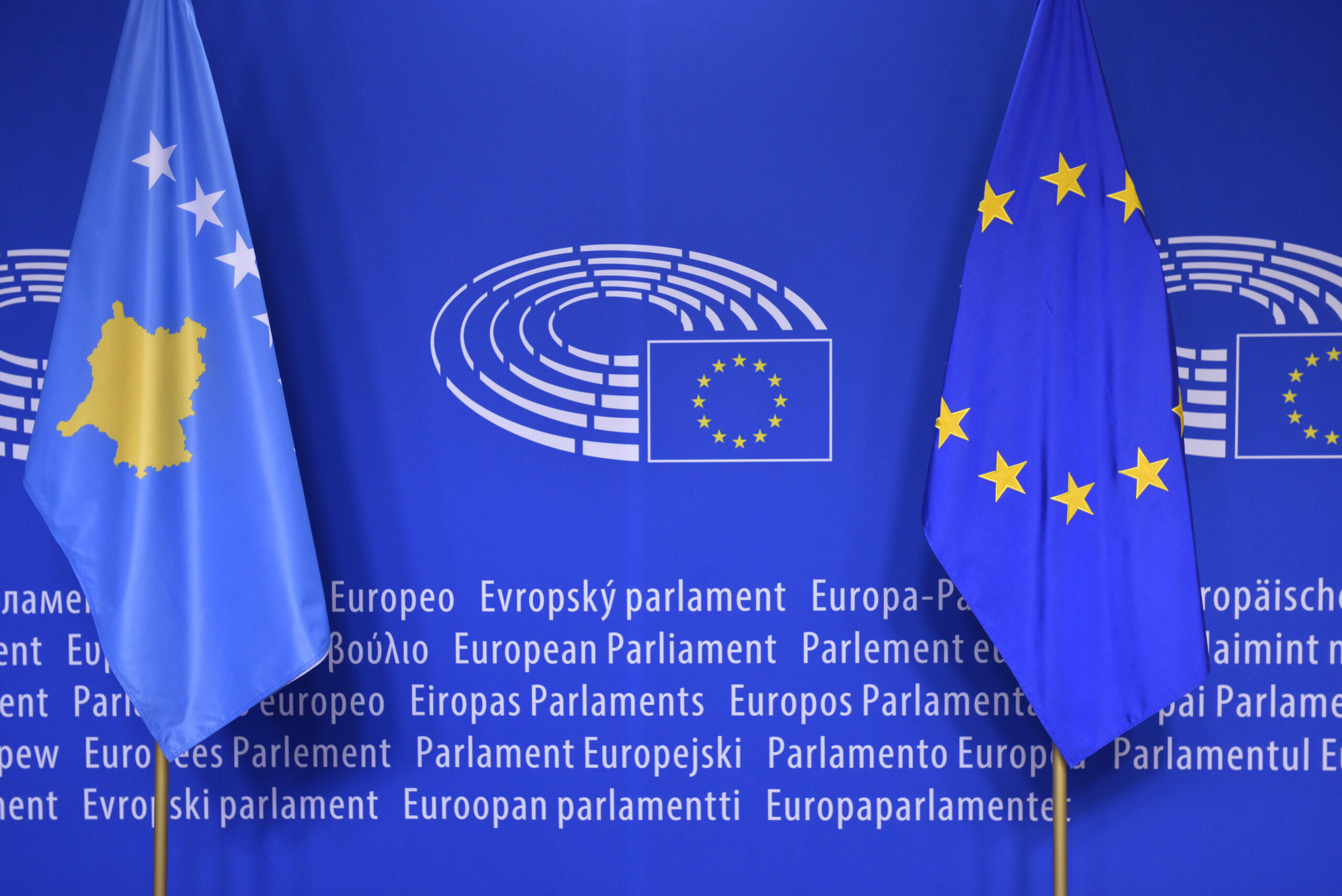
Photo: © European Union 2016 – European Parliament.

Author: Besar Gërgi, Group for Legal and Political Studies, Kosovo

First Plenary Session of Serbia’s Intersectoral Working Group Under WB Reform and Growth Monitor Project Advances EU Reform Monitoring

Yesterday, the first plenary session of the Intersectoral Working Group for Monitoring the Implementation of the Reform Agenda of the Republic of Serbia was held, organised by the National Convention on the EU (NCEU) and the European Policy Centre (CEP) within the framework of the WB Reform and Growth Monitor project.

This platform was established to ensure the active participation of civil society in the implementation and monitoring of Serbia’s Reform Agenda, through tracking progress on reform steps, providing analytical support and external monitoring, as well as assessing their impact on European integration and informing the public about the results.

In its work, the IWG will cooperate closely with representatives of the European Union and state institutions to ensure effective oversight of the implementation of this important strategic document, which is linked to EU support amounting to EUR 1.6 billion by the end of 2027.

During yesterday’s session, the IWG adopted its Rules of Procedure, while subgroup coordinators presented their areas of work and upcoming plans. The discussion focused on the report from the first meeting of the Reform and Growth Facility (RGF) Monitoring Committee.

This platform represents an important step toward strengthening the contribution of civil society, academia, and the private sector to the reform implementation process in Serbia.

Tracking the Reform Agenda – October 2025 – From Adoption to EC Assessment

The infographic “Tracking the Reform Agenda: From Adoption to EC Assessment” provides a clear and concise visual overview of the key stages in the reform process, from the initial adoption of policies to their evaluation by the European Commission. Designed to enhance understanding of this complex journey, it highlights critical milestones.

Повик за изразување интерес за приклучување кон Националниот консултативен механизам за Реформската агенда 2024-2027 (НКМ-РА) на Северна Македонија

Институтот за европска политика – Скопје (ЕПИ) како координатор на регионалниот проект „Следење реформи и раст во Западен Балкан“ кој се спроведува во партнерство со партнерите од мрежата „Мисли за Европа“ (Think for Europe Network (TEN)),  ги повикува сите заинтересирани граѓански организации (ГО), стопански комори, социјални партнери, академската заедница и други засегнати чинители во Северна Македонија да го изразат својот интерес за учество во Националниот консултативен механизам за Реформската агенда 2024-2027 (НКМ-РА). 

Што е НКМ–РА? 

НКМ-РА е национална консултативна плаформа што овозможува структуиран, инклузивен дијалог, заснован врз докази помеѓу јавните институции, ГО, стопанските комори, академската заедница, и други засегнати чинители, за спроведувањето и следењето на Реформската агенда 2024-2027 во Северна Македонија во рамки на Инструментот за реформи и раст за Западен Балкан на Европската Унија. 

Платформата е координирана од ЕПИ, а поддржана од Министерството за европски прашања, институцијата која ги координира сите активности поврзани со спроведувањето на Реформската агенда во земјата, врз основа на потпишан Меморандум за соработка со цел да се обезбеди структуриран дијалог и транспарентност, во согласност со нагласокот на Европската комисија за вклучување на граѓанските организации во реформските процеси.  

Кој може да се приклучи во НКМ-РА? 

НКМ-РА е платформа отворена за сите невладини чинители со искуство или интерес за следење на Планот за раст, Реформската агенда и/или процесите на ЕУ интеграцијата. Од учесниците во консултативниот механизам се очекува конструктивен придонес и почитување на принципите на инклузивност, транспарентност и дијалог заснован врз докази.  

Зошто да се приклучите на НКМ–РА?

НКМ–РА обезбедува простор за конструктивна соработка помеѓу државни органи и останати засегнати чинители, овозможувајќи им на членовите да придонесат кон следење засновано на докази и дискусии за реформи, како и да влијаат врз спроведувањето  на Планот за раст за ЗБ . Специфично, платформата ќе:

  • Овозможи консултации засновани на податоци и алатки за следење;
  • Поттикне меѓусекторска соработка помеѓу различни нивоа на владеење;
  • Понуди можност за градење на капацитети и поддршка за застапување;
  • Промовира транспарентност и отчетност преку објавување извештаи од состаноци и повратни информации од засегнати чинители.

Како да се приклучите?

Доколку Вашата организација сака да се приклучи во НКМ-РА, Ве замолуваме да го пополните формуларот достапен на следниот линк: https://forms.gle/mFeqyVHWdUNPsqfD9. *Доколку веќе сте се пријавиле за учество во НКМ-РА не е потребно да го правите истото повторно.

Следни чекори

Првите два состаноци од НКМ-РА се одржаа минатата година, а третиот е закажан за мај.