The Price of Partial Reforms: Why “Almost” Meeting EU Criteria Holds Serbia Back

For years, it seems that the Serbian Government has operated under the assumption that  being almost aligned with EU criteria should be treated as meaningful progress. This mindset has  contributed not only to the slow pace of reforms but also to the reality that, after eleven years of  accession negotiations, Serbia has opened only two clusters. Under the EU Growth Plan, however,  the habit of presenting partial fulfilment as genuine reform is becoming a structural obstacle,  especially in the Reform Agenda’s area where reforms matter the most: Rule of Law and  Fundamental Rights.  

A striking example is the reform of the Unified Voter Register. The entire process – including the  audit – was supposed to be completed by December 2024. Instead, Serbia approaches the end of  2025 with the reform still only halfway implemented. The legal framework exists, and the  composition of the audit commission is progressing, but the core element, the audit itself, has not  even begun. The Reform Agenda indeed provides a two-year grace period, meaning Serbia can still receive the funds associated with this step. Yet the fact that a reform so central to electoral integrity  and democratic legitimacy has not been prioritised for an entire year raises a deeper concern: if  even this cannot be delivered on time, what does that say about the seriousness of the overall  reform effort?  

A similar pattern is visible in the area of anti-corruption. Serbia adopted a new Anti-Corruption Strategy in July 2024 and, at first glance, appeared to fulfil its obligation by adopting the  accompanying Action Plan in December of the same year. However, the Action Plan covers only  2024 and 2025, rather than the entire duration of the Strategy, despite the Reform Agenda explicitly  requiring a full implementation cycle. The result is a reform that is presented by the Government as  “completed,” but it is substantively partial. It illustrates how institutional energy is often invested  in satisfying the appearance of compliance rather than in establishing the foundations of effective  policy.  

The case of the REM Council further reinforces this pattern. In addition to being a formal obligation  under the Reform Agenda, Serbia also committed in December 2024 – through a non-paper  submitted to Member States – to urgently complete the election of the Council as part of a broader  effort to persuade Member States to support the opening of Cluster 3. A year later, eight of the nine 

members have been elected, leaving the Council still incomplete. The process has been repeatedly  interrupted, criticised by civil society, and burdened by procedural controversies. It is an  improvement, but it is also plainly insufficient. In the logic of the Growth Plan, partial reform is simply  not reform at all.  

The only exception within this framework applies to quantitative steps – those formulated as reaching  a specific number or percentage – which may be assessed as partially fulfilled and can therefore trigger  partial disbursement, proportional to the share of the quantitative target that has been achieved. But  qualitative reforms – and most rule-of-law obligations fall squarely into this category – cannot be  treated this way. They must be implemented fully, not approximately or substantially. This is not a  procedural detail; it is the core principle that separates reforms that exist on paper from reforms that  genuinely reshape institutions.  

This accumulation of “almost reforms” now appears to be complicating the European Commission’s  assessment process. Serbia submitted its first and second payment requests in March and July 2025,  yet no decision has been issued, well beyond the usual timeframe. Part of the delay likely reflects  the Commission’s attempt to distinguish what is genuinely fulfilled from what is merely presented  as such, requiring follow-up questions and clarifications from the Government. But the unusually  long period may also indicate a deeper review – one that goes beyond individual reform steps and  examines whether Serbia continues to meet the fundamental preconditions related to democratic  institutions, rule of law, and the normalisation of relations with Pristina.  

At this moment, Serbia faces a choice. Treating EU reforms as a checklist has produced diminishing  returns. What is needed now is not more drafting, nor more announcements, but clear political will  and institutional capacity to deliver reforms in full. Partial implementation cannot restore trust,  cannot unlock credibility, and cannot bring Serbia closer to the European Union. Only genuine,  complete reforms can do that.  

Almost done is not done. And almost-membership is still not membership. If Serbia is serious about  its European future, it must demonstrate that seriousness through reforms that are implemented  fully, not symbolically, and through institutions that function in practice, not only on paper. 

Author: Marko Todorović, European Policy Centre (CEP)

Image created with Gemini
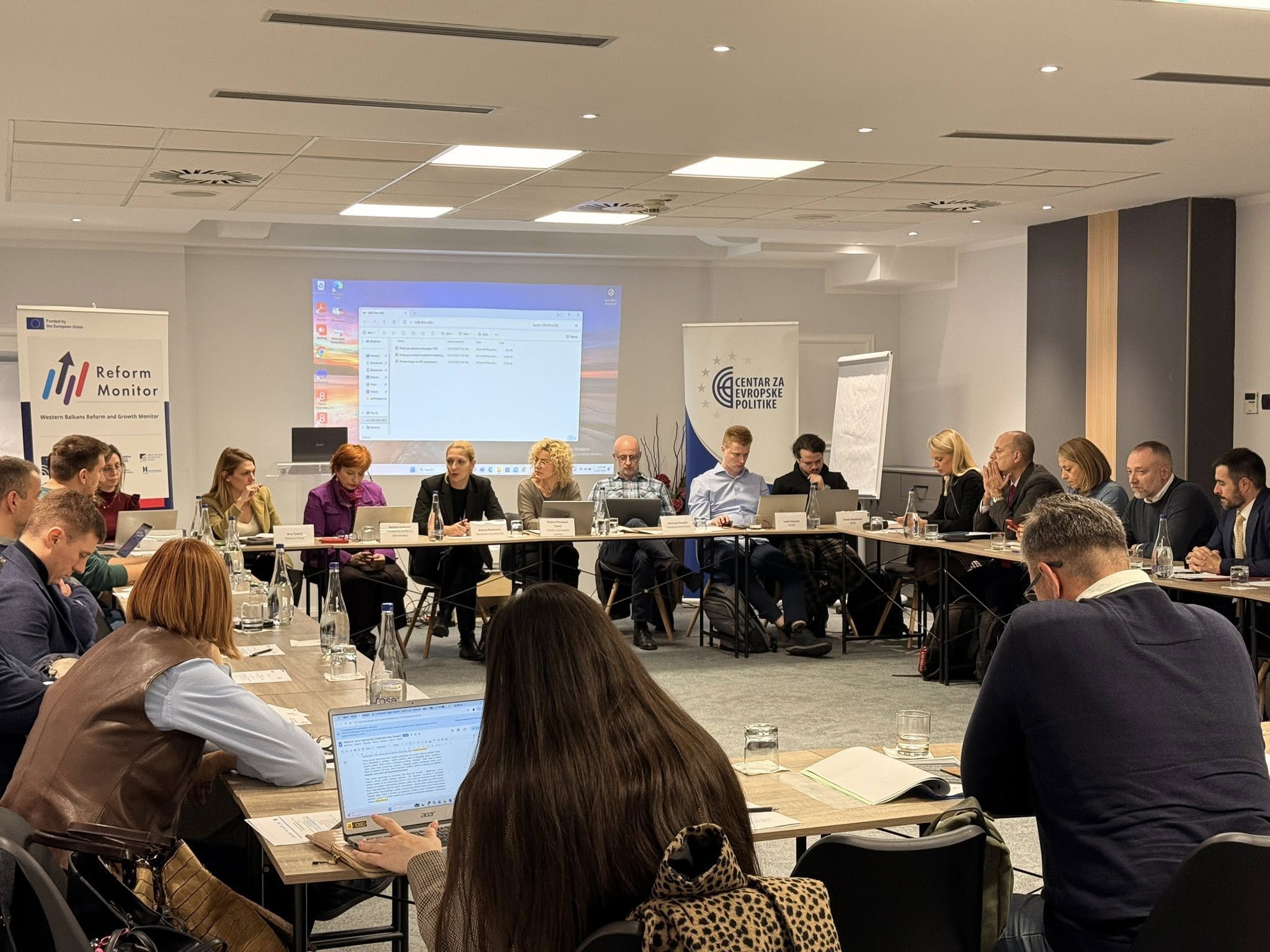
First Plenary Session of Serbia’s Intersectoral Working Group Under WB Reform and Growth Monitor Project Advances EU Reform Monitoring

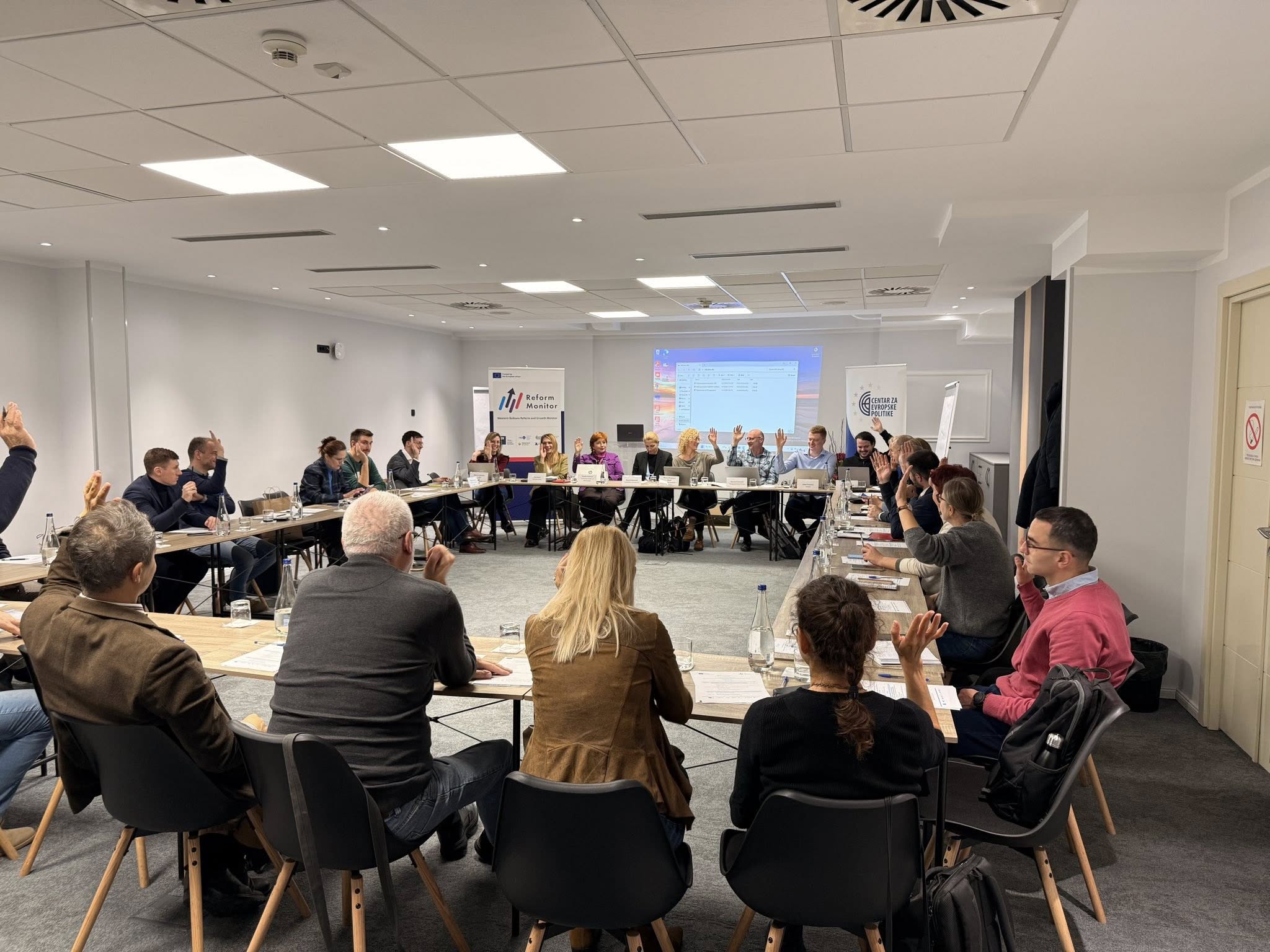
Yesterday, the first plenary session of the Intersectoral Working Group for Monitoring the Implementation of the Reform Agenda of the Republic of Serbia was held, organised by the National Convention on the EU (NCEU) and the European Policy Centre (CEP) within the framework of the WB Reform and Growth Monitor project.

This platform was established to ensure the active participation of civil society in the implementation and monitoring of Serbia’s Reform Agenda, through tracking progress on reform steps, providing analytical support and external monitoring, as well as assessing their impact on European integration and informing the public about the results.

In its work, the IWG will cooperate closely with representatives of the European Union and state institutions to ensure effective oversight of the implementation of this important strategic document, which is linked to EU support amounting to EUR 1.6 billion by the end of 2027.

During yesterday’s session, the IWG adopted its Rules of Procedure, while subgroup coordinators presented their areas of work and upcoming plans. The discussion focused on the report from the first meeting of the Reform and Growth Facility (RGF) Monitoring Committee.

This platform represents an important step toward strengthening the contribution of civil society, academia, and the private sector to the reform implementation process in Serbia.

Tracking the Reform Agenda – October 2025 – From Adoption to EC Assessment

The infographic “Tracking the Reform Agenda: From Adoption to EC Assessment” provides a clear and concise visual overview of the key stages in the reform process, from the initial adoption of policies to their evaluation by the European Commission. Designed to enhance understanding of this complex journey, it highlights critical milestones.

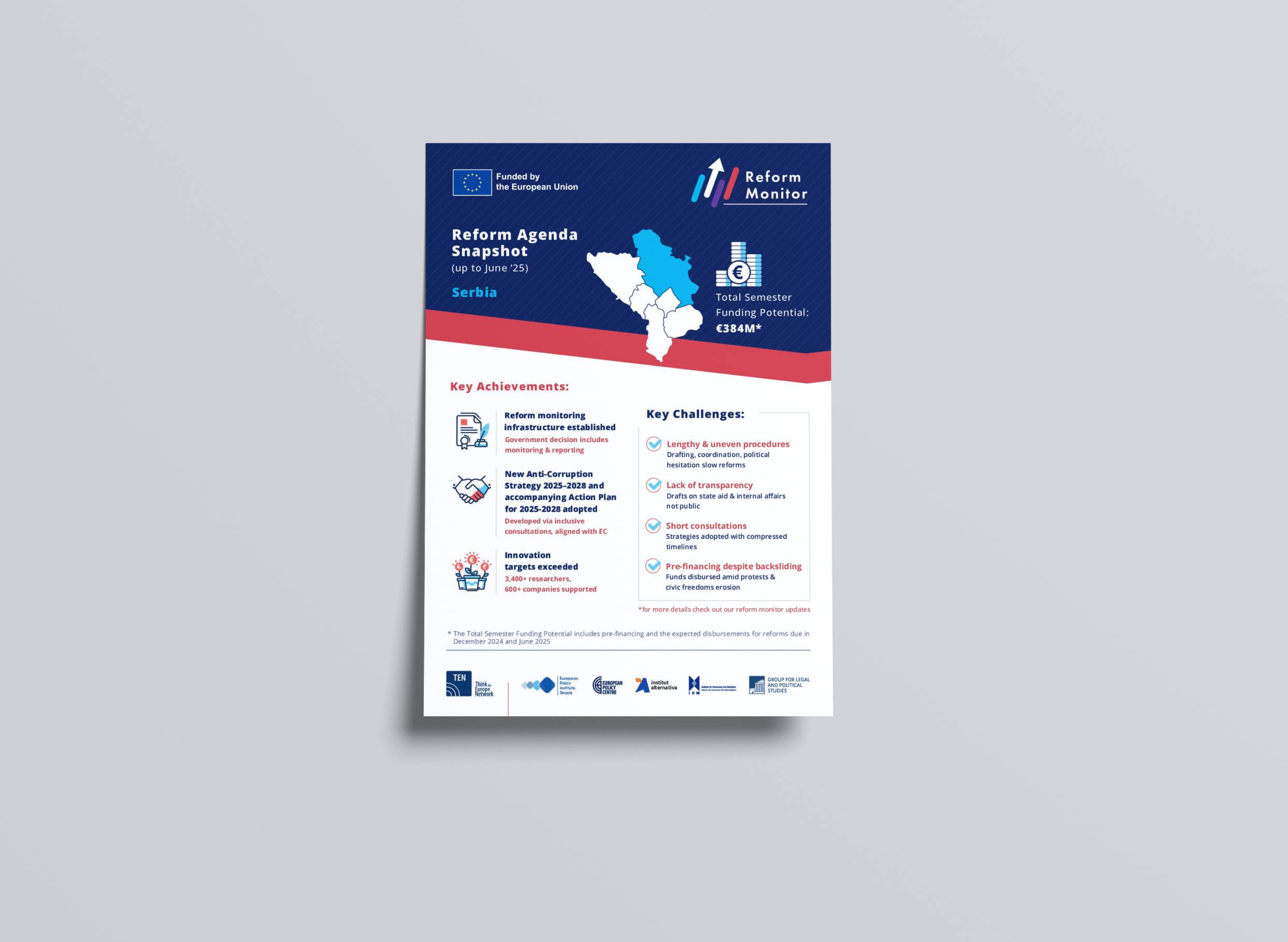
Reform Agenda Snapshot (Јune ‘25) – Serbia

This infographic provides an overview of Serbia’s Reform Agenda implementation up to June 2025, highlighting progress made, pending measures, and key challenges across priority areas.

Reform-Agenda-Snapshot-up-to-june-‘25_Serbia

Srbija – Pregled ispunjenosti Reformske agende: Pilot-monitor reformi

Ovi ažurirani podaci o Reformskoj agendi: Pilot-monitor reformi prvi je u nizu nacionalnih izveštaja o monitoringu u okviru projekta „Praćenje reformi”.

Ovaj prvi pregled ispunjenosti Reformske agende – Pilot-monitor reformi je preliminarno ažuriranje namenjeno kao presek stanja sredinom semestra (upozorenje!), a ne kao detaljna evaluacija. Kako projektni tim probno primenjuje metodološki pristup i indikatore, novi momenti politike u narednim nedeljama mogu da promene status reformi koje su trenutno na čekanju. Zemlje obuhvaćene ovim procesom imaju još mesec dana da ostvare dalji napredak kako bi ispunile rokove koji ističu u junu 2025. godine. 

Monitor reformi prati preduzimanje odabranih reformskih koraka iz Reformskih programa. Odabrani koraci reformi organizovani su u takozvanim „domenima politike” koji spadaju u oblasti politike i pod-oblasti Reformske agendi. Ovi „domeni politike” su utvrđeni nakon dodatnog nivoa identifikacije reformi i kodiranja reformskih koraka koje je obavio projektni tim. Ovaj pristup je izabran radi fokusa na reformskim koracima zajedničkim celom regionu Zapadnog Balkana i da bi omogućio analize na regionalnom nivou, postavljanje merila i uporedivost, s obzirom na raspoložive ljudske resurse i tematsku ekspertizu TEN mreže. Za metodološke napomene i proces odabira reformskih koraka, pogledati napomenu o nacrtu metodologije

Ovo probno ažuriranje podataka o ispunjenosti Reformske agende prati strukturu usklađenu sa metodologijom Monitora reformi, koja obuhvata: (1) Sažetak za visoki nivo; (2) Proceduralnu usklađenost sa Instrumentom za reforme I rast; (3) Status realizacije reformskih koraka po domenu politike; i (4) Narativ i analizu ključnog napretka i izazova. Svaki odeljak daje trenutnu sliku napretka i prepreka u vezi sa sprovođenjem Reformske agende Srbije.

Treba imati na umu da je krajnji datum za prikupljanje i procenu podataka za ovo ažuriranje 30. jun 2025. godine. Dešavanja koja nastupe nakon ovog datuma nisu obuhvaćena ovim izveštajem, ali će biti razmotrena u narednim pregledima.

RA_Pilot-Reform-Monitor_Serbia_First-Semester-2025_As-of-June-2025_srb

Download

Serbia Reform Agenda Update – Pilot Reform Monitor

This Reform Agenda Update: Pilot Reform Monitor is the first of the series of national monitoring reports within the Reform Monitor project.

This first Reform Agenda Update – Pilot Reform Monitor is a preliminary update intended as a mid-semester snapshot (alert!) rather than a detailed evaluation. As the project team pilots the methodological approach and the indicators, further policy developments in the coming weeks may shift the status of currently pending reforms. The countries have one more month to make further progress to meet the June 2025 deadlines.

The Reform Monitor tracks the implementation of selected reform steps from the Reform Agendas. The selected reform steps are organised in so-called “policy domains” that fall within the policy areas and sub-areas of the Reform Agendas. These “policy domains” are developed following an additional level of reform identification and coding of reform steps developed by the project team. This approach was chosen to focus on reform steps common across the WB region and to enable regional-level analyses, benchmarking and comparability, given the available human resources and the thematic expertise of the TEN network. For methodological notes and the reform steps selection process, see the draft methodology note.

This Pilot Reform Agenda Update follows a structure aligned with the Reform Monitor’s methodology, covering: (1) a high-level Executive Summary; (2) procedural compliance under the RGF; (3) reform steps implementation status per policy domain; and (4) narrative and analysis of key progress and challenges. Each section provides a snapshot of progress and obstacles related to Serbia’s Reform Agenda implementation.

Please note that the cut-off date for data collection and assessment for this update is 30 June 2025. Developments occurring after this date are not reflected in this report but will be considered in subsequent updates.

RA_Pilot-Reform-Monitor_Serbia_First-Semester-2025_As-of-June-2025

Download

Advancing Coordination for Reform Monitoring: Outcomes from the Second Intersectoral Working Group Meeting in Serbia

The second meeting of the Intersectoral Working Group for Reform Agenda Monitoring, and the first held within the framework of the WB Reform and Growth Monitor project as a national consultation mechanism, marked important steps forward in operationalising the N-CoMRA platform in Serbia. Participants agreed on the process for forming thematic subgroups based on existing NCEU working groups, supported by transparent coordination, inclusive outreach, and a shared understanding of expected contributions for the upcoming monitoring cycle.

Key-takeaways-IWG-Online-meeting_08.04