European Commission approves first disbursement of Reform and Growth Facility funds to Serbia

The European Commission has adopted an Implementing Decision approving the first release of funds to Serbia under the Reform and Growth Facility (RGF) for the Western Balkans. The decision follows the Commission’s assessment of Serbia’s compliance with the Facility’s preconditions, general payment conditions, and the achievement of reform steps due by December 2024.

EC implementing decision

EC assessment

Follow the money: Funds are released, disbursement may wait

Under this Implementing Decision, the Commission approved a net amount to be released under this first payment request of around EUR 56.55 million, of which 16.23 million is in grants and 40.32 million is in loans. The total gross amount is EUR 61.1 million, comprising if of 17.55 million in non-repayable financial support (grants) and EUR 43.60 million in loan support. Part of the instalment is used to clear advances i.e. the pre-financing of 7% foreseen for all beneficiaries under the RGF. 

In line with the Facility and Loan Agreements, the approved funds will be transferred through the two main channels. The grant component will be made available through the Western Balkans Investment Framework (WBIF) and paid conditional on the conclusion of contribution arrangements and the submission of payment requests by the WBIF fund managers – EIB and the EBRD. This means that the EC implementing decision itself does not imply immediate cash transfers in form of grants. The loan component, on the other hand, is split into two components. Around EUR 14.0 million, or 34.75%, is earmarked for WBIF-linked investments and subject to separate contribution arrangements, while a sum of around EUR 26.3 million will be disbursed directly to Serbia’s Treasury. 

Pre- and general conditions met: cautious but accommodating interpretation

The Commission concluded that the pre-conditions and general conditions for payment are met, including democratic governance, rule of law, macroeconomic stability, and public financial management. This assessment is made despite explicit concerns noted in the same document, including persistent political polarisation and pressure on independent institutions, and ongoing challenges related to judicial independence, citizens’ and media freedom.

The release of funds is also conditional on Serbia’s constructive engagement in the EU-facilitated dialogue with Kosovo, which constitutes a specific precondition for these two countries under the RGF. In its assessment, the Commission concludes that this precondition is fulfilled, based on Serbia’s continued participation in the dialogue and input provided by the European External Action Service.

Reform delivery: Success in green and digital, delays in “Fundamentals”

Out of seven reform steps that were due in December 2024, assessed under Serbia’s first payment request, 3 reform steps were assessed as fully achieved, and 4 steps were assessed as not achieved.

The partial reform delivery of Serbia’s Reform Agenda comes with the Commission confirmation that the reform steps relating to the electricity market integration with key steps taken toward day-ahead market coupling with regional partners and EU, the adoption of a bylaw transposing the EU Toolbox for 5G Security and the termination of visa-free access for at least three third countries in view of alignment with the EU visa regime.

On the other hand, three of the four steps that have not been achieved are in the area of “Fundamentals”. It should be noted that this assessment reflects the situation at the moment when Serbia submitted its request for payment and does not fully capture subsequent developments. In particular, this is relevant in two cases. First, regarding media legislation, the assessment refers to the period prior to the adoption of key media laws, notably amendments to the Law on Electronic Media, the Law on Public Information and Media, as well as the adoption of the Law on Public Service Media, which were adopted subsequently and whose progress is acknowledged in the EC Serbia 2025 Report. The remaining unfulfilled steps relate to electoral framework reforms, notably the functioning of the ODIHR-recommended working group, the voter register audit, and the re-election of the REM Council as well as, in the domain of anti-corruption with the requirement for Serbia to adopt an action plan covering the entirety of the anti-corruption strategy implementation (2025–2028). In the area of state aid transparency, the inventory submitted by Serbia at the time of the payment request did not fully address earlier Commission comments and was therefore considered not achieved. However, the adoption of the final state aid inventory was later confirmed in the EC Serbia 2025 Report.

Already behind schedule: Delays and backloging crucial reforms

This implementing decision and assessment arrive later than those for other beneficiaries in relation to the December 2024 reform deadlines. For example, North Macedonia and Montenegro received their corresponding decision in July 2025, which highlights uneven pacing in the Commission’s assessment and decision-making across beneficiaries.

At the time of adoption of this implementing decision, the assessments of the June 2025 reform steps are still pending, for which Serbia has 10 additional reform commitments. Furthermore, the deadline to report on the December 2025 deadlines passed was 15 January 2026, covering a further 20 reform steps. This sequencing highlights the pressure for reform delivery as Serbia is advancing into the next reform cycles while assessments of earlier deadlines remain pending.

For all non-achieved steps due in December 2024, the grace period runs until 31 December 2026. During this period, Serbia may still complete the outstanding reforms without an immediate financial penalty. However, as explained above, these postponed reforms increase the pressure for administration to deliver an increasing number of reforms over time that may affect future payment requests.

Photo: © European Union, 2026, CC BY 4.0, via Wikimedia Commons
TI BiH joins the fight for transparent reforms in Bosnia and Herzegovina

We are thrilled to announce that Transparency International Bosnia and Herzegovina (TI BiH) has officially joined our project as an implementing partner.

As part of our mission to provide independent, data-driven monitoring of the European Union’s Growth Plan for the Western Balkans, TI BiH brings invaluable expertise in anti-corruption, public accountability, and the rule of law. Their involvement ensures that our monitoring of Bosnia and Herzegovina’s progress is backed by one of the most respected voices in civil society.

Founded in 2001, TI BiH is the national chapter of the global Transparency International movement. They are dedicated to fighting corruption and promoting transparency, accountability, and integrity across all sectors of society.

TI BiH serves as a vital watchdog, monitoring government performance, advocating for legal reforms, and empowering citizens to demand better governance. Their work is essential for ensuring that public funds, especially those tied to EU integration, are managed with the highest ethical standards.

The timing of this partnership is particularly significant. Following a long-awaited political consensus, the Council of Ministers of BiH adopted the country’s Reform Agenda on September 30, 2025. This was followed by the European Commission’s official approval on December 4, 2025, marking a turning point in the country’s European path.

The Reform Agenda is the essential roadmap required to unlock approximately €976.6 million in funding from the EU’s Reform and Growth Facility. The agenda includes 114 specific measures grouped into four critical pillars:

  1. Green and Digital Transition: Modernizing energy infrastructure and accelerating digital services.
  2. Private Sector Development: Improving the business environment and economic competitiveness.
  3. Human Capital: Developing and retaining local talent and aligning education with the market.
  4. Fundamentals and Rule of Law: Strengthening the judiciary, fundamental rights, and the fight against corruption.

The approval of the Reform Agenda is a massive step, but the disbursement of funds is strictly performance-based. Money will only be released as specific reform milestones are met.

Through the WB Reform and Growth Monitor, and with TI BiH now on board, we will provide rigorous oversight. Our goal is to ensure that these 114 measures lead to real, transparent, and tangible improvements for the citizens of Bosnia and Herzegovina.

[Podcast] Navigating the Growth Plan for the Western Balkans

🎙️ In our latest episode of the Western Balkans Reform and Growth Podcast, we are joined by Mr. Matteo Bonomi, senior fellow at the Istituto Affari Internazionali. In our talk we focus on the robustness of the EU’s Growth Plan for the Western Balkans barriers to single market integration, the role of regional cooperation, financial support adequacy, and future directions for reform.

🗣️ Our guest shares perspectives on the EU Growth Plan, identifying areas for further development and outlining considerations for a more ambitious approach to EU integration.

CSOs and Institutions discussed the Reform Agenda and the Growth Plan in Montenegro

The Institute Alternative organised a meeting on Wednesday, 10 December, dedicated to the implementation of the Reform Agenda 2024–2027 and the Growth Plan for the Western Balkans. The meeting brought together representatives of key institutions responsible for implementing reform measures, as well as representatives of civil society.

Participants included representatives of civil society and institutions coordinating the implementation of the Reform Agenda. The aim of the meeting was to present priorities and challenges in implementing reform steps and to consider ways in which reform processes can most effectively respond to the needs of citizens and the economy. Participants also discussed mechanisms for monitoring the implementation of the Reform Agenda, as well as the dynamics of withdrawing funds available through the Growth Plan for Montenegro. To date, Montenegro has prepared two semi-annual reports on the implementation of a total of 25 reform steps, of which the European Commission has confirmed the implementation of 12. It was noted at the meeting that preparation of the third report is underway, covering 32 new reform steps planned for implementation by December 2025, which will be reported to the European Commission by mid-January.

Žana Jovanović, Head of the Directorate for the Management Structure at the Ministry of Finance, explained details related to financial management, the funds received through the fulfillment of reform steps, and the way in which the Ministry of Finance prepares payment requests. The discussion also covered the preparation of the budget for the following year and the manner in which funds needed for implementing reform steps are planned within the individual financial plans of budget users.

Bojan Vujović, Director General of the Directorate for Coordination of EU Financial Support at the Ministry of European Affairs, answered questions related to challenges in coordinating the implementation of the Reform Agenda, cooperation with representatives of the European Commission, and the way in which the understanding of certain reform steps and activities changes during the course of implementation. The practice of regular meetings between representatives of the European Commission and the Government regarding the alignment of understanding of the current status of reform steps and the determination of their implementation status was also mentioned.

Marko Sošić, Public Policy Researcher at the Institute Alternative, presented findings and observations regarding specific reform measures as part of research conducted with regional partners, with a particular focus on areas where progress has been slower or where additional clarification is needed.

During the meeting, several proposals for further work were formulated. With regard to the need to strengthen transparency, it was requested that the payment requests prepared by the Ministry of Finance on the basis of materials for the semi-annual report be published, as well as the publication of the communication plan for the Reform Agenda that has already been prepared by the Ministry of European Affairs. It is also necessary to consider expanding the Supervisory Committee for the Reform Agenda to include interested representatives of civil society, beyond the already appointed permanent members. With regard to financial transparency, it was recommended to consider opening separate budgetary programs for financing the implementation of reform steps, in order to enable easier monitoring of the planning and spending of funds for this purpose. Particular emphasis was placed on the need to strengthen transparency in the component related to infrastructure projects – the way projects are selected, prepared for application, submitted to the WBIF, and how their status and financing are monitored.

The meeting represents a step toward better information sharing and greater openness toward citizens and civil society regarding the implementation of the Reform Agenda and the Growth Plan, with the aim of ensuring that reform processes deliver concrete and measurable benefits to the citizens and economy of Montenegro.

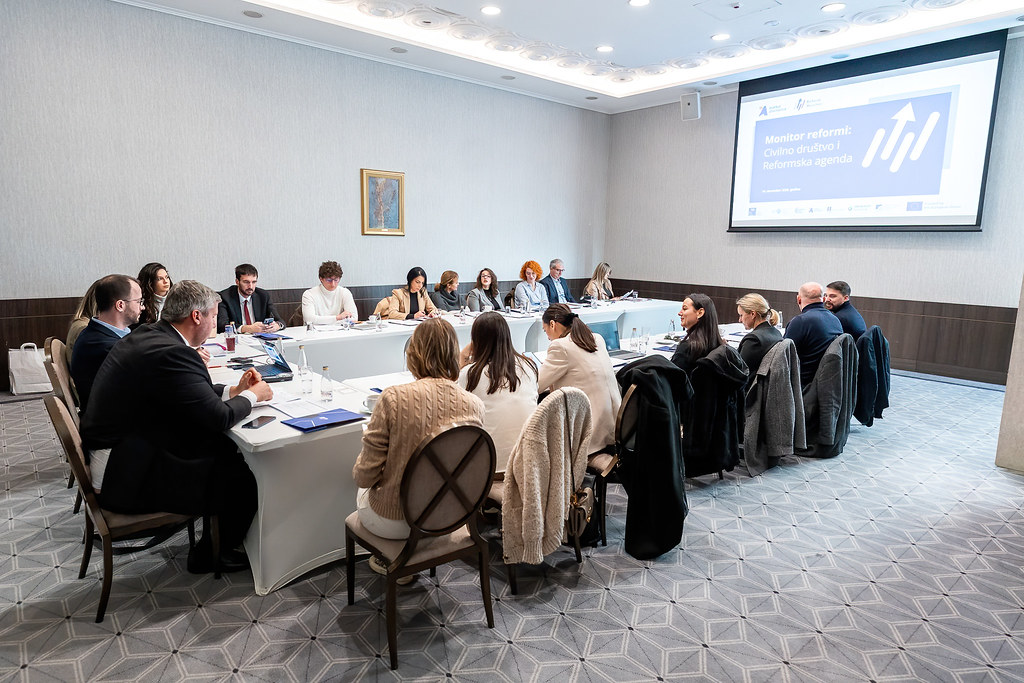
Reformska agenda i civilno društvo - Prvi sastanak

Launch of the R-CoMER: Uniting Regional Forces to Accelerate Western Balkans’ Growth and Reforms

The European Policy Institute (EPI) and the Think for Europe Network (TEN) hosted the first meeting of the Regional Consultation Mechanism  (R-CoMER) today. The online event brought together representatives from key regional organizations/institutions, such as the Regional School of Public Administration (ReSPA), the Transport Community Permanent Secretariat, the CEFTA Secretariat, and the Regional Cooperation Council (RCC), who, together with TEN explored opportunities for cooperation under the EU-funded “WB Reform and Growth Monitor” project.

Designed as an introductory and informative session, the meeting focused on presenting each organization/institution’s work related to the Growth Plan, identifying potential synergies, and outlining the project’s progress to date. Regional organizations/institutions shared their mandates under the Growth Plan and the Common Regional Market (CRM), emphasizing opportunities for collaboration such as exchanging monitoring methodologies and data. Their interventions highlighted that the project operates within a broader ecosystem of regional reforms that directly influence the pace and credibility of EU integration.

ReSPA’s contribution underscored its direct support to Reform Agenda implementation through expert missions, legislative drafting, digitalization tools, and mobility schemes that facilitate peer learning within the region and with EU Member States. Programme Manager Boris Ristović highlighted ongoing work in North Macedonia and Montenegro, including support for a new anti-corruption strategy, assistance on public salary system reforms through cooperation with Croatia, and work on cybersecurity and NIS2 preparedness. He also announced an upcoming December webinar on administrative simplification—an area closely linked to improving service delivery. Ristović expressed interest in comparing the project’s methodology with ReSPA’s activities.

RCC Senior Expert Fatmir Curri outlined RCC’s work on CRM pillars related to competitiveness, human capital, and digital transformation. He announced that RCC is finalizing an internal CRM monitoring tool, developed jointly with other regional bodies, which will break down measures into annual milestones. Curri underscored that many CRM outcomes rely on national-level progress, such as the rollout of national digital ID wallets, which are essential for a future regional digital ID system. He also noted that RCC will soon present the CRM to civil society across the region to strengthen public understanding of national and regional responsibilities, highlighting a clear opportunity for synergy with R-CoMER and the Monitor’s national consultation mechanisms.

CEFTA representative Aurelia Ieseanu presented progress in CRM pillars on trade in goods and services, including achievements on Additional Protocols and new work on e-commerce and intellectual property rights. She also noted advances in mutual recognition of conformity assessment for industrial products and efforts to remove short-term work permit requirements under Additional Protocol 6. These developments demonstrate how regional agreements can translate into practical benefits for businesses, precisely the type of outcomes the Monitor aims to assess.

Transport Community representative Elvira Kavazović highlighted the organization’s mandate to align Western Balkan transport rules with the EU acquis and stressed that economic growth and transport development must progress in parallel. She noted ongoing work on e-freight and intelligent transport systems that can modernise freight transport, reduce border delays, and support the region’s digital and green transition. The Transport Community submits annual progress reports to the European Commission and confirmed readiness to support the project with data, methodologies, and insights, strengthening the Monitor’s capacity to track connectivity reforms as indicators of competitiveness and EU market readiness.

The discussion also addressed the practical challenges of monitoring WBIF projects—an area where civil society has limited access to information and where European Commission procedures for co-financing under the Reform and Growth Facility are still being finalised. Participants noted that independent monitoring can help identify bottlenecks early and reinforce accountability on both EU and government sides.

The “WB Reform and Growth Monitor” project, funded by the European Union, aims to strengthen data-driven monitoring, institutional accountability, and public engagement in the implementation of the Growth Plan. By fostering structured cooperation with regional organizations through R-CoMER, the project contributes to advancing reforms and supporting the region’s EU integration efforts.

North Macedonia: National Consultation Mechanism Discusses Updates in Implementing the Reform Agenda 2024–2027

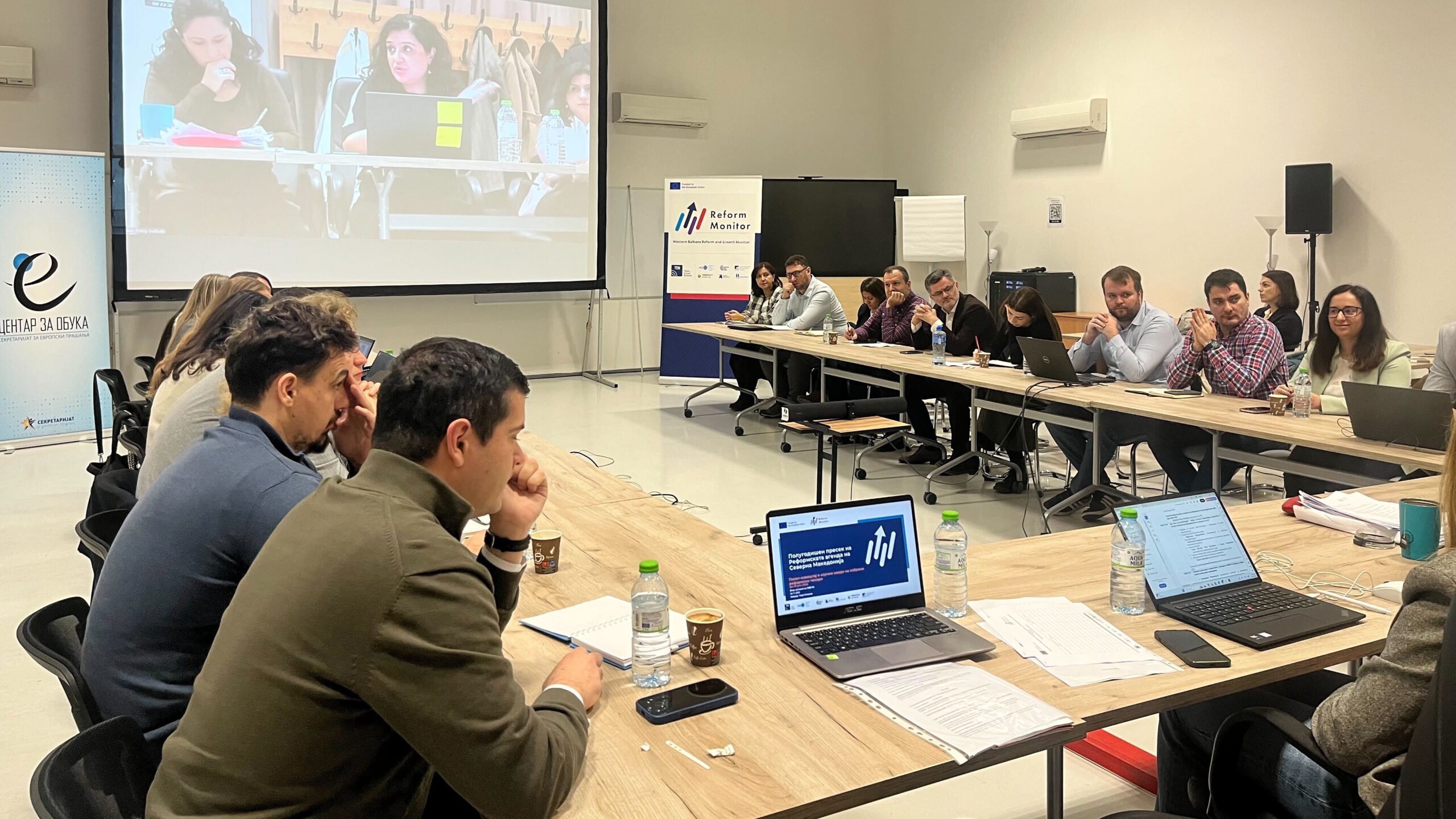
The European Policy Institute (EPI) – Skopje, in cooperation with the Ministry of European Affairs, held the second meeting of the National Consultation Mechanism for the Reform Agenda (N-CoMER) as part of the regional EU-funded project Western Balkans Reform and Growth Monitor. The meeting, organised at the premises of the Ministry, brought together representatives of national institutions (members of RA working group), civil society organisations, the private sector, and independent experts to review progress, identify obstacles, and discuss the next steps in implementing the Reform Agenda 2024–2027


Institutional Priorities, Progress and Key Challenges

The Ministry of European Affairs presented the current status of the third reporting period, highlighting that while the overall pace of implementation aligns with regional trends, institutions face tight deadlines, methodological differences in assessing qualitative indicators, and persistent coordination challenges. The Ministry underlined the need for timely reporting and stronger cooperation with civil society.

EPI shared findings from its pilot monitoring of reform delivery (December 2024 – June 2025), noting delays in publishing key documents, gaps in inter-institutional coordination, and capacity shortages in several institutions. The analysis also showed significant variations between policy areas, with energy, digitalisation, and rule of law facing the greatest bottlenecks.

The Ministry of Digital Transformation emphasised the complexity of aligning national legislation with EU requirements in cybersecurity and digital services, pointing to limited staffing and financial constraints as major barriers.

The Ministry of Energy reported substantial delays in market coupling procedures and transposition of EU regulations due to their technical nature and lengthy approval processes. Work continues on energy poverty measurement, decarbonisation plans, and the introduction of new digital services for vulnerable consumers.

The Ministry of Education outlined ongoing efforts to improve school digital infrastructure and expand dual education programmes, while the Ministry of Justice highlighted the critical need for strengthened human resources and long-term planning in the judiciary, as well as the impact of electoral cycles on legislative timelines.


Civil Society Insights

Representatives from civil society organisations stressed low public awareness of the Reform Agenda, challenges in accessing transparent data, and the need for improved quality of consultations. They also shared ongoing initiatives to strengthen public communication and parliamentary engagement regarding the reforms.

Conclusions and Way Forward

Participants agreed that administrative capacity remains the biggest obstacle to timely implementation. Strengthening inter-institutional coordination, improving transparency, and ensuring meaningful consultation were identified as priorities for the coming period.

The National Consultation Mechanism will continue to serve as a platform for structured dialogue, evidence-based monitoring, and joint problem-solving throughout the implementation of the Reform Agenda and the EU Growth Plan.

Proposed Methodology for Measuring Reform Agendas’ Progress in Western Balkan Countries

The Reform and Growth Facility (RGF) for the Western Balkans is a new €6 billion instrument (2024–2027) that links EU financial assistance to the implementation of ambitious Reform Agendas in each Western Balkan country. These Reform Agendas outline socio-economic and fundamental reforms aimed at spurring growth and convergence with the EU, focusing on priority areas such as Rule of Law and Fundamental Rights, Green Transition and Digital Transformation, Business Environment and Private Sector Development, and Human Capital. In exchange for undertaking these reforms, partner governments receive budget support disbursements upon completion of agreed reform steps. This report presents a methodological framework for monitoring the Reform Agendas under the RGF, structured as a formal methodology document. It covers two key tasks: (1) preparatory consultations to define the monitoring approach and align it with best EU and international practices, and (2) development of a draft monitoring methodology including indicators, data collection tools, reporting templates, and analytical frameworks (with regional and gender perspectives). The report includes an overview of relevant best practices, a detailed monitoring framework proposal, and recommendations for implementation, with references to EU, World Bank, and IMF approaches that inform the methodology.

Proposed-Methodology-for-Measuring-Reform-Agendas-Progress-in-Western-Balkan-Countries-1
Download

[Podcast] The Growth Plan and Performance-Based Funding in the Western Balkans

🎙️ In our first episode of the Western Balkans Reform and Growth Podcast, we speak with Mr. Dominik Hatiar, Head of Sector for the RGF at the European Commission, about how the new Reform and Growth Facility is shaping essential reforms, accelerating EU convergence, and ensuring financial assistance is tied directly to results.

🗣️ Our guest reflects on the shift from traditional, bureaucratic assistance to a more strategic, performance-based model of funding under the Reform and Growth Facility. He shares insights on how this new approach works in practice — from the implementation of reforms and transparency.

Listen to the Podcast on Spotify.

The Price of Partial Reforms: Why “Almost” Meeting EU Criteria Holds Serbia Back

For years, it seems that the Serbian Government has operated under the assumption that  being almost aligned with EU criteria should be treated as meaningful progress. This mindset has  contributed not only to the slow pace of reforms but also to the reality that, after eleven years of  accession negotiations, Serbia has opened only two clusters. Under the EU Growth Plan, however,  the habit of presenting partial fulfilment as genuine reform is becoming a structural obstacle,  especially in the Reform Agenda’s area where reforms matter the most: Rule of Law and  Fundamental Rights.  

A striking example is the reform of the Unified Voter Register. The entire process – including the  audit – was supposed to be completed by December 2024. Instead, Serbia approaches the end of  2025 with the reform still only halfway implemented. The legal framework exists, and the  composition of the audit commission is progressing, but the core element, the audit itself, has not  even begun. The Reform Agenda indeed provides a two-year grace period, meaning Serbia can still receive the funds associated with this step. Yet the fact that a reform so central to electoral integrity  and democratic legitimacy has not been prioritised for an entire year raises a deeper concern: if  even this cannot be delivered on time, what does that say about the seriousness of the overall  reform effort?  

A similar pattern is visible in the area of anti-corruption. Serbia adopted a new Anti-Corruption Strategy in July 2024 and, at first glance, appeared to fulfil its obligation by adopting the  accompanying Action Plan in December of the same year. However, the Action Plan covers only  2024 and 2025, rather than the entire duration of the Strategy, despite the Reform Agenda explicitly  requiring a full implementation cycle. The result is a reform that is presented by the Government as  “completed,” but it is substantively partial. It illustrates how institutional energy is often invested  in satisfying the appearance of compliance rather than in establishing the foundations of effective  policy.  

The case of the REM Council further reinforces this pattern. In addition to being a formal obligation  under the Reform Agenda, Serbia also committed in December 2024 – through a non-paper  submitted to Member States – to urgently complete the election of the Council as part of a broader  effort to persuade Member States to support the opening of Cluster 3. A year later, eight of the nine 

members have been elected, leaving the Council still incomplete. The process has been repeatedly  interrupted, criticised by civil society, and burdened by procedural controversies. It is an  improvement, but it is also plainly insufficient. In the logic of the Growth Plan, partial reform is simply  not reform at all.  

The only exception within this framework applies to quantitative steps – those formulated as reaching  a specific number or percentage – which may be assessed as partially fulfilled and can therefore trigger  partial disbursement, proportional to the share of the quantitative target that has been achieved. But  qualitative reforms – and most rule-of-law obligations fall squarely into this category – cannot be  treated this way. They must be implemented fully, not approximately or substantially. This is not a  procedural detail; it is the core principle that separates reforms that exist on paper from reforms that  genuinely reshape institutions.  

This accumulation of “almost reforms” now appears to be complicating the European Commission’s  assessment process. Serbia submitted its first and second payment requests in March and July 2025,  yet no decision has been issued, well beyond the usual timeframe. Part of the delay likely reflects  the Commission’s attempt to distinguish what is genuinely fulfilled from what is merely presented  as such, requiring follow-up questions and clarifications from the Government. But the unusually  long period may also indicate a deeper review – one that goes beyond individual reform steps and  examines whether Serbia continues to meet the fundamental preconditions related to democratic  institutions, rule of law, and the normalisation of relations with Pristina.  

At this moment, Serbia faces a choice. Treating EU reforms as a checklist has produced diminishing  returns. What is needed now is not more drafting, nor more announcements, but clear political will  and institutional capacity to deliver reforms in full. Partial implementation cannot restore trust,  cannot unlock credibility, and cannot bring Serbia closer to the European Union. Only genuine,  complete reforms can do that.  

Almost done is not done. And almost-membership is still not membership. If Serbia is serious about  its European future, it must demonstrate that seriousness through reforms that are implemented  fully, not symbolically, and through institutions that function in practice, not only on paper. 

Author: Marko Todorović, European Policy Centre (CEP)

Image created with Gemini

Kosovo’s Dream Year: What Could Have Been in 2025

Disclaimer: Since it is so difficult to find some positivity in the current political situation, we had to invent a parallel reality to make a comparison of what we could have had if things went smoothly. The events set out in this op-ed, sadly enough, are entirely fictional.

Dear Readers,

Happy New Year 2026!

The year that we are leaving behind was certainly memorable with many positive events that helped propel Kosovo’s EU aspirations.

In the beginning of the year, the political parties were able to quickly come to an understanding that Kosovo needs a steady executive to pursue its strategic goals, therefore they left behind their ideological and political differences and created a stable government and a functional Assembly.

Once the government was created, it immediately went ahead with the signing of the Loan Agreement from the Reform and Growth Facility, and presented it to the Parliament together with the already signed Facility Agreement. The Members of Parliament, understanding their duty to serve the European aspiration of the people and not the daily squabbles, voted in favor of the treaties almost unanimously. After some technical steps, within weeks Kosovo was allocated the pre-financing of some €61.8 million, of which some 55% were allocated to the Western Balkans Investment Framework and the rest were dedicated as direct budget support for the government. After almost two years of punitive measures, this was a very positive sign by the European Union for Kosovo.

The responsible politicians of Kosovo understood that merely declarations of commitment to the European Union are not enough. As the old saying goes, words are good, deeds are better. Therefore, the new government set out to seriously and speedily implement all the reform steps laid out in Kosovo’s Reform Agenda. As a result, until the end of this year, the Government of Kosovo successfully implemented all 40 reform steps set out for the first three semesters and as a result was allocated €300 million euros in total, after taking into account the pre-financing as well. Such a massive amount of investment spurred an impressive economic growth for Kosovo.

Such an exemplary performance from Kosovo became a prime factor in the decision of the European Council and Commission to retrieve the punitive measures introduced in June 2023. After all, it was so unfair to keep such measures against a country that had such a terrific record in the implementation of the EU oriented-reforms. Even the most vehement opponents of the withdrawal of the punitive measures were robbed of their arguments by such a performance. In fact, there is a momentum to open accession negotiations with Kosovo, but the discussions are still on-going.

Experts believe that by implementing the Reform Agenda in such a decisive manner, Kosovo undoubtedly benefitted financially, however it also improved its chances of getting into the EU. This year’s Country Report was very positive and there were improvements in the overall evaluation in the majority of the policy areas. Experts state that such a progress will help Kosovo down the line to have smoother negotiations for accession.

As you can see, Kosovo had an incredible year thanks to a responsible political class. They were able to move beyond slogans and set their differences aside to work for common good. One has to wonder how things would be if instead they stuck to their guns on minute differences and lost a whole year on fruitless debates!

Photo: © European Union 2016 – European Parliament.

Author: Besar Gërgi, Group for Legal and Political Studies, Kosovo