Реформа за раст: Механизам за мали грантови

Проектот  „Следење реформи и раст во Западен Балкан“, спроведуван од членови на мрежата Мисли за Европа (ТЕН) и Транспаренси Интернешнл – Босна и Херцеговина (ТИ-БиХ), со поддршка од Европската Унија, објавува Повик за предлози во рамки на Механизмот за мали грантови „Реформа за раст“.

Целта на овој Повик е да ги зајакне граѓанските организации во обезбедувањето независен мониторинг, застапување и секторски перспективи во однос на имплементацијата на Планот за раст за Западен Балкан.

Вкупен износ од 314.620 евра е доделен на SGF за поддршка на максимум 20 грантови, со период на спроведување од 10 до 12 месеци по акција. Финансиската рамка за грантовите е следна:

  • Максимален износ на грант: 16.000 евра
  • Индикативен просечен грант: 15.730 евра     

Индикативната регионална распределба е планирана на следниов начин:  

ЗемјаБрој на грантови
Србија4
Босна и Херцеговина4
Северна Македонија3
Албанија3
Косово 3
Црна Гора3
ВКУПНО20

За да биде подобен за грант, апликантот мора:

  • Да биде правно лице;
  • Да биде непрофитен субјект;
  • Да биде граѓанска организација чии активности се спроведуваат на национално и/или локално ниво (т.е. во рамките на една или повеќе единици на локалната самоуправа);
  • Да покаже активно и соодветно искуство во една или повеќе тематски области на овој Повик, преку својот мандат, претходни или тековни активности, истражување, следење или застапување; 
  • Да биде регистриран во една од следниве земји: Северна Македонија, Србија, Црна Гора, Албанија, Босна и Херцеговина или Косово, најмалку шест (6) месеци пред објавувањето на овој Повик;
  • Да биде директно одговорен за подготовката и управувањето со акцијата, а не да дејствува како посредник;
  • Да имаат доволен оперативен и финансиски капацитет за спроведување на предложената акција;
  • Да не биде корисник на средства во рамките на Програмата на ЕУ за граѓанско општество и Медиумската програма (Референтен број EuropeAid/179703/DH/ACT/Multi) во истиот период на спроведување на предложената акција.

Тематски приоритети на механизмот: 

  1. Интеграција во единствениот пазар на ЕУ;
  2. Регионална интеграција преку Заедничкиот регионален пазар (ЗРП);
  3. Приоритетни области од Реформските агенди;
  4. Спроведување на Инструментот за реформи и раст (ИРР);

За повеќе информации за овој Механизам за мали грнатови, ве молиме внимателно прочитајте го УПАТСТВО ЗА АПЛИКАНТИTE ЗА ГРАНТОВИ.

Поднесување на апликацијата

Апликациите мора да се поднесат електронски и да ги содржат пополнети документите кои може да се симнат на линковите:

Краен рок за поднесување: 6 мај 2026.

Апликациите треба да се испратат на:: [email protected]; со копија: [email protected] 

Насловот на е-поштата треба да гласи: CfP: Re-form for Growth – (Country)_Application

Доколку е потребно, дополнителни информации може да се добијат со испраќање прашања на наведената е-пошта, најдоцна до 6 април 2026 година.
Reforma për Rritje: Skema e Granteve të Vogla

Projekti “WB Reform and Growth Monitor”, i zbatuar nga anëtarët e Think for Europe Network (TEN) dhe Transparency International në Bosnje dhe Hercegovinë (TI BiH), me mbështetjen e Bashkimit Evropian, shpall Thirrjen për Propozime në kuadër të Skemës së Granteve të Vogla “Re-form for Growth” (Small Grant Facility – SGF).

Qëllimi i kësaj thirrjeje është fuqizimi i organizatave të shoqërisë civile për të ofruar monitorim të pavarur, advokim dhe perspektiva sektoriale lidhur me zbatimin e Planit të Rritjes për Ballkanin Perëndimor (Growth Plan for the Western Balkans – GPWB).

Një shumë totale prej 314,620 euro është ndarë për këtë Skemë të Granteve të Vogla, për të mbështetur deri në 20 grante, me një periudhë zbatimi prej 10 deri në 12 muaj për secilin projekt.

Korniza financiare për grantet është si në vijim:

ShtetiNumri i Granteve
Serbia4
Bosnja dhe Hercegovina4
Maqedonia e Veriut3
Shqipëria   3
Kosovo     3
Mali i Zi3
TOTALI20

Për t’u kualifikuar për grant, aplikanti duhet:

  • Të jetë subjekt juridik;
  • Të jetë subjekt jofitimprurës;
  • Të jetë organizatë e shoqërisë civile, aktivitetet e së cilës zbatohen në nivel kombëtar dhe/ose lokal (domethënë brenda një ose më shumë njësive të vetëqeverisjes lokale);
  • Të demonstrojë angazhim aktiv dhe përvojë në një ose më shumë fusha tematike relevante për këtë Thirrje për Propozime, nëpërmjet mandatit të saj, aktiviteteve të mëparshme ose të vazhdueshme, punës kërkimore, monitoruese ose avokuese;
  • jetë i regjistruar në një nga vendet e mëposhtme: Maqedonia e Veriut, Serbia, Mali i Zi, Shqipëria, Bosnja dhe Hercegovina, ose Kosova, të paktën gjashtë (6) muaj para publikimit të kësaj Thirrjeje për Propozime;
  • Të jetë përgjegjës drejtpërdrejt për përgatitjen dhe menaxhimin e veprimit, dhe të mos veprojë si ndërmjetës;
  • Të ketë kapacitet të mjaftueshëm operativ dhe financiar për ta zbatuar veprimin e propozuar;
  • Të mos jetë përfitues i fondeve në kuadër të Programit të BE-së për Shoqërinë Civile (CSF) dhe Mediat (Nr. i Referencës EuropeAid/179703/DH/ACT/Multi) për të njëjtën periudhë zbatimi të veprimit të propozuar.

Prioritetet Tematike të Thirrjes për Aplikim: 

  1. Integrimi me Tregun e përbashkët të Bashkimit Evropian;
  2. Integrimi rajonal përmes Tregut të Përbashkët Rajonal;
  3. Fushat prioritare të Agjendave të Reformës;
  4. Zbatimi i Mekanizmit për Reformë dhe Rritje;

Për më shumë detaje rreth kësaj thirrjeje, ju lutemi lexoni me kujdes UDHËZUESIN PËR APLIKIM.

Dorëzimi dhe Afati i Fundit

Aplikimet duhet të dorëzohen në mënyrë elektronike duke përfshirë dokumentet e mëposhtme të plotësuara:

Afati i dorëzimit: 6 Maj 2026

Aplikimet duhen të dërgohen në: [email protected]; cc:[email protected] me subjektin: “CfP: Re-form for Growth – (Country)_Application”.

Nëse është e nevojshme, informata shtesë mund të merren duke dërguar pyetje në adresat e emailit më poshtë, jo më vonë se 6 prill 2026.

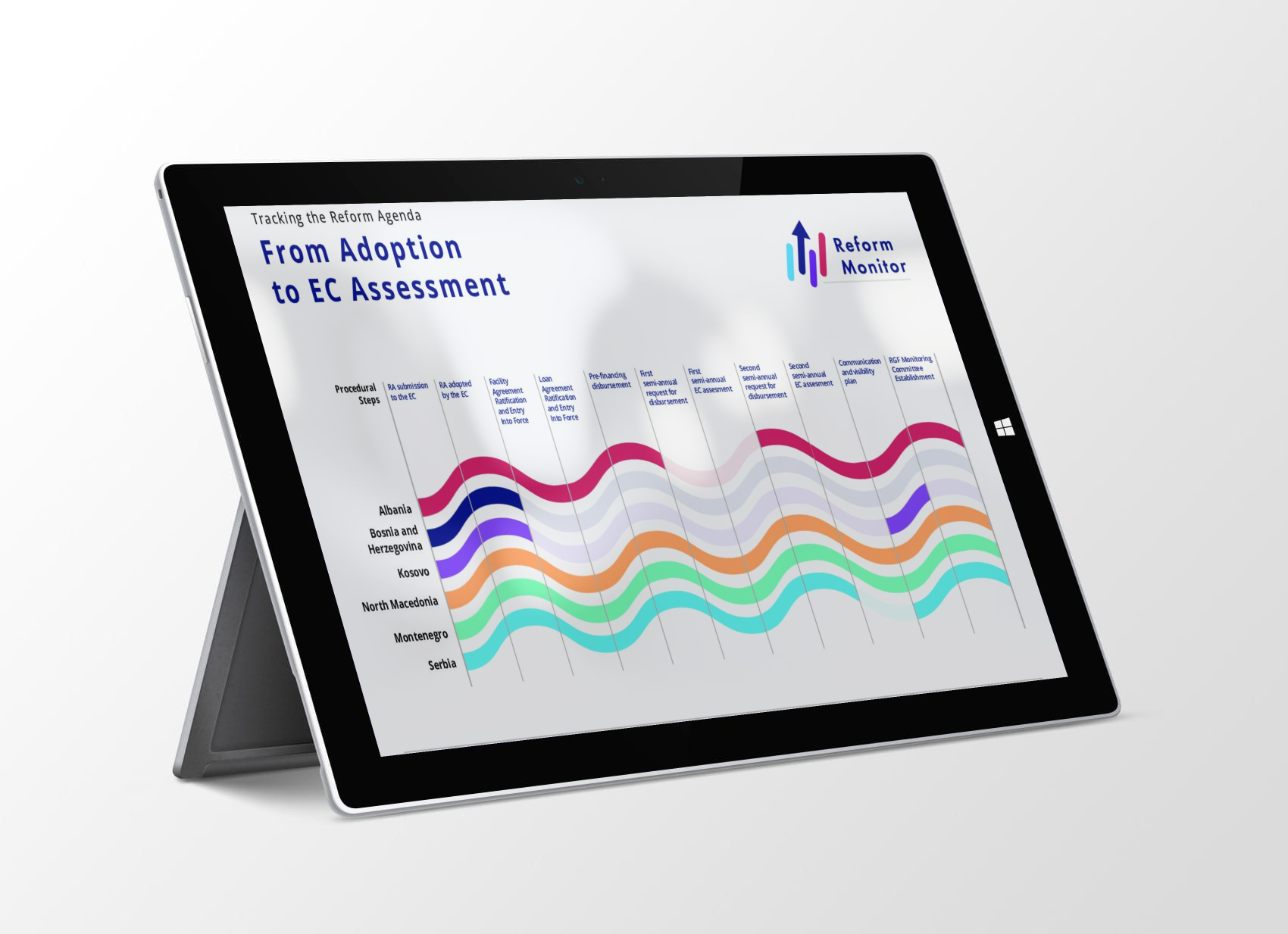
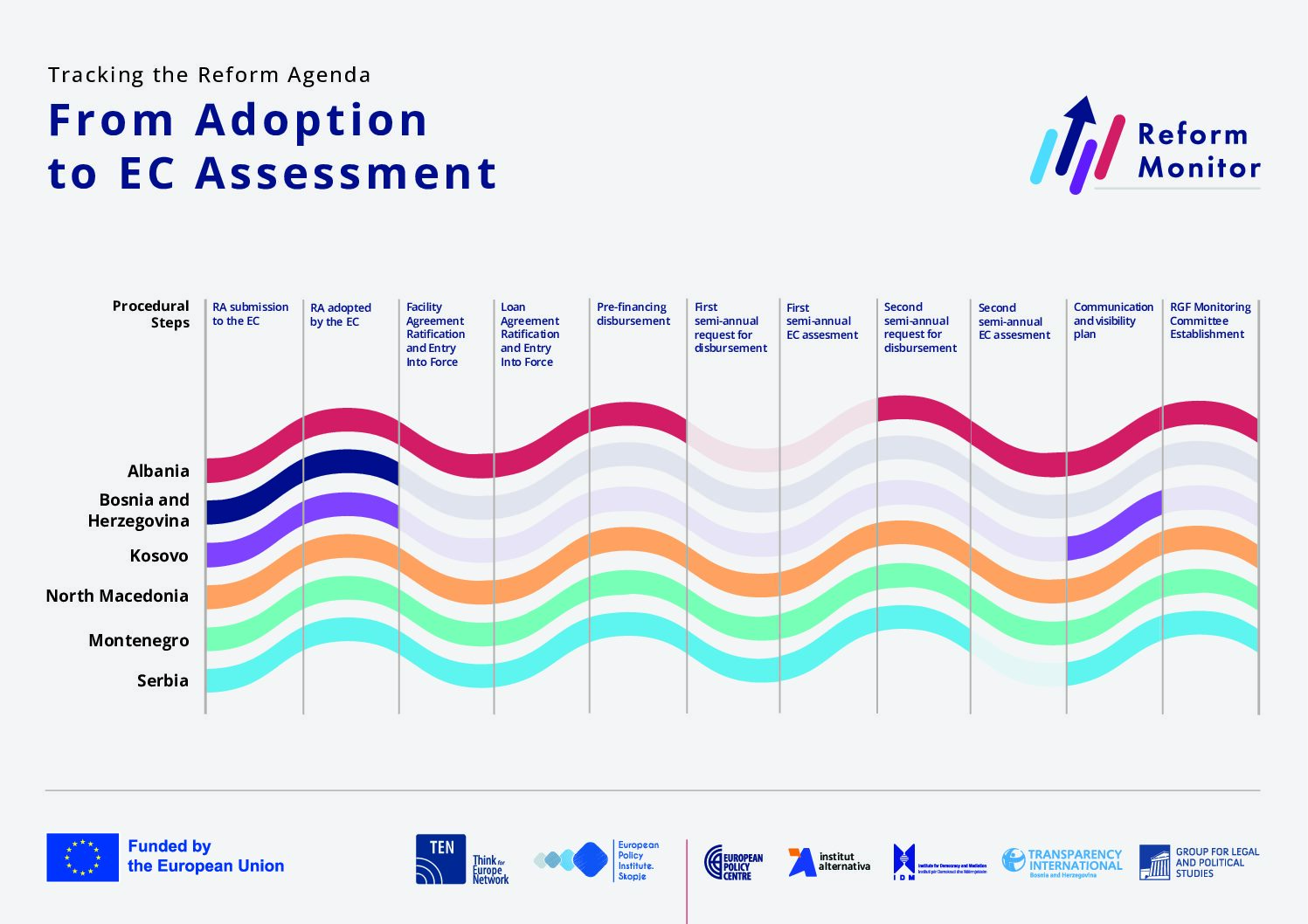
Tracking the Reform Agenda – January 2026 – From Adoption to EC Assessment

The infographic “Tracking the Reform Agenda: From Adoption to EC Assessment” provides a clear and concise visual overview of the key stages in the reform process, from the initial adoption of policies to their evaluation by the European Commission. Designed to enhance understanding of this complex journey, it highlights critical milestones.

North Macedonia: National Consultation Mechanism Discusses Updates in Implementing the Reform Agenda 2024–2027

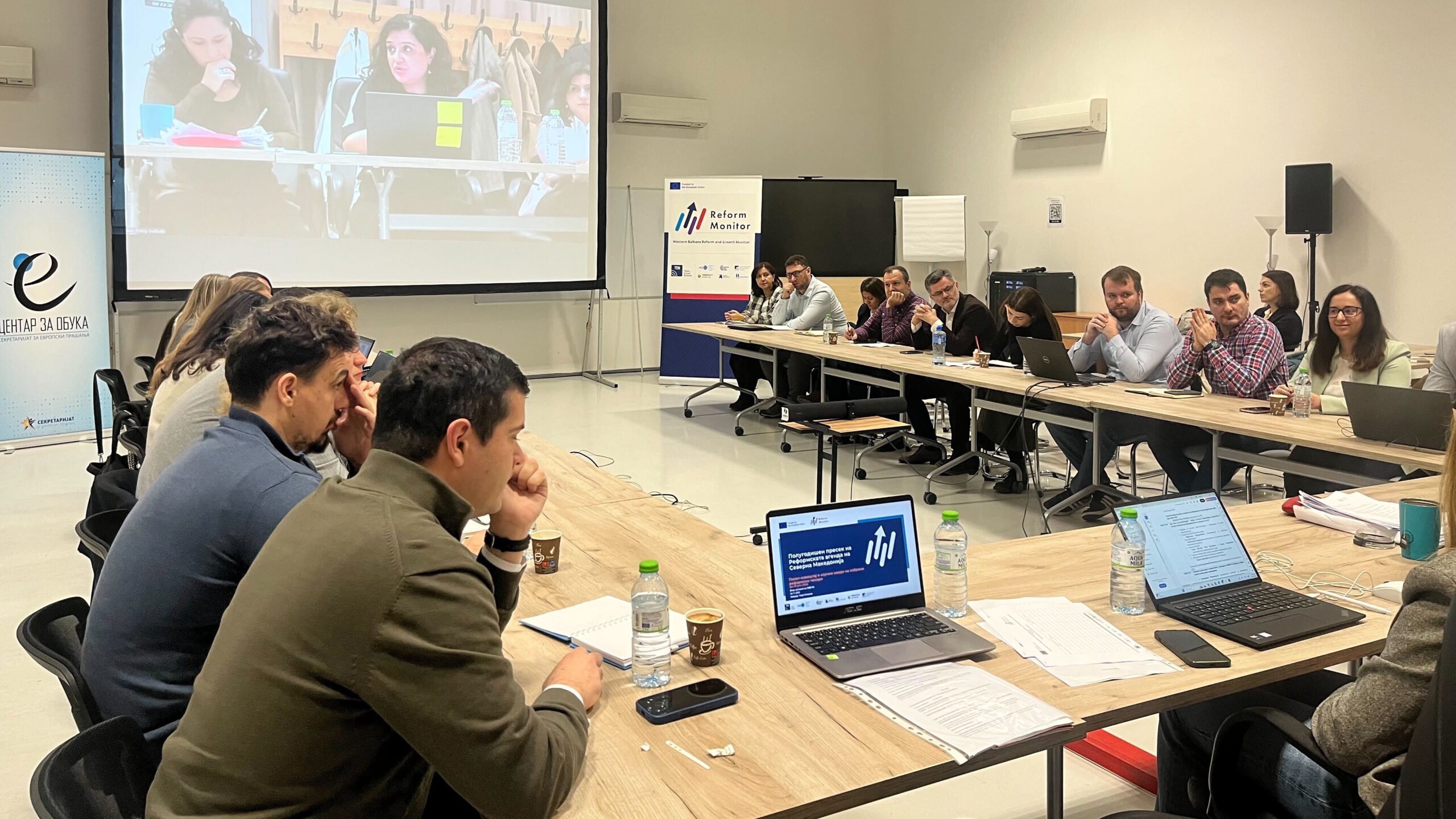
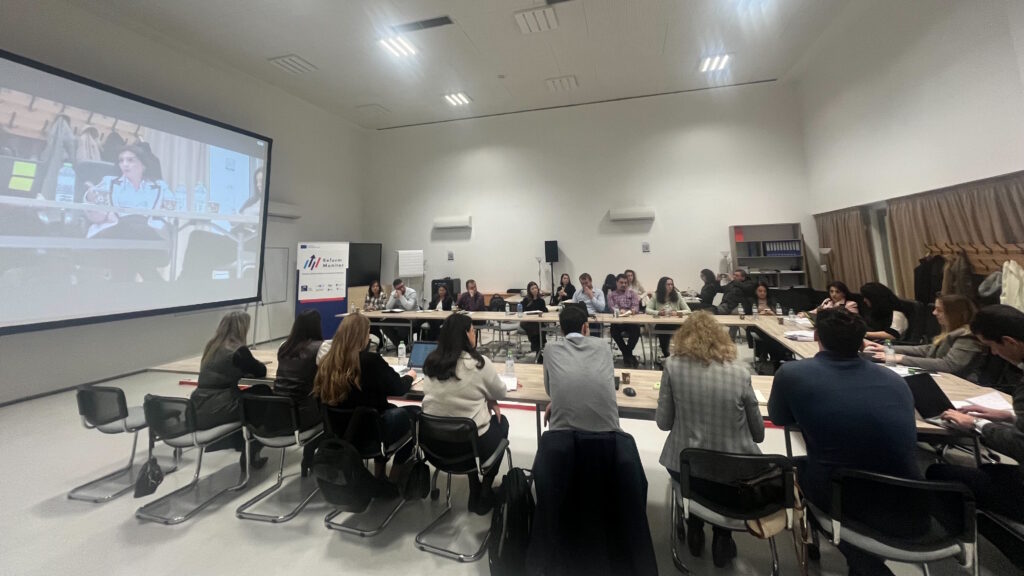
The European Policy Institute (EPI) – Skopje, in cooperation with the Ministry of European Affairs, held the second meeting of the National Consultation Mechanism for the Reform Agenda (N-CoMER) as part of the regional EU-funded project Western Balkans Reform and Growth Monitor. The meeting, organised at the premises of the Ministry, brought together representatives of national institutions (members of RA working group), civil society organisations, the private sector, and independent experts to review progress, identify obstacles, and discuss the next steps in implementing the Reform Agenda 2024–2027


Institutional Priorities, Progress and Key Challenges

The Ministry of European Affairs presented the current status of the third reporting period, highlighting that while the overall pace of implementation aligns with regional trends, institutions face tight deadlines, methodological differences in assessing qualitative indicators, and persistent coordination challenges. The Ministry underlined the need for timely reporting and stronger cooperation with civil society.

EPI shared findings from its pilot monitoring of reform delivery (December 2024 – June 2025), noting delays in publishing key documents, gaps in inter-institutional coordination, and capacity shortages in several institutions. The analysis also showed significant variations between policy areas, with energy, digitalisation, and rule of law facing the greatest bottlenecks.

The Ministry of Digital Transformation emphasised the complexity of aligning national legislation with EU requirements in cybersecurity and digital services, pointing to limited staffing and financial constraints as major barriers.

The Ministry of Energy reported substantial delays in market coupling procedures and transposition of EU regulations due to their technical nature and lengthy approval processes. Work continues on energy poverty measurement, decarbonisation plans, and the introduction of new digital services for vulnerable consumers.

The Ministry of Education outlined ongoing efforts to improve school digital infrastructure and expand dual education programmes, while the Ministry of Justice highlighted the critical need for strengthened human resources and long-term planning in the judiciary, as well as the impact of electoral cycles on legislative timelines.


Civil Society Insights

Representatives from civil society organisations stressed low public awareness of the Reform Agenda, challenges in accessing transparent data, and the need for improved quality of consultations. They also shared ongoing initiatives to strengthen public communication and parliamentary engagement regarding the reforms.

Conclusions and Way Forward

Participants agreed that administrative capacity remains the biggest obstacle to timely implementation. Strengthening inter-institutional coordination, improving transparency, and ensuring meaningful consultation were identified as priorities for the coming period.

The National Consultation Mechanism will continue to serve as a platform for structured dialogue, evidence-based monitoring, and joint problem-solving throughout the implementation of the Reform Agenda and the EU Growth Plan.

Tracking the Reform Agenda – October 2025 – From Adoption to EC Assessment

The infographic “Tracking the Reform Agenda: From Adoption to EC Assessment” provides a clear and concise visual overview of the key stages in the reform process, from the initial adoption of policies to their evaluation by the European Commission. Designed to enhance understanding of this complex journey, it highlights critical milestones.

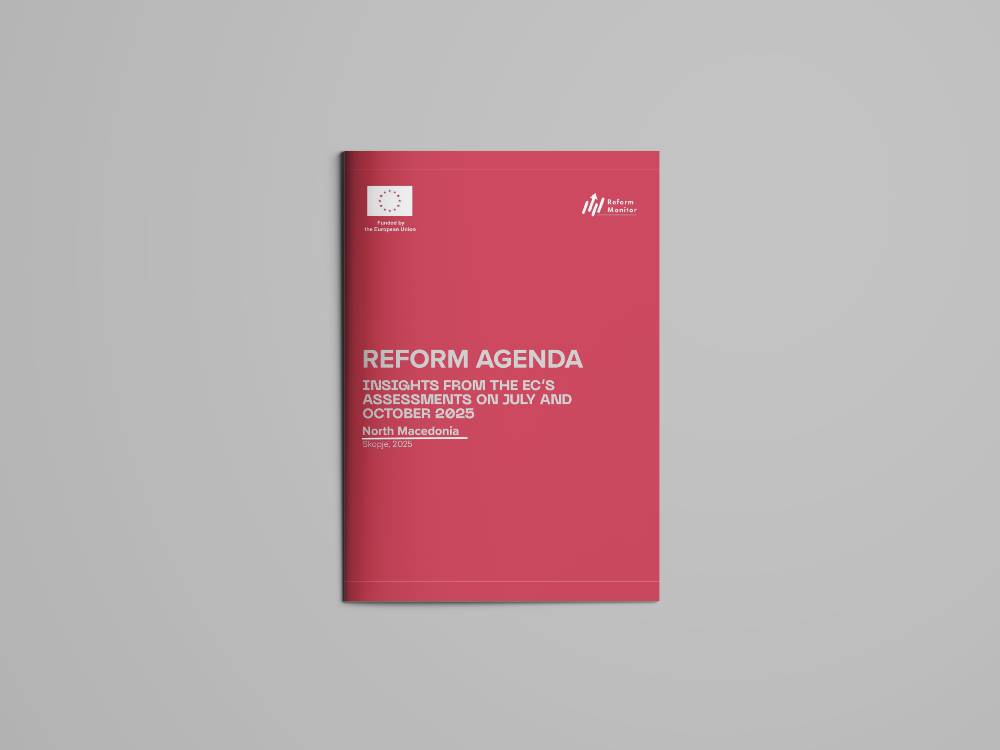
North Macedonia – INSIGHTS FROM THE EC’S ASSESSMENTS IN JULY AND OCTOBER 2025

On 30 July and 8 October 2025, the European Commission published its assessments of North Macedonia’s implementation of the Reform Agenda for the reform steps scheduled for December 2024 and June 2025. The assessments provide an in-depth overview of the country’s performance, highlighting key areas of progress, delays and remaining gaps across priority areas. The headline figures point to a limited level of success. Of the 21 reform steps that North Macedonia committed to complete across the two reporting periods (December 2024 and June 2025), it implemented 6 reform steps, corresponding to a completion rate of 28,6 %.

Reform-Agenda-insights-from-EC-assessment-North-Macedonia-july-and-october-2025.pdf

Download

Повик за изразување интерес за приклучување кон Националниот консултативен механизам за Реформската агенда 2024-2027 (НКМ-РА) на Северна Македонија

Институтот за европска политика – Скопје (ЕПИ) како координатор на регионалниот проект „Следење реформи и раст во Западен Балкан“ кој се спроведува во партнерство со партнерите од мрежата „Мисли за Европа“ (Think for Europe Network (TEN)),  ги повикува сите заинтересирани граѓански организации (ГО), стопански комори, социјални партнери, академската заедница и други засегнати чинители во Северна Македонија да го изразат својот интерес за учество во Националниот консултативен механизам за Реформската агенда 2024-2027 (НКМ-РА). 

Што е НКМ–РА? 

НКМ-РА е национална консултативна плаформа што овозможува структуиран, инклузивен дијалог, заснован врз докази помеѓу јавните институции, ГО, стопанските комори, академската заедница, и други засегнати чинители, за спроведувањето и следењето на Реформската агенда 2024-2027 во Северна Македонија во рамки на Инструментот за реформи и раст за Западен Балкан на Европската Унија. 

Платформата е координирана од ЕПИ, а поддржана од Министерството за европски прашања, институцијата која ги координира сите активности поврзани со спроведувањето на Реформската агенда во земјата, врз основа на потпишан Меморандум за соработка со цел да се обезбеди структуриран дијалог и транспарентност, во согласност со нагласокот на Европската комисија за вклучување на граѓанските организации во реформските процеси.  

Кој може да се приклучи во НКМ-РА? 

НКМ-РА е платформа отворена за сите невладини чинители со искуство или интерес за следење на Планот за раст, Реформската агенда и/или процесите на ЕУ интеграцијата. Од учесниците во консултативниот механизам се очекува конструктивен придонес и почитување на принципите на инклузивност, транспарентност и дијалог заснован врз докази.  

Зошто да се приклучите на НКМ–РА?

НКМ–РА обезбедува простор за конструктивна соработка помеѓу државни органи и останати засегнати чинители, овозможувајќи им на членовите да придонесат кон следење засновано на докази и дискусии за реформи, како и да влијаат врз спроведувањето  на Планот за раст за ЗБ . Специфично, платформата ќе:

  • Овозможи консултации засновани на податоци и алатки за следење;
  • Поттикне меѓусекторска соработка помеѓу различни нивоа на владеење;
  • Понуди можност за градење на капацитети и поддршка за застапување;
  • Промовира транспарентност и отчетност преку објавување извештаи од состаноци и повратни информации од засегнати чинители.

Како да се приклучите?

Доколку Вашата организација сака да се приклучи во НКМ-РА, Ве замолуваме да го пополните формуларот достапен на следниот линк: https://forms.gle/mFeqyVHWdUNPsqfD9. *Доколку веќе сте се пријавиле за учество во НКМ-РА не е потребно да го правите истото повторно.

Следни чекори

Првите два состаноци од НКМ-РА се одржаа минатата година, а третиот е закажан за мај.

EC approves second release of funds for Albania, Montenegro and North Macedonia under the Western Balkans Growth Plan

On 16 October 2025, the European Commission published the second implementing decision for the release of funds to Albania, Montenegro, and North Macedonia under the Reform and Growth Facility for the Western Balkans, part of the broader Growth Plan.

The Commission’s decisions are based on evaluations of compliance with political preconditions, macro-financial stability, and specific reform commitments outlined in each country’s Reform Agenda. The release follows positive assessments of reform progress and macroeconomic conditions in the three countries, and partial implementation of specific reform steps under the Reform Agendas.

The Commission’s implementing decision approving release of funds to Albania, Montenegro and North Macedonia under the Reform and Growth Facility for the Western Balkans is avaliable here.

Albania

The European Commission found that  21 out of the 41 payment conditions related to the reform steps as set in its request and in its Reform Agenda are fulfilled by Albania. With that, the country will receive its first release of €99,323,541.9 net (post-pre-financing clearance): € 28,504,617.19 in non-repayable grants and € 70,818,924.71 in loans, with 34.75% (€ 24,609,576.34) allocated to the Western Balkans Investment Framework (WBIF). This disbursement comes in recognition of Albania’s progress on key governance and economic reforms, including public administration reform, judicial efficiency, and digitalisation of public services. Specific projects under WBIF will focus on enhancing sustainable transport networks and clean energy initiatives.

The Assessment of the Conditions for Payments is available here.

Montenegro

The European Commission found that  5 out of 18 payment conditions related to the reform steps as set out in its second request for disbursement are fulfilled by Montenegro with a deadline due June 2025. In total, Montenegro fulfilled 12 reform steps so far. With that, the country will receive its second release of funds of € 8,083,884.46 net (post-pre-financing clearance): € 2,319,973.97 in non-repayable grants and € 5,763,910.49 in loans, with 34.75% (€ 2,002,958.90) allocated to the Western Balkans Investment Framework (WBIF). 

This release follows the country’s successful implementation of reforms in public sector transparency, digital transition, and energy efficiency. Notably, Montenegro has improved the accessibility of data on State-Owned Enterprises (SOEs) and adopted several key laws aligned with EU directives, such as the Law on Information Security in line with the NIS2 directive. 

The Assessment of the Conditions for Payments is available here.

North Macedonia

The European Commission found that  4 of of 16 payment conditions with a deadline due June 2025 are fulfilled by North Macedonia, or in total 6 out of 21 for both semesters. With that, the country will receive its second disbursement of  €15,929,721.7 net (post-pre-financing clearance): € 4,571,631.37  in non-repayable grants and € 11,358,090.36 in loans, with 34.75% (€ 3,946,936.40 ) allocated to the Western Balkans Investment Framework (WBIF). The country demonstrated progress in corporate governance, internal financial controls, and justice sector reforms, although key challenges remain, particularly in the fight against high-level corruption and political interference in the judiciary.

The Assessment of the Conditions for Payments is available here.

Next Steps

The facility rewards the beneficiaries who demonstrate measurable progress in implementing their Reform Agendas in areas like the rule of law, governance, green and digital transitions, and public financial management.

Assessments for Serbia are not yet published, and the country has not yet received funding under the RGF apart from the prefinancing that beneficiaries received. In contrast, Kosovo has not yet ratified the necessary agreements, and Bosnia and Herzegovina is awaiting the Commission’s approval of its Reform Agenda.

You can find further documents and implementing decisions in the Documents section of our website.


Reform Agenda Snapshot (Јune ‘25) – North Macedonia

This infographic provides an overview of North Macedonia’s Reform Agenda implementation up to June 2025, highlighting progress made, pending measures, and key challenges across priority areas.

Reform-Agenda-Snapshot-up-to-june-‘25_North-Macedonia

EU Commission published its first assessments and greenlighted partial release of funds for Montenegro and North Macedonia under the Western Balkans Reform Facility

The European Commission has approved the initial release of funds under the Reform and Growth Facility for the Western Balkans, in accordance with implementing decisions adopted on 30 July 2025. These implementing decisions specify the amounts and the procedure for the release of the non-repayable and the loan support for Montenegro and North Macedonia. 

The implementing decisions are accompanied by the first formal assessments under the Reform and Growth Facility for the Western Balkans, offering detailed evaluations of the reforms implemented by North Macedonia and Montenegro. The assessment covers the payment conditions for the period since the entry into force of Regulation (EU) 2024/1449 on 25 May 2024 and until 28 February 2025, i.e the first deadlines in the respective Reform Agendas.  

North Macedonia

The European Commission found that only 2 of 5 conditions are fulfilled by North Macedonia. With that, the country will receive €7,918,701.90 net (post-pre-financing clearance): €2,272,568.64 in non-repayable grants and €5,646,133.26 in loans, with 34.75% (€1,962,031.31) allocated to the Western Balkans Investment Framework (WBIF). North Macedonia got finances for amending the corporate law to introduce new rules on the appointment of independent board members of State Owned Companies in the Business environment and private sector development policy area, as well as for the adoption of the Public Internal Financial Controls (PIFC) Law in the Governance, Public Administration Reform and Public Financial Management policy area.

The Commission’s implementing decision approving the first release of funds to North Macedonia is available at: https://reform-monitor.org/wp-content/uploads/2025/09/COMMISSION-IMPLEMENTING-DECISION-approving-the-first-release-of-funds-to-North-Macedonia-under-the-Reform-and-Growth-Facility-for-the-Western-Balkans.pdf 

The Assessment of the Conditions for Payments is available at: https://reform-monitor.org/wp-content/uploads/2025/09/ANNEX-%E2%80%93-Assessment-of-the-Conditions-for-Payments-%E2%80%93-North-Macedonia.pdf 

Montenegro

Montenegro met 7 of 14 conditions, unlocking €10,178,175.47 net (post-pre-financing clearance): €2,921,009.36 in non-repayable grants and €7,257,166.11 in loans, including 34.75% (€2,521,865.22) for WBIF projects.  Montenegro released funds by improving the transparency of the inter-governmental agreements and third-country contracts, and keeping a publicly available and up to date register of SOEs and companies with State’s participation, including municipal companies in the Business environment and private sector development policy area. They also released funds by ensuring the issuing of Energy Performance Certificates (in line with the EPBD) and amended the relevant legislation to enable effective decision-making on energy efficiency investments for homeowners as part of the Energy and Green transition policy area. In the policy area of Digital Transition they adopted the Law on Information Security in full alignment with the NIS2 directive, they adopted the National Plan for deployment of Broadband infrastructure by the Government and a plan for full deployment of transactional national and local level public electronic services 2025-2027. The final implemented reform was the appointment of the Supreme Court presiding as part of the Fundamentals and Rule of Law policy area.

The Commission’s implementing decision approving the first release of funds to Montenegro is available at: https://reform-monitor.org/wp-content/uploads/2025/09/COMMISSION-IMPLEMENTING-DECISION-approving-the-first-release-of-funds-to-Montenegro-unde.pdf

The Assessment of the Conditions for Payments is available at: https://reform-monitor.org/wp-content/uploads/2025/09/ANNEX-%E2%80%93-Assessment-of-the-Conditions-for-Payments-%E2%80%93-Montenegro.pdf 

Similar assessments are anticipated for Serbia and Albania. In contrast, Kosovo has not yet ratified the requisite loan and facility agreements essential for fund disbursement under the Facility, while Bosnia and Herzegovina lacks final approval from the European Commission on its submitted Reform Agenda.